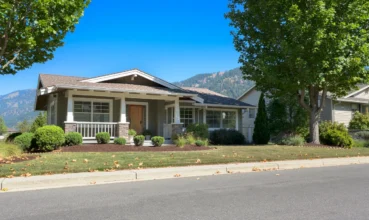
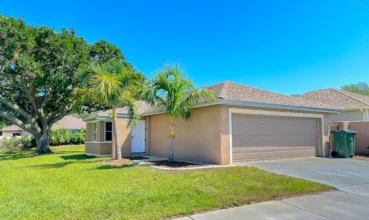
In Orange County’s real estate market, broad city or county-level analysis is losing relevance. According to Kristina Hudes, co-owner of The Hudes Group at Keller Williams, individual home performance now depends less on general market conditions and more on the specific decisions made by sellers and their agents.
Hudes points out that two homes on the same street, priced similarly, can have entirely different results. One may attract multiple offers while the other remains unsold, due to differences in pricing, marketing, and agent strategy. Blanket statements about whether it is a good time to buy or sell, she argues, are largely irrelevant.
“You can have two homes on the same street in the same price range, and they have two completely different things going on, because they chose a different pricing strategy, they chose a different marketing strategy, they chose a different realtor,” Hudes says.
This perspective challenges traditional real estate analysis, which relies on aggregated neighborhood- or regional-level data to identify trends. Hudes contends that such methods miss the true drivers of individual property outcomes — how each home is presented, priced, and marketed.
Selective Buyers Split the Market
Hudes attributes divergent outcomes to a more selective pool of buyers. While most homes sit unsold for extended periods, properties that excel in condition, price, and marketing still see multiple competing offers.
“We’re seeing the few homes that have the right condition, the right price, the right marketing — those homes will still get multiple offers, and sometimes you’ll even see four, five, six offers still in this market where most homes are sitting,” Hudes explains.
The market has split into two distinct tracks. Sellers who execute well can still achieve strong results, while others face longer time on market and less buyer interest. Hudes notes this pattern holds across all price points and property types in Orange County. The main variable, she says, is not the overall economic environment but the seller’s approach. Sellers who misprice or under-market their homes are likely to struggle, regardless of broader trends.
Why Hyperlocal Analysis Matters
Because of this fragmentation, Hudes says it is nearly impossible to make meaningful predictions at the city or county level. The only reliable analysis, she argues, is property-specific.
“The biggest theme of this market is that every home, every price range, every condition, every marketing approach, is performing differently right now,” Hudes says.
This hyperlocal variability places a premium on local expertise. Agents must understand which pricing and marketing strategies will attract buyers to each property and which improvements will yield the highest returns. Hudes emphasizes that this shift increases the value of skilled local agents. “Every situation is so unique, which makes local realtors even more valuable,” she says. With so much variation, agents must provide tailored advice, not generic guidance.
National Trends Miss Local Picture
National real estate headlines often focus on interest rates, inventory, and affordability. Hudes argues these narratives fail to capture how transactions actually unfold in Orange County, where individual execution matters more than macroeconomic trends.
Interest rates are frequently cited as the main driver of market activity. While Hudes acknowledges that rates influence buyer demand, she maintains that the effect is often outweighed by seller decisions on pricing and marketing.
“I think it’s going to be a market that continues to be reliant and reacting to interest rate changes,” Hudes says. “But overall, I think that Orange County will always continue to be a safe place to make your real estate purchases.”
While economic conditions set the backdrop, they do not determine whether a specific home sells quickly or lingers on the market. The difference, Hudes says, comes down to execution.
What This Means for Sellers
In this fragmented market, sellers and their agents face greater responsibility to get the details right. Sellers who rely on standard approaches or assume that market trends will drive outcomes risk disappointment.
Agents who succeed, Hudes says, are those who can spot and act on opportunities that broad data cannot reveal. This includes identifying off-market listings, recognizing motivated sellers, and flagging mispriced or poorly promoted properties. The Hudes Group is developing a signature process to find off-market opportunities. Hudes says this is necessary as online platforms and algorithmic tools make basic listing information widely accessible. The goal is to provide clients access to homes and deals not available to the general public.
“I think this is something that is going to continually be more valuable for us realtors as we get into more of an AI generation,” Hudes says. “How can we find something for our clients that they can’t find anywhere else?”
Strategy Matters More Than Statistics
These trends point to a market where individual execution matters more than ever. For sellers, success depends on precise decisions about pricing, marketing, and presentation rather than broad market momentum. For agents, the challenge is delivering tailored strategies that account for the hyperlocal dynamics shaping each transaction.
In Orange County’s current market, broad predictions and generic advice are less useful than a sharp understanding of what drives buyers to act on a specific home. Sellers and agents who embrace this reality are best positioned to achieve strong results, even as broader market signals become less reliable.