


French-born entrepreneur Dan Malka, who founded Malka Realty after a successful career transition from tech, has witnessed firsthand the dramatic shifts in Los Angeles’ luxury real est...

Portland’s Balanced Prices and Development Activity Signal a Sustainable Market Rebound

Written by:
Date:
17 Oct 2025
Share via Facebook

Share via Linkedin

Share via X

Copy to clipboard

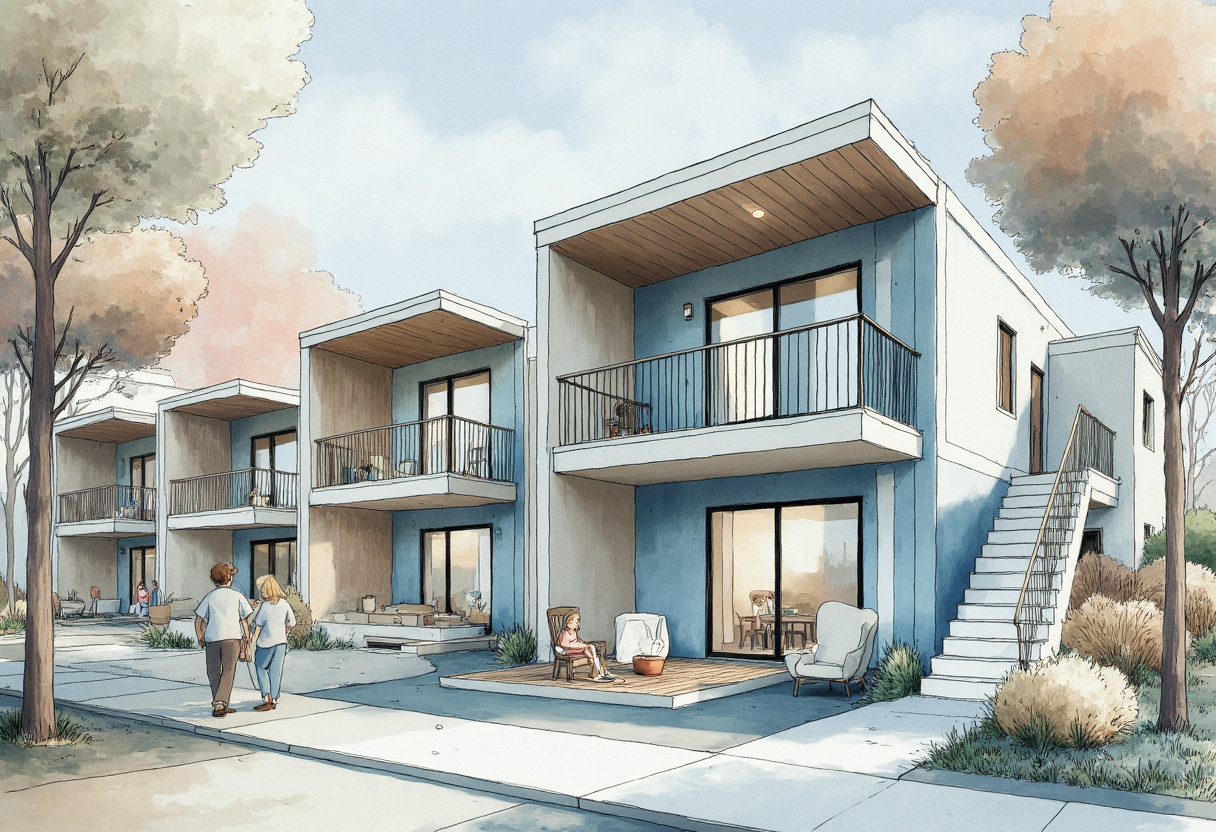
Despite recent challenges, Portland’s fundamentals as a livable, affordable West Coast city remain strong and could drive its recovery, according to one industry leader who argues the region’s quality of life advantages haven’t changed.
“We continue to be the most affordable West Coast City,” says Cassidy Bolger, Director of Development at Killian Pacific. “We continue to be a very livable city with good transit, good mobility options. We are an hour and a half from the ocean. We are an hour and a half from a snow-covered volcano.”
While Portland faced negative media coverage during recent years, Bolger suggests the reality on the ground was different than portrayed. “My office was two blocks from where that protest was occurring, and I went out and got my burrito at lunch, just like I always had, “he says. “It wasn’t as bad as everyone thought it was, if you just looked on the news.”
However, he acknowledges the impact of perception: “Sometimes that doesn’t matter. Perception sometimes can do its thing, but we all knew in Portland we had to do better, and I think we are doing better by working together.”
Recent changes in government leadership appear to be catalyzing positive momentum. “We’ve seen really good leadership from the governor’s office in Oregon in pro-housing movements,” says Bolger, who also serves as vice president of the board for Oregon Smart Growth. “We have a whole new form of government right now and a new mayor, and so we’ve been working hard to try to lift up the conversation about housing.”
These efforts focus particularly on housing stability and supply. “We’re advancing those conversations on how housing gets actually created, and trying to help prevent some of the misconceptions of sort of profit mongering outside developers coming in and extracting wealth from a community,” Bolger explains.
The improving situation reflects stronger collaboration between public and private sectors. “Those conversations, I think, are maturing really well in the city,” Bolger says. “I think as a city, we’re doing a good job of starting to talk more about that, about how we can kind of work together in the public and private sector.”
This cooperation extends to downtown revitalization efforts. “The focus on downtown, led by the governor and the mayor has been great,” Bolger notes. “Livability is much, much different than it was in 2020.”
While challenges remain, including high construction costs and interest rates that “make achieving market returns on most new projects in our markets not really feasible,” Bolger remains optimistic about Portland’s fundamentals.
“I think that that is what drove the Portland metro boom, 10, 15 years ago, when that started in earnest,” he says of the city’s quality of life advantages. “And I think that it will be why we recover strong.”
Similar Articles
Explore similar articles from Our Team of Experts.


Industry Profiles, Real Estate Investment, Commercial Real Estate, Property Technology, Market Analysis & Policy, Featured Articles
The commercial real estate industry continues to change amid shifting market dynamics, with established firms adapting their strategies to maintain competitive advantages. Eric Paulsen is le...

