
Phoenix’s housing inventory is being significantly overstated by media reports that conflate different property types, according to veteran real estate agent Chris Dunham of Brokers Hu...

How COVID Permanently Changed the Value of Pool Homes

Written by:
Date:
24 Dec 2025
Share via Facebook

Share via Linkedin

Share via X

Copy to clipboard

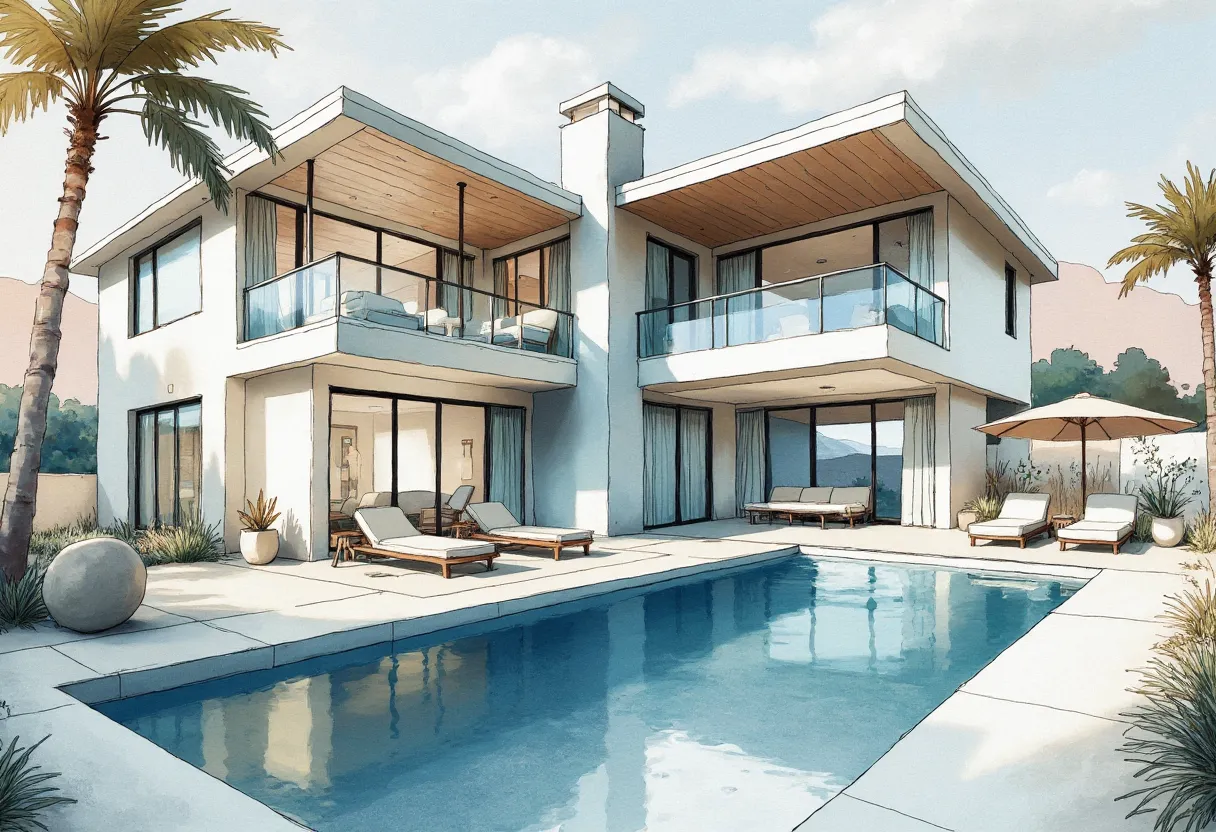
Swimming pools have shifted from a minor home upgrade to a central factor that divides suburban housing markets, according to a veteran broker who says the pandemic caused one of the most significant changes in residential real estate valuation in recent memory.
Matt Mobley, broker and owner of Hancock Realty Group in Clermont, Florida, says the value gap between homes with pools and those without has widened dramatically in recent years. “When I started, a pool was worth about $15,000 difference in home values,” Mobley says. “Now we’re seeing a $70,000 to $100,000 differential between pa $15,000es and non-pool homes.”
Mobley notes that this new premium is not always reflected in formal appraisals. “You don’t see that $100,000 value specifically in an appraisal,” he explains. “But when you compare pool home sales to non-pool home sales, is that wide a gap?”
Pandemic Shift Changed Buyer Priorities
The price divergence, Mobley says, accelerated sharply during the COVID-19 pandemic and has not reversed. “COVID is what made that happen,” he says. “COVID is when we saw the differential take off between pool homes and non-pool homes.”
Mobley attributes this to the closure of public spaces and recreational facilities, which forced families to rely on private outdoor amenities. “Your backyard became a place you needed to be,” he says. “How much improvement can you bring to your backyard? Being home became important during COVID.”
He describes how the sudden loss of public recreation created a new standard for what buyers expected in a home. “Little League is over. Going to the parks is over. Going out in public is over,” Mobley recalls. “So pool homes, you needed to be able to entertain yourself at home, and that’s when the value of a pool really began to take off.”
A Clear Market Split
Mobley says this shift has created two distinct housing markets within the same neighborhoods. “Pool homes and non-pool homes are not the same market, and that is not the same buyer,” he says. “These are really two different markets now in the same neighborhood.”
Before the pandemic, pools added a modest premium, and buyers were generally choosing between similar homes at close price points. “Are you going to pay $250,000 for this house? Are you going to pay $265,000 for this house and get a pool?” Mobley says, describing the previous buying logic. “It’s really the same buyer.”
Now, with a $70,000 to $100,000 gap, pool homes and non-pool homes attract different buyers with different budgets and priorities. “We have three markets in the pre-owned market here,” Mobley explains, identifying the 55-plus market, pool homes, and non-pool homes as separate categories.
Challenges for Sellers and Appraisers
Mobley’s observations highlight new challenges for both sellers of non-pool homes and appraisers. If pool and non-pool homes function as separate markets, traditional comparative market analysis may yield inaccurate valuations.
For sellers without pools, Mobley says the consequences are clear: their properties now compete in a lower-priced segment, regardless of other upgrades. For appraisers, capturing the actual value gap is difficult because the premium is not a simple line item; it emerges only through side-by-side sales comparisons.
Whether this pool premium is a lasting change in buyer preference or a temporary result of the pandemic remains uncertain. However, Mobley says the gap has persisted for several years after the height of the COVID-19 pandemic, with no signs of narrowing.
Mobley’s firm, Hancock Realty Group, now markets pool and non-pool homes as fundamentally different products, tailoring strategies and buyer outreach accordingly. Whether other brokerages and industry analysts will follow depends on whether this valuation divide holds – and if similar trends start to appear in suburban markets beyond Central Florida.
Similar Articles
Explore similar articles from Our Team of Experts.

Perspectives, Industry News, Commercial Real Estate, Market Analysis & Policy, Real Estate Investment
Mizuho director predicts surge in enterprise-specific AI implementations will reshape data center market. The next major driver of data center demand won’t come from generic AI models ...

Industry Profiles, Commercial Real Estate, Property Technology, Market Analysis & Policy, Top Articles
In New York City’s commercial real estate world, few names carry as much weight as Bob Knakal. Having personally brokered the sale of over 2,300 buildings valued at more than $22 billi...