Outdoor amenities now trump density in community planning, according to 40-year development expert. The COVID-19 pandemic has fundamentally shifted what homebuyers want from master-planned communities, with outdoor spaces and nature access now taking precedence over traditional amenities, according to Lisa Clark, Senior Vice President of Master Planned Communities at W Land Development.
The Shift Toward Open Space
“The trend in the last five years with COVID hit is more they want to be outside,” Clark says, noting a dramatic change in buyer preferences. “People got tired of being locked up in houses. So it’s really nice to have all the outdoor space. We do find that outdoor space is in better demand than it’s ever been.”
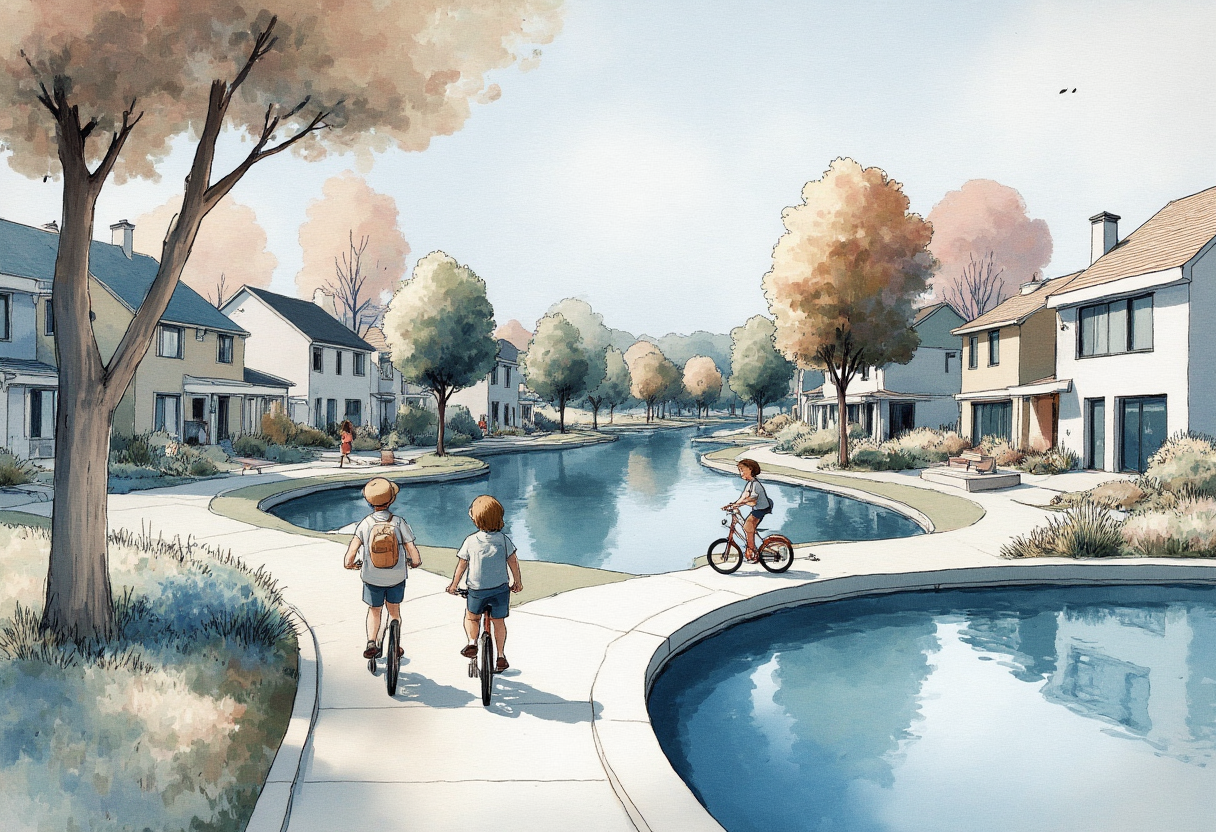
According to Clark, this shift goes beyond traditional amenities like pools and fitness centers. “Now they want serious trails to get out, take their kids out, play, enjoy nature, enjoy the lake,” she explains. This demand has directly influenced how developers allocate land within new communities.
The Economic Case for Less Density
While some developers might maximize buildable lots, Clark argues there’s strategic value in preserving significant open space. At W Land’s Preservation Creek project, approximately 250 acres are being dedicated to a regional park, a decision that Clark says came after months of economic analysis.
“A lot of people would probably develop more land in an area like Preservation Creek,” Clark acknowledges. “But we’re not a developer that just builds on top of each other, every inch of the land. We want to create a destiny, not only for our residents but also for the region.”
The New Community Blueprint
Clark says modern master-planned communities must offer diverse outdoor experiences. “You have to give various type of trails,” she notes. “People like to get out with strollers. They like to get out with bicycles. They like to get out with skateboards.”
This emphasis on outdoor space also fosters community connections. “People are really looking for the outdoor experience,” Clark observes. “To be able to go out with your neighbors, meet at the recreation center or meet at a park area, hang out on a Friday night, let the kids play and just enjoy each other.”
The Solution: Balanced Development
W Land Development’s approach demonstrates one way developers are adapting to these new market demands. Their Preservation Creek project, while still in development, showcases how communities can balance density with quality of life through strategic land allocation.
“We ran numbers for many, many months on different types of land plans and lot sizing,” Clark explains. “Working with Alvin, we want to create a destiny, not only for our residents but also for the region.”
As the project moves toward its spring grand opening, it may offer insights into whether this nature-focused approach represents the future of master-planned communities.