A designer argues that dismissing backyard projects as weak financial investments reflects an outdated view, as buyers increasingly prioritize stress relief and quality of life alongside traditional renovation metrics.
Rethinking the Resale Value of Outdoor Living
Real estate professionals have long advised homeowners that outdoor living upgrades yield weaker financial returns than kitchen or bathroom renovations. Paul Lafrance, founder and CEO of Paul Lafrance Design, says this belief no longer matches how buyers evaluate homes.
“The number one misconception is that if you put too much into the backyard, it’s not a good return on investment,” Lafrance says. He calls this “a really short-sighted capitalistic viewpoint” that overlooks how people actually live.
Lafrance highlights what he sees as a contradiction in homeowner spending habits. Many will spend heavily on vacations that provide no lasting value, yet hesitate to invest in permanent backyard retreats for fear of hurting resale value. He argues that this thinking ignores both the immediate quality-of-life benefits and the potential market impact when a home with a distinctive outdoor space is listed for sale.
Traditionally, outdoor upgrades have been treated as optional luxuries rather than core elements of a home’s value. Lafrance sees this as outdated thinking, especially as mental health concerns have become central for many buyers.
Case Study: Toronto Townhouse Backyard Redesign
Lafrance describes a project that he says challenged industry assumptions about outdoor investment returns. His clients, Ron and Irene, owned a downtown Toronto townhouse with a 13-by-27-foot deck built over a parking garage. The deck lacked privacy, faced a blank warehouse wall, and had little visual appeal.
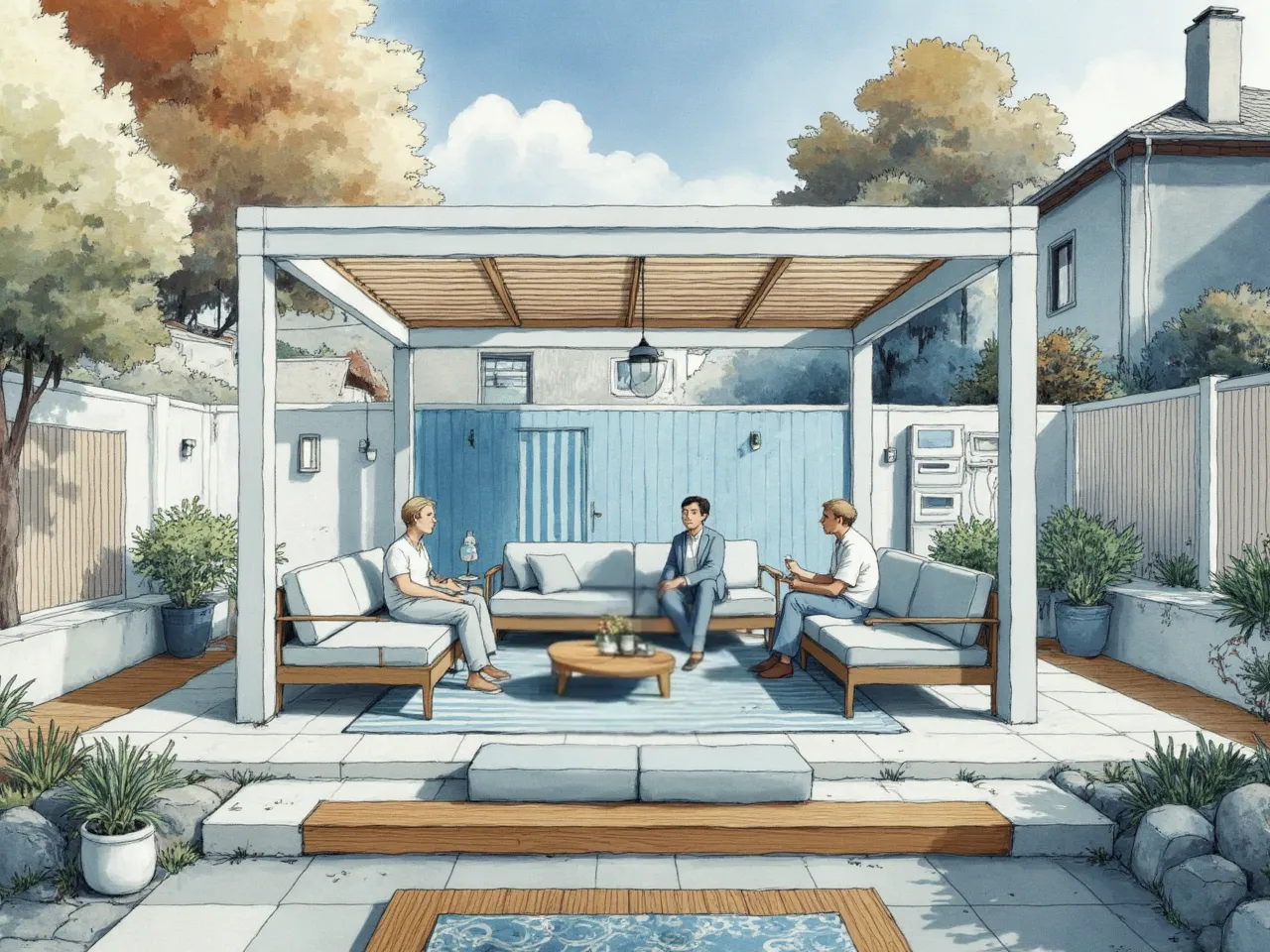
The couple wanted to recreate the mood of the South Miami Beach cabanas and nightclubs where they had met. Lafrance’s redesign included visual screens, canvas awnings, decorative panels, and a cabana structure, at a cost of about $60,000 to $70,000.
“When I was done, they lost their minds,” Lafrance says. “They were like, This is amazing.”
Soon after, Ron’s job required a move to Azerbaijan, forcing a quick sale before their backyard was featured on HGTV. Concerned about recouping their investment, the couple listed the property.
“There was a bidding war on that place,” Lafrance says. Potential buyers, exhausted after touring dozens of similar houses, were drawn to the backyard’s vacation-like retreat, which was missing from other row homes in the area.
The townhouse sold for $400,000 over the asking price. Lafrance attributes the premium to the outdoor space, which he says set the property apart in a market where many backyards are identical and undeveloped.
How Stress and Lifestyle Priorities Influence Buyers
He says the premium paid for homes with finished outdoor spaces reflects a shift in buyer priorities. Lafrance says today’s buyers see stress and anxiety as ongoing challenges that require physical spaces for relief, not just lifestyle tweaks.
He notes, “Do you really think the next buyer is going to be that different than you?” He says stress is common, and buyers look for homes that offer a sense of escape.
Lafrance frames this as “invest in rest,” urging homeowners and agents to view outdoor upgrades as long-term lifestyle investments rather than purely aesthetic choices or financial risks.
He compares these investments to other essential systems in a home. Just as people do not delay necessary medical care due to short-term costs, Lafrance argues that they should not delay creating spaces that support psychological well-being.
Quoting Jim Carrey, Lafrance says, “Most people live their lives through fear disguised as practicality.” He believes economic caution often masks deeper anxieties, which he says well-designed outdoor spaces can help address.
What Outdoor Living Trends Mean for Real Estate Agents
Lafrance sees a missed opportunity for real estate agents who overlook outdoor living design in their services. He proposes that agents work with designers to offer buyers visual concepts for unfinished backyards during the purchase process.
“I should be busy designing for clients, for people who are just buying their house full-time,” Lafrance says. He envisions agents saying, “Here’s the house, and as part of the package, Paul’s going to design this backyard for you. You’ll have a vision of what it can become before you even move in.”
Lafrance says this approach would address what he sees as a persistent gap in property marketing. While interiors are often staged and renovated for sale, backyards are often left bare and undifferentiated. In competitive markets, this is a missed chance to create emotional appeal for buyers.
He notes that the Toronto townhouse case is not unique. Across his projects, properties with distinctive outdoor spaces consistently attract more buyer interest and command higher prices, even when the cost of the upgrades is high compared to the home’s value.
Lafrance acknowledges that not every market or property will support major outdoor investments. He says even modest upgrades, such as a well-designed 10-by-10-foot pergola, screening, lighting, and a fire pit, can have a meaningful impact for buyers seeking stress-relieving spaces.
Lafrance’s firm works on outdoor living projects across North America, including residential and commercial properties. He says the firm focuses on creating environments that help people decompress and connect with family, positioning outdoor spaces as functional parts of the home rather than purely visual enhancements.
The Changing Economics of Outdoor Investments
As mental health becomes a top concern for homebuyers, the logic of home improvement is changing. Outdoor spaces are no longer just “nice to have” features or risky investments. They are increasingly viewed as core assets that support personal satisfaction and may influence market value. For sellers and agents who rethink traditional assumptions, investing in backyard retreats may influence how a property performs in the market.
This article was sourced from a live expert interview.
Every month we conduct hundreds of interviews with active market practitioners - thousands to date.
The Dallas luxury real estate market continues to attract high-caliber professionals, driven by major corporate relocations and significant commercial investment. Recent PwC rankings placed ...
Commercial real estate owners face a new reality in property insurance as artificial intelligence and data science transform traditional underwriting, according to one industry veteran who a...
The real estate industry has seen significant consolidation over the past decade, with major franchises and national brands dominating market share across most regions. Yet in coastal Maine,...
Real estate investment companies often frame success as a product of strategy – spotting undervalued properties, entering the right markets, and timing cycles correctly. But Andrew Farnell...
Jacksonville’s housing market has shifted rapidly from a seller’s market to one that favors buyers. After months of limited inventory and bidding wars, the number of homes for sale in Ja...
For more than two decades, real estate technology companies have built consumer-facing search tools and agent platforms. Yet a core problem persists: the data powering these systems is often...