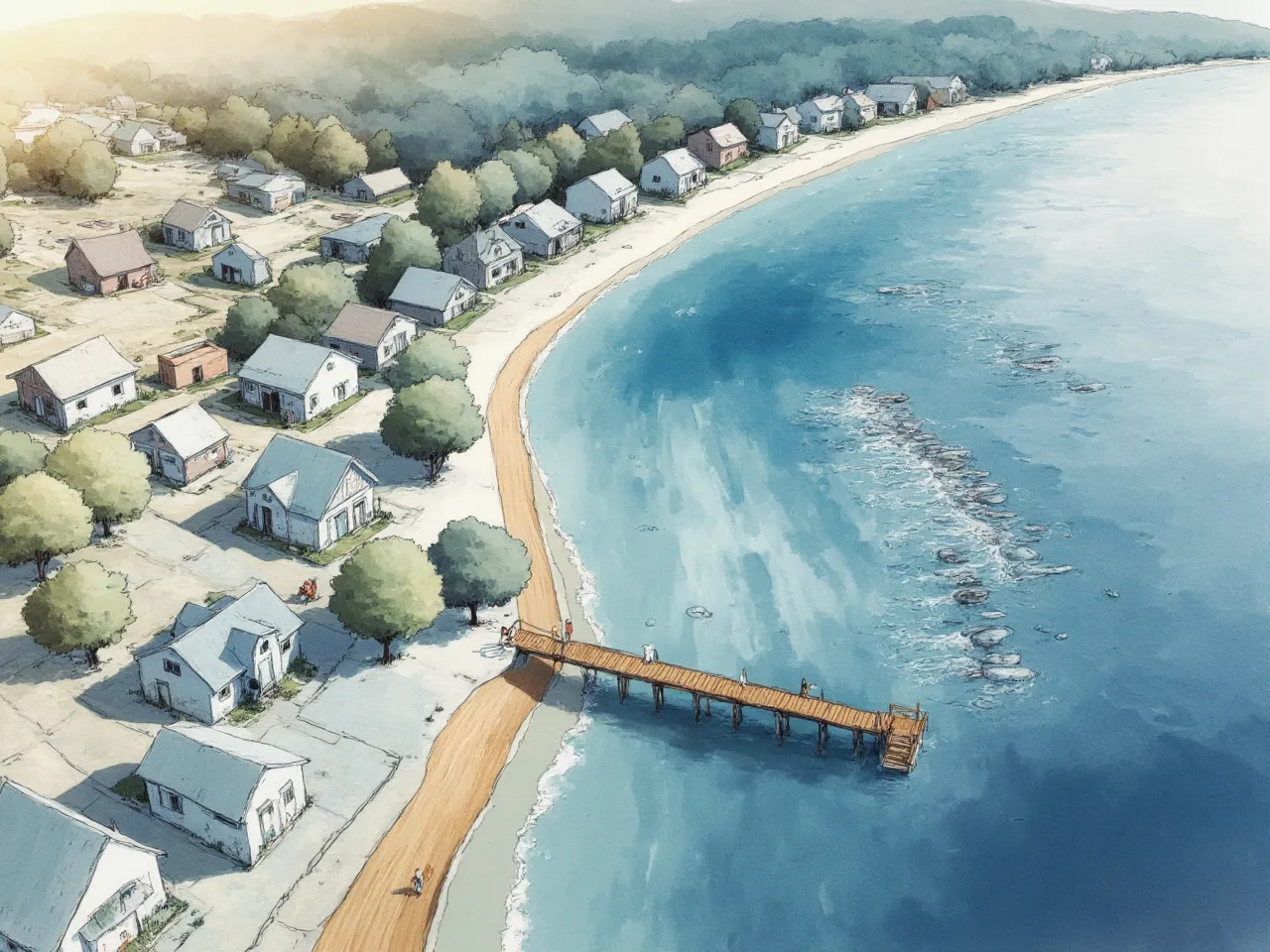
Waterfront property development in northern Michigan faces structural obstacles that keep inventory tight, according to Sander Scott, broker and owner of Net Real Estate. Shoreline in Leelanau, Grand Traverse, Benzie, and Antrim counties is restricted by federal and state parks, land conservancies, and environmental regulations governing wetlands and critical dunes. In areas where private ownership is possible, low-density zoning further limits new construction and subdivision. As a result, even as demand from out-of-state buyers and retirees rises, new waterfront inventory enters the market very slowly.
Scott explains that the supply of waterfront property is effectively capped. “Much of the shoreline is protected land or governed by low-density zoning, which places natural limits on how many new parcels or homes come onto the market,” he says. This scarcity persists regardless of broader real estate cycles, preventing the region from following the more typical patterns seen in inland or suburban markets.
Conservation Limits Private Waterfront Inventory
A significant portion of northern Michigan’s shoreline is off-limits to private development. Federal and state parks occupy large stretches of Lake Michigan frontage, while land conservancies have acquired additional parcels specifically to prevent development. Environmental protections, especially in designated wetlands or critical dunes, add another layer of restriction.
Scott notes that these protections mean the number of privately owned waterfront parcels increases very slowly, even as buyer interest grows. The result is a ceiling on inventory that cannot be raised through traditional market responses. Developers cannot build more homes to meet demand. Buyers seeking Lake Michigan frontage or access to bays such as Grand Traverse Bay, Suttons Bay, or Northport Bay must compete for a small, slowly growing pool of properties.
Supply constraints can vary within individual lakes. North Lake Leelanau’s more stable water levels and sandier beaches make it more desirable than South Lake Leelanau, often resulting in price differences of more than $1 million for comparable homes. These geographic distinctions further segment an already limited market, creating micro-markets where scarcity and desirability drive significant price gaps.
Zoning Restricts Waterfront Development Further
Zoning restrictions play a major role in holding down the number of new waterfront homes. Low-density zoning in these areas often prevents subdivision and large-scale development, even when environmental rules do not apply. Buyers or developers interested in subdividing vacant land must navigate the Michigan Land Division Act, local zoning codes, road and utility access, and septic system requirements.
Scott walks clients through these regulations to determine what is legally and practically possible for any given parcel. “You have to deal with the Michigan Land Division Act, local zoning, different infrastructure, road accessibility, wetlands, critical dunes, whether or not the site would be suitable for a septic system,” he says. In many cases, these requirements make development unfeasible or cost-prohibitive, keeping new inventory to a minimum.
Infrastructure requirements further limit development. In rural areas, the cost and complexity of providing road access, utilities, and septic systems can be significant barriers. Even when land is available, these requirements often make building new homes impractical or too expensive.
Market Favors Sellers Despite Stabilization
Despite cooling from the post-pandemic peak, the northern Michigan waterfront market still favors sellers due to ongoing scarcity. Days on market have returned to a typical 60 to 90-day range, and buyers are taking more time to decide. However, Scott emphasizes that the market continues to lean toward sellers because the underlying supply constraints have not changed.
“It’s always going to tend more toward a seller’s market in my area than a buyer’s market,” he says. “But it is much more balanced than it was five years ago.”
The surge in demand after the pandemic was fueled by remote work and changing priorities. Some buyers who had delayed purchasing waterfront property decided not to wait any longer, especially after personal experiences during the pandemic. Scott recalls a client who, after a family loss during COVID, felt a renewed sense of urgency and moved quickly to secure a home in Leelanau County. That urgency, combined with limited inventory, created bidding wars and rapid sales that have since slowed.
The fundamental scarcity remains. Even as buyers are more deliberate, the market cannot shift decisively in their favor because the number of available parcels remains low. Competition is less intense than during the peak, but sellers remain in a strong position compared to most other markets in Michigan.
Scarcity Keeps Waterfront Values Strong
The persistent supply constraints have significant implications for pricing and long-term market stability. In markets where developers can add new homes to meet demand, rapid price increases are often followed by corrections. In northern Michigan’s waterfront sector, this feedback loop does not exist. The inability to expand supply acts as a floor under prices, making sharp declines less likely.
The specific characteristics of each parcel heavily influence prices. Sandy beaches command premiums over rocky shorelines, and properties just yards apart can have vastly different values based on water depth, exposure, and beach quality. While these factors cause wide variation in pricing, the overall trend remains upward due to scarcity.
For buyers, purchasing waterfront property in northern Michigan carries less risk of significant price drops than in less-restrictive markets. For sellers, properties tend to hold their value even as broader market conditions fluctuate. The combination of conservation restrictions, zoning, and infrastructure requirements creates a market where supply is inelastic.
Buyers Need Guidance Navigating Market
Scott and his firm focus on helping buyers understand these unique market dynamics. Through YouTube videos and a website guide called Growing Up on the Water, Net Real Estate explains the complexities of buying and owning waterfront property in the region. Most of Scott’s business comes from referrals, but buyers often research him online before reaching out. The educational content is designed to prepare clients for the realities of the market, including the legal, environmental, and logistical challenges involved.
The northern Michigan waterfront market differs from national real estate trends. While other markets cycle between buyer and seller advantages, this region’s inventory remains capped by geography and regulation. Sellers continue to benefit from persistent scarcity, and buyers must be prepared for a competitive, highly nuanced market. These structural constraints are likely to keep the northern Michigan waterfront market stable and seller-friendly, regardless of broader economic cycles.
This article was sourced from a live expert interview.
Every month we conduct hundreds of interviews with active market practitioners - thousands to date.
A severe housing shortage along Oregon’s northern coast is forcing employers to take extraordinary measures to maintain operations, according to industry expert Rashelle Newmyer, who p...
Southwest Florida’s real estate market is undergoing a significant shift as it moves beyond the post-pandemic surge that pushed prices up 62% in two years. The region’s distinct position...
Houston’s housing market is following a path distinct from the sharper downturns seen in Austin, Boston, and other major metros. Mark Lee, Co-Founder and Partner at Absolute Properties...
Chicago’s south and southwest neighborhoods are facing a sharp correction as speculative development during the pandemic era collides with rising property taxes and stagnant rents. Kevin R...
“This program, together with 485x, will significantly reshape the landscape for the next decade,” says David Shamshovich, discussing the city’s newest housing incentives wi...
The Tampa Bay waterfront market is experiencing an unprecedented surge in property demolitions following last year’s hurricanes, with one barrier island alone potentially facing more than ...