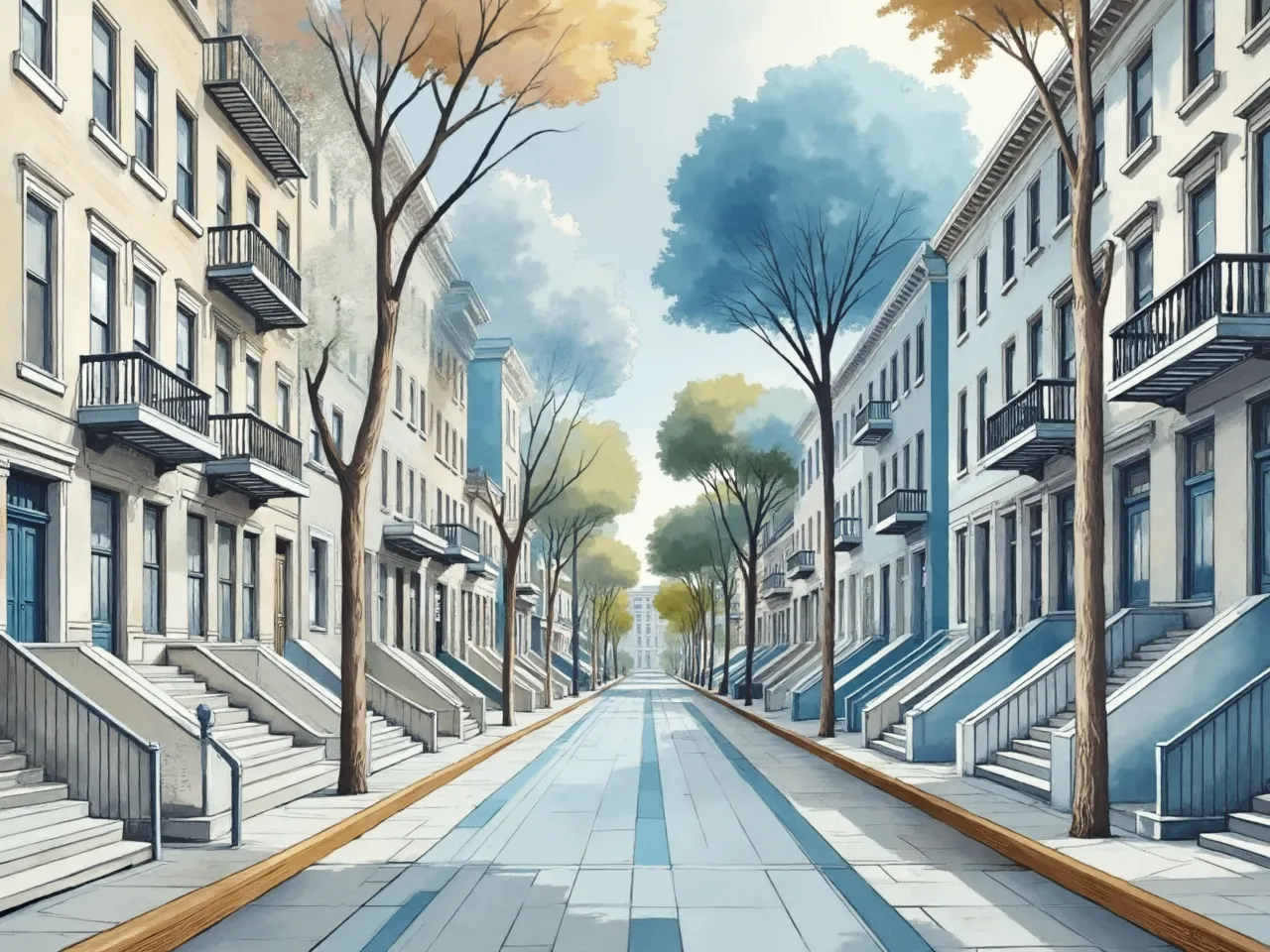
The Upper West Side has seen a surprising slowdown in its luxury townhouse market over the past two years, even as the neighborhood’s core strengths remain intact. Richard Pretsfelder, Senior Partner at Leslie J. Garfield & Co., notes that demand at the top end has lagged despite continued proximity to Central Park, access to leading schools, cultural attractions, and a walkable urban environment.
“The Upper West Side was a little sluggish, particularly on the higher end. Could I give you a reason for it? I wish I could. It’s a great neighborhood,” Pretsfelder says.
This lack of a clear explanation highlights a challenge in luxury real estate: even when neighborhoods retain all the features that have historically attracted affluent buyers, demand can cool in ways that standard economic models do not predict. The slowdown on the Upper West Side suggests that high-end buyer behavior does not always align with the supply-and-demand logic tied to neighborhood quality.
Fundamentals No Longer Guarantee Demand
For decades, the Upper West Side has drawn wealthy families with its combination of green space, culture, and top-tier schools. Central Park offers direct access to recreation. The area is home to renowned museums, a vibrant dining scene, and reliable urban infrastructure. Most significantly, it provides access to some of New York City’s best public and private schools.
“You have the park, you have museums, you have restaurants, you have proximity to a lot of good schools. Most of the good public and private schools are on the Upper East and Upper West Side,” Pretsfelder notes. “It’s all a magnet for those kinds of families to live in that neighborhood so they can be closer to the schools. That’s been the case for decades. That hasn’t changed.”
Yet despite these advantages, the luxury townhouse segment has underperformed. This disconnect challenges the assumption that strong fundamentals always translate into steady demand. At the high end, buyers’ decisions are shaped by factors beyond objective neighborhood qualities — changes in sentiment, evolving trends, or intangible perceptions of desirability that can shift even when underlying conditions remain stable.
The Upper West Side’s recent experience shows that luxury markets can soften for reasons unrelated to declining fundamentals or broader economic downturns. For sellers and brokers, this creates uncertainty, as there are few clear steps to correct the weakness or predict when demand might recover.
Upper East vs. Upper West Performance
Both the Upper East Side and Upper West Side border Central Park and offer similar access to schools, cultural institutions, and city amenities. However, their markets have diverged in recent years. While Pretsfelder does not cite specific data for the Upper East Side, the relative weakness on the Upper West Side suggests that buyer preferences between the two have shifted.
These shifts are often driven by perceived trendiness, established social circles among affluent buyers, or subtle differences in neighborhood atmosphere. These factors carry more weight in the luxury segment than in lower price tiers. In the $5 million to $15 million range, buyers have the flexibility to act on personal preference rather than necessity, leading to pronounced swings in demand that may persist for extended periods.
For the Upper West Side, preference-driven changes are difficult to counter with traditional market responses. Lowering prices may eventually attract buyers, but it does not address the core issue if the slowdown is rooted in sentiment or reputation rather than value.
High-End Condo Sales Signal Shift
Recent high-value condo transactions on the Upper West Side may signal that sentiment is beginning to shift. Pretsfelder highlights several $40 million-plus condo sales at the end of last year and the start of this year, indicating that the neighborhood still appeals to wealthy buyers, even if this interest has not yet revived the townhouse market.
“We saw a couple of very large condo sales towards the end of last year, the beginning of this year, on the Upper West Side, a couple of 40-plus million dollar condo sales,” Pretsfelder says. “So that’s an indication that the neighborhood is still attractive to affluent buyers, and it’s just a matter of seeing some of those condo sales ripple through the townhouse market as well.”
Whether these condo deals will boost townhouse demand remains uncertain. Condo and townhouse buyers often have different priorities. Condos offer amenities and minimal maintenance, while townhouses appeal to those seeking more space, privacy, and control over their property, as well as the potential for rental income or multi-generational living.
If the recent surge in high-end condo sales reflects a broader change in buyer sentiment, the Upper West Side’s slowdown could end sooner rather than later. If these are isolated purchases, however, the townhouse market may continue to struggle until broader perceptions shift.
Navigating Unpredictable Luxury Demand
The Upper West Side’s current market highlights how luxury real estate operates on its own logic. Even with stable fundamentals, demand can decline when buyers’ attitudes change for reasons that are hard to measure or influence directly. For now, sellers and agents face a market where traditional advantages are not enough to guarantee quick sales or strong offers.
As high-end buyers continue to weigh subjective factors — trendiness, social ties, or perceived status — over objective neighborhood strengths, the path forward remains uncertain. The Upper West Side’s experience underscores that understanding luxury demand requires more than tracking data and fundamentals. It also demands attention to the intangible forces that drive the decisions of the city’s wealthiest buyers.