


Florida’s real estate market is in the midst of a reset that is exposing a divide between experienced professionals and agents who relied on the pandemic boom to generate easy commissions....

New Construction Dominates Relocation Market: Florida Agent Reports 75% of Clients Choose New Builds

Written by:
Date:
25 Dec 2025
Share via Facebook

Share via Linkedin

Share via X

Copy to clipboard

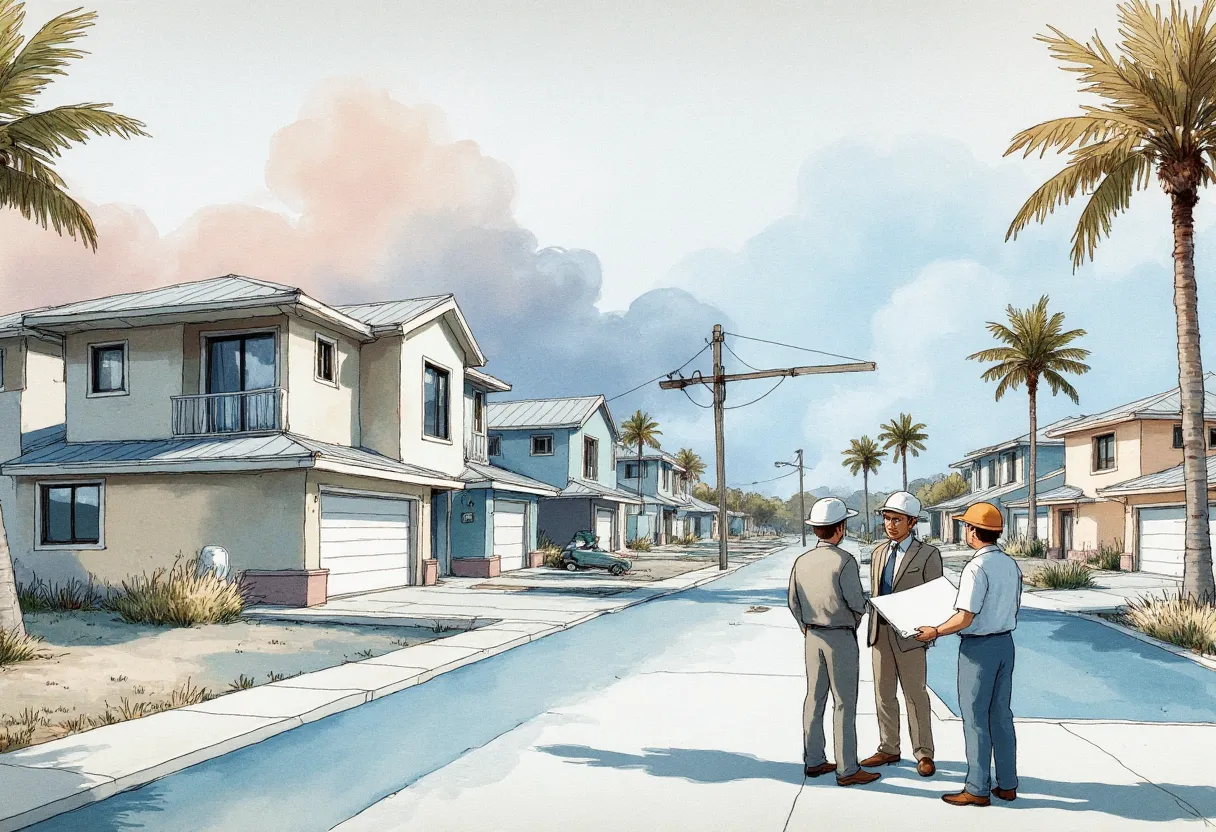
Raymond Fernandez, a relocation specialist with eXp Realty in Palm Beach County, has seen a striking trend: new construction now accounts for roughly 75% of his clients’ purchases, nearly eight times the estimated 10% market share of new builds in the county overall. This imbalance suggests that relocating buyers—especially those from outside Florida—are driving a surge in demand for new homes that is not reflected in the broader resale-dominated market.
“For me, I’m probably three-quarters, like seventy-five percent new construction,” Fernandez says. “It’s not because I tell people that’s what they should do. It’s because this is what they want.”
Relocating Buyers Seek New Construction
Fernandez’s business serves a specific population: buyers moving from out of state, particularly from the Northeast. He notes that these clients have different priorities from local buyers and are far more likely to seek out new construction. One of the main reasons is concern over hurricane preparedness.
“In Florida, new construction is one of the best things,” Fernandez explains. “We could get hurricanes down here, and it’s nice to have a well-built CBS block home built to withstand the weather we sometimes experience here in South Florida.”
For buyers unfamiliar with hurricane risks, assurance from newer building codes and construction quality is often decisive. Many local buyers, already accustomed to Florida’s climate and the performance of older homes during storms, may be less concerned about these issues. In contrast, newcomers want the peace of mind that comes with modern engineering and compliance.
Master-Planned Communities Fuel Demand
The demand for new construction among relocating buyers is not spread evenly across the region. Fernandez points to large master-planned communities as the primary beneficiaries of this trend. Avenir in Palm Beach Gardens stands out for its plans for 4,000 homes and multiple builders, including Geo Homes, Kolter, Toll Brothers, and Pulte Homes’ luxury DiVosta brand.
Other active communities include WestLake, which Fernandez says led the market two to three years ago and remains busy, and Arden, which is nearing completion after eight years but still sees notable transaction volume, including resales.
The popularity of these developments indicates that buyers value the amenities, infrastructure, and predictable development timelines that master-planned communities provide. These factors often outweigh the potential cost savings or unique features of resale homes in established neighborhoods.
Expertise Gap Among Agents
Fernandez also notes a lack of expertise in new construction among local real estate agents. “Most realtors in this area of Florida don’t do new construction, and don’t do—they’ve never done new construction, which is crazy, in my mind,” he says.
If this is accurate, it means many buyers seeking new construction may not have access to agents with the specialized knowledge needed to navigate builder incentives, construction timelines, and contract negotiations. The complexity of new-build transactions—including financing options, customization choices, and builder-specific timelines—can be a barrier for agents accustomed only to resale properties.
This specialization gap creates an opportunity for agents who invest in understanding the nuances of new construction sales. For relocating buyers, finding an agent with this expertise can make the difference between a smooth transaction and a frustrating experience.
Land Scarcity Limits Supply
Despite strong demand among relocating buyers, new construction still accounts for a small share of overall transactions in Palm Beach County. Fernandez attributes this to a persistent shortage of buildable land.
“The biggest dilemma for builders right now is finding land,” Fernandez says. “That’s their pain point. They need to find land, and they have a hard time doing it.”
This constraint plays out geographically. Miami offers limited new construction opportunities, and Broward County even fewer. Palm Beach County has a moderate amount of available land. In contrast, areas further north, such as Port St. Lucie, Stuart, and Palm City, have more available land and, as a result, more new construction activity.
Land scarcity means that even if buyer demand for new homes remains high, supply cannot keep pace in the most desirable locations. The estimated 10% market share for new construction in Palm Beach County likely reflects a cap imposed by limited inventory, not a lack of buyer interest.
Future Outlook: Separate Markets for Different Buyers
Whether the share of new construction will grow depends on factors beyond buyer preference, such as land availability, permitting timelines, and builders’ ability to deliver homes in desirable locations. If these constraints ease, new construction could claim a larger share. If not, it may remain a limited product, available primarily in outlying areas or large-scale developments.
At present, Fernandez’s experience highlights a clear divide. Relocating buyers—especially those from out of state—are operating in a parallel market with distinct priorities, inventory, and competition compared to the resale market that dominates local transaction volume. Their preference for new construction, driven by safety, amenities, and predictability, is reshaping the business for agents who serve them, even as broader market statistics understate the shift.
This divergence underscores the importance for agents and builders alike to recognize the specific needs of relocating buyers, and for local professionals to develop the expertise required to serve this growing segment. As long as these buyers continue to prioritize new construction, the demand for modern homes in master-planned communities will remain a defining feature of the South Florida relocation market.
Similar Articles
Explore similar articles from Our Team of Experts.




Industry Profiles, Residential Real Estate, Real Estate Investment, Market Analysis & Policy, Industry News
The luxury resort real estate market on Hilton Head Island is experiencing a notable shift as it moves away from the pandemic-era buying frenzy toward more normalized conditions. This transi...

