The Nashville housing market has been through a lot in the past several years: a pandemic-era boom, a sharp slowdown, and now what appears to be an early-stage recovery. For professionals who have worked through multiple cycles in this market, the current moment feels familiar in some ways and genuinely different in others.
Alex Helton, Owner and Team Leader of Helton Real Estate Group at Compass, has been operating in the Nashville market for nearly two decades. His team of four agents focuses primarily on Brentwood, Franklin, Williamson County, and the west side of Davidson County, areas that sit at the intersection of Nashville’s strongest demand drivers.
A Market Finding Its Floor
Transaction volume in Nashville has dropped to levels not seen in decades. “The sales volume in Nashville is the lowest it’s been, it may have been the last 30, 40 years,” Helton notes.
But transaction count and sale price are telling different stories. While fewer homes are changing hands, values have not collapsed in the way volume figures might suggest. Helton is careful to distinguish between the two, noting that conflating them leads to a distorted picture of market health.
More notably, he’s seeing early signs that a floor may be forming. In recent weeks, homes have started receiving multiple offers, something that hasn’t been common for roughly two years, and properties are going under contract faster. It’s not a broad-based recovery yet, but it represents a meaningful change from where things stood even a month prior.
The Return of Home Sale Contingencies
One of the more telling behavioral shifts is the resurgence of home sale contingencies, clauses that make a purchase dependent on the buyer first selling their current home. Helton says this has become a defining feature of deals across price points.
For some buyers, it’s a straightforward affordability issue. But for the higher-end clientele his team often works with, it’s less about needing the proceeds and more about managing uncertainty. “Sometimes it’s not so much about affordability as it is lowering risk and a sense of security,” he explains.
When sales activity is thin and price direction is unclear, buyers who might otherwise transact freely are opting for that safety net. It slows down deals and complicates negotiations, but it reflects a rational response to an unpredictable environment.
Buyer Psychology and the Inspection Problem
Beyond contingencies, Helton describes a subtler but equally important shift in how buyers approach transactions. In a slower market, hesitation becomes the default, and buyers begin looking for reasons to walk away rather than reasons to commit.
“Whether buyers can articulate this or not, they’re really looking for a reason for the home to not work,” he says. That skepticism extends from the initial online viewing through inspections, appraisals, and the final walk-through before closing.
The practical implication for sellers is significant. Deals that fall apart most often do so at the inspection stage, and the listings moving successfully tend to be ones where sellers have done the work upfront, getting pre-inspections, completing repairs, and removing obstacles before a buyer ever walks through the door.
Sellers who price their homes based on 2022 comparables are finding the market unforgiving. “If they’re trying to price the home at 2022 levels, the home is literally not going to sell,” Helton says. By contrast, sellers who follow a disciplined process are still achieving strong outcomes and occasionally finding themselves with multiple offers while their neighbors wonder why their own listings are sitting.
What Makes Nashville Resilient
Nashville’s relative insulation from national downturns is something Helton has observed across multiple cycles. During the 2008-2009 downturn, when national home values fell 20 to 30%, Nashville declined roughly half that. He attributes this to a combination of economic diversity, quality of life, and consistent civic leadership that has actively attracted corporate investment over the past two decades.
Williamson County, in particular, has become home to a significant concentration of major employers, drawing a steady stream of relocating professionals and their families. The county’s school system consistently ranks among the strongest in the state, which remains a primary driver for families choosing where to settle.
Nashville International Airport has also played a meaningful role. Direct flights to most major business hubs give executives and frequent travelers the connectivity they need when evaluating relocation options.
The buyer mix has shifted from the pandemic peak, when out-of-state relocations from California, New York, and Chicago made up the majority of transactions, to something closer to a 60/40 split favoring local buyers today. Relocations haven’t stopped, but they’ve normalized.
Where Investors Should Be Looking
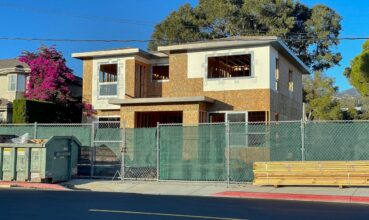
For capital looking to enter the Nashville market, Helton’s advice centers on optionality. His preferred approach is finding properties that serve immediate needs while preserving future flexibility, specifically, homes in neighborhoods where teardown-and-rebuild activity is already underway.
The play works whether the buyer intends to hold, sell, or eventually redevelop the site. In areas with strong underlying demand, a home that can be lived in now but sits on land with redevelopment potential five to seven years out offers built-in flexibility worth paying for.
The East Bank and the Rate Question
Two factors stand out in Helton’s forward-looking view. The first is the large-scale development underway on the east bank of the Cumberland River, which he expects to reshape East Nashville and surrounding communities over the next decade. It’s a long-horizon story, but one already influencing how buyers and developers think about that part of the city.
The second is interest rates, the variable that continues to govern buyer confidence more than almost anything else. Rates touched the high fives several months ago but have since moved higher, dampening momentum. As of May 2026, the spring market is showing its usual seasonal lift, but a more sustained recovery likely depends on rates moving in a direction that gives buyers enough certainty to act.
Political and economic news cycles are also playing a more direct role than many expect. Among Nashville’s affluent buyer base, stock market volatility and policy uncertainty have a measurable effect on confidence and willingness to transact.
For now, Nashville sits past the peak of the pandemic boom and past the sharpest part of the slowdown, with early signs of stabilization visible in faster contract times and returning competition among buyers. For those willing to engage with the market on its current terms, the opportunities are real. For those still operating on assumptions from 2022, the adjustment is ongoing.
About the Expert: Alex Helton is the Owner and Team Leader of Helton Real Estate Group at Compass, covering Brentwood, Franklin, Williamson County, and the west side of Davidson County in the Nashville, Tennessee market. He has been operating in the Nashville market for nearly two decades, leading a four-agent team focused on residential sales.
This article is based on information provided by the expert source cited above. It is intended for general informational purposes only and does not constitute legal, financial, or real estate advice. Readers should conduct their own research and consult qualified professionals before making any real estate or financial decisions.