National data suggests American families are pulling back from buying homes together. In the National Association of Realtors’ 2026 Home Buyers and Sellers Generational Trends report, 14% of buyers purchased a multigenerational home – one shared by adult children, adult siblings, parents, or grandparents – down from 17% a year earlier.
The reasons families buy those homes, though, have not weakened. Caring for aging parents now ranks as the leading motive at its highest level since NAR began tracking it, and some families are pursuing the same goals without sharing a roof. In Pensacola, Florida, Jennifer Keenan of the Keenan Team at Keller Williams Gulf Coast says family is buyers’ top motivation, and she is seeing families buy separate homes next door to one another.
Where the Decline Is Happening
The national drop is not uniform, and the split by age complicates the idea of a broad retreat. Older buyers account for the decline: the share of Gen X buyers purchasing a multigenerational home fell to 19% from 21%, and the share among older baby boomers fell to 11% from 13%. Younger buyers moved the other way. Among younger millennials, the share rose to 9% from 7%, and among older millennials it rose to 14% from 12%.
Older buyers appear to be moving toward family in other ways. NAR deputy chief economist Jessica Lautz notes in the report that many baby boomers now move to be closer to friends and family, to downsize, or to retire. That pattern suggests some older households are choosing proximity to relatives over sharing a home with them.
The motives that drive families together, meanwhile, remain strong. In NAR’s 2025 Profile of Home Buyers and Sellers, 41% of multigenerational buyers named caring for or supporting aging parents as their primary reason, the highest share since NAR began tracking it in 2015. The same report added two new reasons to its survey: 12% of multigenerational buyers cited grandchildren living in the home, and 6% cited lower childcare costs. Neither caregiving nor childcare requires a shared address, only a short distance.
Near, Not Under One Roof
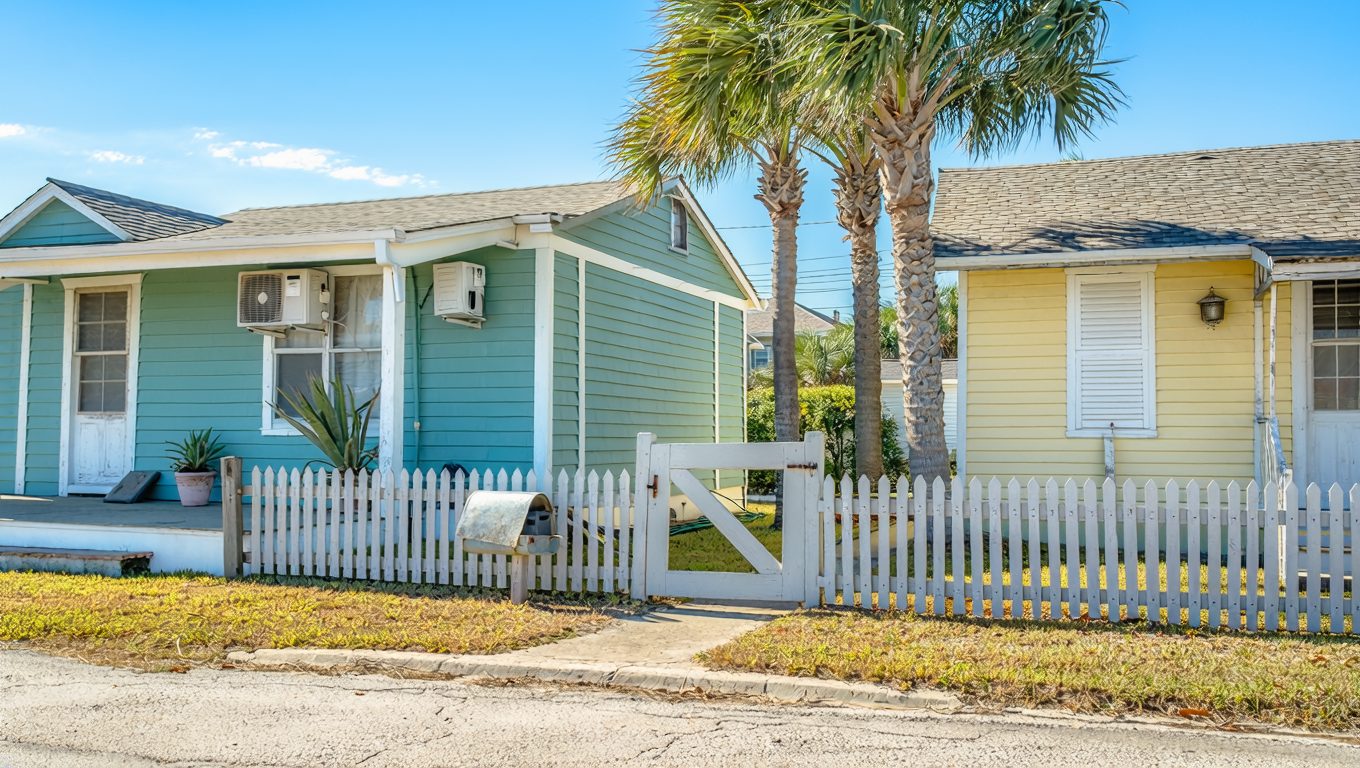
In Pensacola, Keenan sees families meeting those needs with separate houses on the same street. Among the buyers she works with, she says, the desire to live close to family now outweighs other motivations, and she sees it across multiple generations. In one recent purchase, parents bought the house next door for their grown children. Others go further. “We’re seeing a lot more intentional purchases,” Keenan says, describing families that assemble homes on a block “where entire families want to live and be near each other.”
Those purchases would not register in the national figures. NAR counts only homes that relatives share under one roof, so parents who buy the house next door for their children appear in the data as two ordinary purchases. NAR’s survey does not measure how often families buy near each other, and one agent’s market cannot establish a trend. But Keenan’s experience shows one way the decline in shared homes could coexist with families’ undiminished interest in living near each other.
Broader research supports the idea that proximity to family drives where people buy. In a 2024 NAR survey of its members, agents reported that 30% of clients who relocated chose their new area to be closer to family and friends, more than any other reason, including getting more home for the money.
The Pull on Sellers
The same priority shapes the other side of the transaction, where older owners trade price for proximity. Keenan recently closed a sale for a widowed seller. He listed the house at $335,000 and accepted $325,000 so he could move on and live closer to family. A couple of years ago, she says, the same house would have drawn multiple offers. In today’s slower market, the seller accepted a $10,000 reduction to reach the closing table and take his next step.
His decision mirrors the national pattern among older owners. The generations whose multigenerational buying is falling are the same ones Lautz describes as moving to be near family. Taken together, the national data and Keenan’s experience point to the same conclusion: the share of families buying one home together has slipped, but family has not lost its pull on where people buy and sell. In markets like Pensacola, it can show up as a short walk next door rather than a shared front door.
About the Expert: Jennifer Keenan leads the Keenan Team at Keller Williams Gulf Coast in Gulf Breeze, Florida, focusing on residential sales across the greater Pensacola area.
This article is based on information provided by the expert source cited above. It is intended for general informational purposes only and does not constitute legal, financial, or real estate advice. Readers should conduct their own research and consult qualified professionals before making any real estate or financial decisions.