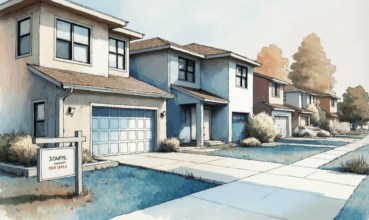
The Memphis real estate market stands out for its mix of accessible pricing and neighborhood diversity. High-end homes can sit just blocks from affordable starter properties, giving buyers at different income levels real choices. Yet despite this range, only 45% of Memphis residents own their homes, while 55% remain renters – a figure that speaks to persistent barriers to homeownership in the city.
Ricki Fitzpatrick, a realtor with Keller Williams Realty, has focused her career on closing that gap. With five years in real estate and a background in education, Fitzpatrick specializes in helping first-time buyers and investors who want to improve Memphis neighborhoods, not just turn a quick profit.
Bringing an Educator’s Approach to Real Estate
Fitzpatrick’s move from teaching to real estate was driven by practical needs. “I was a teacher at first, and it was something that was stressful. I couldn’t be a parent to my children,” she says. “I needed to make a change so that I can take care of my kids and take care of my bills at the same time.”
Her teaching experience has shaped her approach to real estate. “It’s more integrated than people would think,” Fitzpatrick says. Many clients arrive with outdated assumptions, particularly about down payments. “Most people still believe that you need 20% down in order to even purchase a home.”
Memphis: A Market Defined by Proximity and Price Range
Memphis is notable for its tightly packed mix of luxury and affordable housing. According to Fitzpatrick, “You may have million-dollar homes on one street, but maybe three streets over, you’ll have your $185,000 to $200,000 homes that are great for the first-time homebuyer.”
The rental market mirrors this diversity. In some areas, rentals under $1,000 are still available, but most three-bedroom, two-bathroom single-family homes now rent for between $1,700 and $2,200. Larger, corporate-owned apartment complexes often charge more, pushing families to consider single-family rentals instead.
“I’d rather pay $2,000 for a single-family home than an apartment,” Fitzpatrick says, pointing to a common preference among local renters that shapes demand.
Investor Influence and Market Shifts
Memphis attracts both local investors and out-of-state buyers, but Fitzpatrick prefers working with those rooted in the community. “Those are my favorite because they care about Memphis and Memphians,” she says, referring to local investors who focus on renovating and reselling homes rather than holding them as rentals.
Institutional investors from outside the area are less engaged with the community, Fitzpatrick notes. “It’s harder to work with the ones that are out of state because it’s almost like they don’t have the heart for the community,” she explains, adding that coordinating property tours and inspections is also more difficult with remote buyers.
Recent market trends show some investors looking to exit. “A lot of investors are looking to liquidate their investment, get the money out,” Fitzpatrick says. Those still active are increasingly targeting multifamily properties – such as duplexes, quadplexes, and small apartment buildings – for better returns in a changing market.
Patterns in Construction and Development
Most new construction in the Memphis region is happening in the surrounding suburbs, not within city limits. “It’s not in the Memphis area. It’s more in the county,” Fitzpatrick says. Suburbs like Arlington, Collierville, and Bartlett are seeing the bulk of new development, while the city focuses on renovating existing homes.
This split creates direct competition between new builds and resale properties. Builders are responding to slower market conditions with incentives. “There’s a builder that I just went to their homes over in Atoka. They’re offering a rate of 4.99%, which is anything under five right now in this area is pretty much unheard of,” Fitzpatrick reports.
A Slower Market, More Choices for Buyers
Memphis is experiencing the same cooling trend seen in many U.S. housing markets. “Showings are going down. Everybody in the market here is feeling that things are slowing down,” Fitzpatrick says. She views this as a healthy adjustment rather than a crisis, noting that buyers now have more time and options.
“Buyers have more choices, they have more time, so they’re taking their time to make their choices, which I think is great. I think that’s a sign of a healthy market,” she explains.
The slowdown has created hesitation among sellers, who are waiting for more decisive buyer activity before listing. Fitzpatrick describes this as “a chicken or the egg type thing,” with both sides waiting for the other to make the first move.
Outlook for 2025
Despite current sluggishness, Fitzpatrick expects the Memphis market to pick up in 2025. “I think people are tired of waiting on the sidelines right now. I think people are just accepting what’s going on in the market, and they’ll be more inclined to just go ahead and make the move.”
She compares the current market to past cycles when waiting led to missed opportunities. “It’s almost like a moving train. If you don’t hop on right now, you’re going to wish you hopped on before, like everybody wishes they bought in 2018, then everybody wished they bought in 2020.”
Fitzpatrick sees a key challenge in helping renters adopt a long-term ownership mindset. “A lot of people are used to renting, so they have this ‘I leave in a year or two’ lease mindset, and them hopping over to ‘oh, I’m owning this house and I’m investing in this home.’”
Memphis’s Overlooked Luxury Segment
Many outsiders are surprised by the size of Memphis’s luxury home market. “Memphis has a very big hidden luxury market,” Fitzpatrick says. “There are a lot of trees here in Memphis, so you’ll probably be driving and think, ‘Oh, it’s just a bunch of trees.’ But if you got off on the exit, you’d see huge homes.”
This range of housing options, from entry-level to luxury, creates opportunity for a broad spectrum of buyers. “You can find your place here in Memphis. Everybody can,” she says, emphasizing that the city’s inclusiveness is reflected in its housing stock. “We’re all the same people here. It’s just maybe your home’s 1,000 more square feet than mine.”
A Mission to Educate and Empower
Fitzpatrick’s long-term goal is to increase homeownership citywide by providing education and guidance. With major employers like FedEx, Pepsi, UPS, International Paper, and Ford operating in Memphis, she sees a large population with the income to buy homes but lacking information about how to start.
“We have so many different areas here where people make enough money to own a home, but they just don’t know where to start,” she says. To address this, Fitzpatrick is expanding her homebuying seminars from quarterly to more frequent sessions.
“My goal next year is to teach as many people as possible,” Fitzpatrick says. “It’s not just to get leads, it’s to really educate people to see that they’re closer than they think they are to their dream of owning a home in Memphis.”
This educational focus is central to her approach as an agent. “Education is the route to everything. Once they know they can do it, they can decide what they want to do or what they need to do,” she says.
With a combination of accessible pricing, neighborhood diversity, and dedicated professionals like Fitzpatrick prioritizing education, Memphis is positioned for sustainable growth as the market stabilizes and more residents are empowered to buy rather than rent.
This article was sourced from a live expert interview.
Every month we conduct hundreds of interviews with active market practitioners - thousands to date.
A surge in new construction is forcing existing home sellers to significantly adjust their pricing strategies in Central Florida, according to Michael Dorman of Elevate Real Estate Brokers, ...
What lies ahead for Miami’s luxury real estate market? Ignacio Villanueva, Senior Director of Luxury Sales at Compass, believes the landscape is at a distinct turning point that challenges...
Real estate CEO Daniel Kaufman argues that following institutional capital into hot markets is a recipe for underperformance. His firm’s early exits from now-oversupplied markets illustrat...
While Trump’s tariffs dominate headlines, ACME Real Estate’s Courtney Poulos says interest rates and pandemic-era pricing dynamics are the real story. The real estate industry lo...
The Los Angeles luxury real estate market is facing a growing crisis that has nothing to do with interest rates or property values – skyrocketing insurance costs in fire-prone areas ar...
A new wave of migration is reshaping the New York metropolitan real estate market as buyers priced out of Queens increasingly move east to Long Island. Lower home prices and steady demand ar...