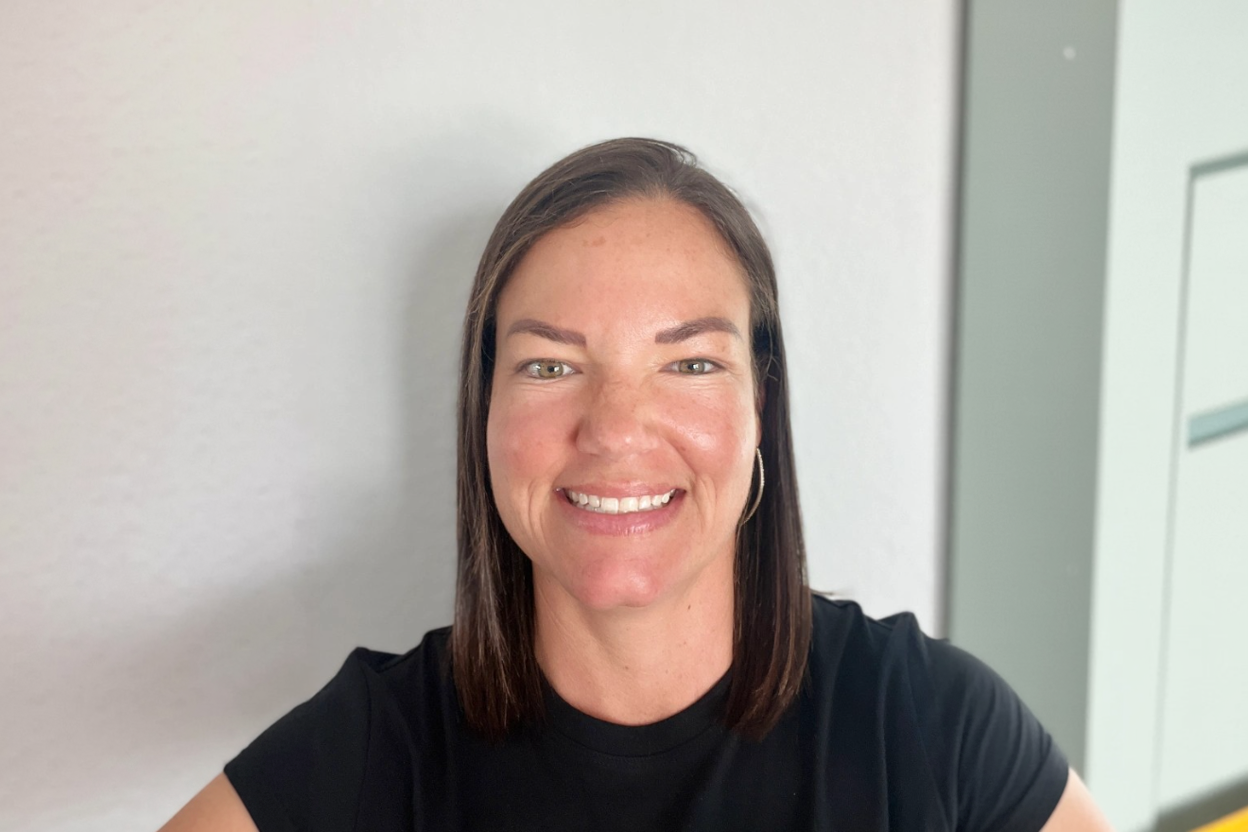
“If you can flip a house, you can be the developer in your town,” says Kristi Kandel, host and founder of the Local Real Estate Developers Podcast. With a career spanning from small-town Ohio to California’s competitive development landscape, Kandel is on a mission to remove the barriers that have traditionally surrounded real estate development.
Breaking Into Development: An Accidental Journey
Like many in the industry, Kandel’s entry into development wasn’t planned. “Most people who get into development either have family or friends in it, or accidentally fall into it. I was in the category of accidentally fell into development right out of college,” she explains.
After moving from Ohio to Florida, Kandel began working with a sign company installing exterior signage for CVS Pharmacy. This role unexpectedly opened her eyes to the broader world of development. “I started realizing these developers aren’t just building a CVS, they’re building the shopping center around it, and some were building the housing communities. I thought, ‘Is this how our communities were formed?'”
This curiosity led her to ask a developer what it would take to enter the field. To her surprise, the answer wasn’t “go back to school” but rather an offer to learn the business firsthand. Three weeks later, she joined their company—just as the 2009 real estate crash hit.
Despite the challenging timing, opportunity knocked when Family Dollar wanted to expand to California. Kandel volunteered to open their California office, and for the next four years, she developed 30 Family Dollar stores annually across the state.
“From San Francisco to San Diego, I was doing everything—getting the dirt under contract, going into cities, doing due diligence, finding architects and engineers, presenting to planning commissions and city councils, handling permitting, and even construction management,” Kandel recalls. “It was slightly crazy with 60 to 80 hour weeks, but it gave me a crash course in real estate development in arguably the toughest region in the country.”
This intensive experience helped her recognize patterns across different jurisdictions. “Even though everyone uses ten words for the same thing, and every city says it slightly differently, I realized there are similarities and a roadmap you can put together. It didn’t matter what city or market you’re in—if you know the right questions to ask and the right steps in the right order, you’ll set yourself up for success.”
By 2014, Kandel expanded beyond retail into shopping centers, industrial projects, and downtown mixed-use developments in Los Angeles. A year later, she launched her own development company, and in 2025, started Local Real Estate Developers, a podcast focused on normalizing development at the community level.
Busting Development Myths
One of Kandel’s primary goals is dispelling misconceptions about what it takes to become a developer. Chief among these is the belief that development requires massive capital.
“People think, ‘I need millions to get started,’ and you honestly don’t,” she emphasizes. “Most communities—over 16,000 in the US—have populations of less than 10,000 people. In your town, if you’re doing a project, you might need one to $300,000, and then you get a loan from a regional bank.”
Even developers working on massive projects in major cities aren’t bringing all the capital themselves. “They’re actually sourcing the money from other people,” Kandel points out. “As a developer, you’re building the team. You’re the person who puts together the concept, builds the team, brings in the right partners—and that includes the money partners, the equity, the debt, securing tax credits and grants.”
This team-building approach contrasts with the “lone wolf” mentality common in other real estate investing strategies. “I think we’re so used to lone wolfing when we think of real estate and investing—’I’m going to do it myself, I’m going to flip this’—but you get to build a team with development.”
Another myth Kandel works to dispel is that local governments are adversarial to developers. “Cities are not your enemy. For the most part, in our smaller and medium-sized communities, your city managers, planning commissioners and city council want you to be successful. Before you buy that building, they want you to come in and talk about your project so they can help make sure what you want to do is possible.”
Why America Needs Local Developers
The 2008 financial crisis created a development vacuum in smaller communities across America. “When the market crashed, developers and lenders all focused on the primary and some of the secondary markets, and it really left our tertiary or small towns behind,” Kandel explains.
The result? “Our buildings have aged a little bit more. Infrastructure has aged a little bit more.” This creates an opportunity for local developers to step in and revitalize their communities.
Kandel sees parallels with the “buying businesses” movement championed by entrepreneur Cody Sanchez. “We need to get back to rolling up our sleeves and being the ones who are doing the actual work. If we are the ones redeveloping our buildings, running the businesses within them, and shopping at local stores, we’re creating a thriving community.”
The economic benefits stay local too. “We’re generating tax dollars that stay within the community, as opposed to outside developers coming in, taking the profits and leaving. Then the city can reinvest into roads and infrastructure, going back to the self-sustaining communities we used to have when our towns were first formed.”
The impact goes beyond economics. “When locals are the ones doing projects, we want to support local. We want to go there, and that community impact creates a different vibe. It doesn’t matter if it’s politically red or blue, we all chose to live here, we have pride in our community, and we want our community to thrive.”
Pathways Into Development
Through her podcast, Kandel has discovered several common pathways people take into development:
1. Accidental developers: “There’s a handful of people who accidentally got into development because they were flipping a house and then realized what they wanted to do either wasn’t going to get the return or had some other issue. They realized, ‘Wait, if I demolish this and buy the lot next door, instead of flipping the single-family house, the city will allow me to build a four-plex.'”
2. Commercial brokers: “You’ve got commercial brokers who are already working with tenants and property owners, already know the city inside and out because they’re giving deals to developers. They’re thinking, ‘Wait, I want an equity stake in this one. Why not me?’ They’re right there, doing all the things—they just need to finish putting the rest of the development pieces together.”
3. Short-term rental hosts and flippers: “These are businesses we’ve created, and it’s great we’re creating cash flow, but this isn’t the end game. The minute I turn this off, I don’t have any more income.” These entrepreneurs often transition to creating spaces their communities need, like “saunas, cool tap rooms, outdoor spaces where we’re all hanging out.”
The ripple effect can be powerful. Kandel describes holding emerging developer workshops in a Michigan community: “We thought we’d get 10 or 15 people—50 plus people showed up to each one. It really showed who in the community was interested and curious. They’re like, ‘Well, we saw Lynn and Jason doing that, so we want to do this.’ It brought the city together and the locals together.”
The Financial Case for Development
While development projects take longer than flips—12 to 24 months versus 30 to 60 days—the financial returns can be substantially higher.
“Generally, development projects are going to have a much larger return,” Kandel notes. “You can either sell and take that large chunk of capital gains and roll it into your next project, or you could hold and be the long-term landlord. In smaller communities, you probably are doing a longer-term hold to truly see the value and benefit of what you created.”
She illustrates with an example: “We had a five-acre affordable housing project, 100 units out in Nevada. We were one of the GPs on the deal. That deal was going to take approximately 24 to 36 months, and our portion of one of the fees would have been around a million dollars for my team.”
Beyond the development fee, her team would have had an ownership stake throughout the 10-year operations period. “We would have had a cash flow portion each year for the 10 years. And then at the end of year 10, we would have had around 36% equity in the deal. So when we sold it, we got another chunk of money.”
The caveat? “You’re not making money until you hit that first payday of the 24 to 36 months when you have it built, stabilized and fully leased up. That’s why you want a pipeline of projects. You have to be good with managing your money to get to the paydays because it’s lumpy, but it’s very worth it.”
Current Market Opportunities
As of mid-2025, Kandel sees several promising development opportunities:
Modular construction: “We’re looking at modular, specifically in southwest Florida along the coast where hurricanes hit. I live in Fort Myers Beach, it wiped out my community. We’re in a 15-year rebuild process, three years into it. Modular construction allows developers to do the structural work and underground utilities, plop in the mods which are set within four hours, pop the roof up, finish the flooring, landscape and decks, and you’re done. Those things are saving us about half the cost and about two-thirds of the time.”
Service business infrastructure: With AI and technology changing the business landscape, Kandel is focusing on businesses that will remain essential. “I really get excited about our service businesses. If we have our electricians, pest control, HVAC—they’re physically going to still be needed, and as they grow, they’re going to need locations.”
Flex warehouse space: “I’m a big fan right now of flex warehouse space. If I want to be the property owner leasing spaces to those service-based businesses in a market, I’m just ground leasing, collecting the monthly rent check, and working with businesses that, if run properly, should be around for a long time.”
Removing the Barriers
Kandel’s podcast, The Local Real Estate Developers, aims to share stories from developers across the country to make the process more accessible. “We started the podcast to help share the stories of locals across the country, of projects big and small, so people can get an idea and get familiarized with ‘Oh, that’s what development is. Oh, this person’s doing it. Oh, that’s the strategy they use.'”
The podcast complements her earlier show, The Real Estate Pessimist, which focuses on the realities of real estate investing. “We really wanted to pull back the curtain. Yes, we can tell our success stories, but there were things that gave us gray hair and wrinkles along the way.”
For those interested in development, the podcast offers practical resources. “We’ve got a developer vault where everyone who’s on shares a different resource and tool. We are not trying to keep people out. We literally want to help remove the gatekeeping and give people the confidence that they can do it.”
By democratizing access to development knowledge and showcasing success stories from communities of all sizes, Kandel is working to create a new generation of local developers who can revitalize America’s towns and cities one project at a time.