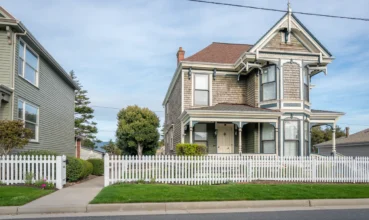
The New Jersey coastal real estate market illustrates how local conditions can differ sharply from widely reported data. In Spring Lake, an affluent seaside community, experienced agents are seeing buyer and seller behavior that contradicts what national platforms and zip code data suggest about coastal property values.
A Family Brokerage Competes Through Local Knowledge
Dylan Smith entered real estate after three years in New York City television production, joining his father’s independent brokerage, Chris Smith Realty, which has served Spring Lake since 2005.
“My dad had always wanted me to get my real estate license and start working with him, even if it wasn’t on a full-time basis,” Smith says. He saw value in keeping the business in the family.
This local, relationship-driven approach has helped the brokerage compete against larger corporate firms. Marking its 20th anniversary this year, Chris Smith Realty has relied on personalized service and deep local expertise to win clients in a competitive Jersey Shore market.
Smith’s background in television production also gave him an edge in digital marketing. “When I started about ten years ago, there wasn’t a whole lot of virtual tours and digital presence at that time,” he explains. By the time COVID-19 made virtual showings standard, Smith was already using video and online marketing to attract buyers.
The Problem with Online Data
One of the biggest challenges along the Jersey Shore is the inaccuracy of data on major real estate platforms. Smith notes that some platforms show Spring Lake home prices dropping nearly 40% year-over-year—a figure that doesn’t align with what he’s seeing.
“I don’t know where Redfin is getting its data because it’s definitely not down in Spring Lake. Spring Lake prices are going up dramatically right now,” Smith says. The problem stems from how these sites aggregate data by ZIP code, grouping towns with distinct markets.
“Spring Lake Heights is a completely different municipality from Spring Lake, but they have the same zip code,” Smith explains. “A lot of these online platforms accumulate and pull those towns together even though they’re not the same town because it’s all based on zip code.”
This issue is common along the Jersey coast, where many small towns share zip codes but have different price points and market activity. For investors and buyers relying on online data, this creates blind spots and can lead to poor decision-making.
Changes in Buyer and Seller Behavior
The Spring Lake market has shifted away from the frantic buying of the past few years. Today’s buyers are more patient and selective, no longer feeling the urgency that drove bidding wars during the pandemic.
“Buyers just don’t seem to feel that sense of urgency as they did a few years ago,” Smith notes. “They have a little bit more patience; they don’t feel as much pressure. The market has stabilized itself, giving buyers the ability to be a little bit more selective.”
This new environment is more balanced. Buyers are willing to wait for homes that truly fit their needs, rather than rushing into a purchase. The market no longer favors desperate overbidding, and negotiations are more measured.
Seller behavior has adjusted in response. “You’re seeing a lot more price reductions happening,” Smith observes. Some sellers still test the market with high asking prices, but after a few weeks without offers, they’re forced to lower their expectations.
Luxury Investment Opportunities
Despite broader economic uncertainty, Spring Lake continues to attract interest from builders and developers. The town’s reputation and limited inventory create strong incentives for investors.
“We’re seeing a lot of builders come into town that are buying up these old properties,” Smith explains. “A knockdown or a piece of land is valued at anywhere from two to three and a half million, depending on where you are in town.”
Developers can purchase older homes for under $3 million, demolish them, and build new properties priced at $6-7 million. This margin makes Spring Lake attractive to those who can navigate the town’s regulations and construction challenges.
However, buying older homes carries risks, particularly regarding structural integrity. “Some townhomes were built in the late 1800s, early 1900s. The risk would really lie in the structural aspects of these homes,” Smith cautions. Investors must conduct thorough inspections and account for potential renovation costs.
Why Deals Fall Apart: Inspections, Not Financing
In Spring Lake, most failed transactions are due to inspection issues, not financing or insurance. Smith explains that buyers often uncover problems during inspections that the seller is unwilling to address.
“It’s usually based around inspections,” Smith says. “They find things in the house that are alarming to a buyer, and maybe the seller is not willing to negotiate on it.”
Financing and appraisal challenges are rare, mainly because many buyers pay cash. “A lot of the buyers that I’ve worked with recently are not getting mortgages,” Smith notes. This reduces the risk of deals collapsing over loan approvals or low appraisals.
Flood insurance, often a concern in coastal areas, has not been a significant obstacle for most buyers. Smith finds that those committed to waterfront living accept the cost as part of the lifestyle. “Being on the water is part of the lifestyle, so they’re used to flood insurance,” he says.
Relationship-Driven Service in a Complex Market
Smith emphasizes the importance of tailoring his approach to each client, focusing on understanding their specific goals rather than relying on generic strategies. This is especially important in high-end markets, where buyers and sellers have unique needs and expectations.
“I do a lot of customization when it comes to working with my clients and being able to understand what their goals are,” Smith explains. He tailors his methods to each situation, considering timing, property type, and client priorities.
His earlier career in television taught skills that transfer well to real estate—especially confidence and adaptability. “I got to meet a lot of fascinating and successful people at a very young age, which forced me into a position of conducting myself very confidently,” Smith says.
The demanding nature of television work also prepared him for the self-driven world of real estate. “Real estate is one of those industries where there’s no requirement for you to be in an office working every day. If you don’t put the work in, you’re not going to get a lot out of it.”
Why Local Knowledge Matters Now
Looking ahead, Smith expects the Spring Lake market to remain stable, with balanced conditions for both buyers and sellers. “I think we’re moving into a more balanced and healthy market, where buyers are very patient, and sellers should be more strategic in their pricing,” he says.
Interest rates and broader economic conditions could influence the market, but Smith avoids making bold predictions. “I’m not a fortune-teller, so that’s what I see as far as the way the market is moving now, going into the near future.”
For agents and investors, the lesson is clear: reliance on aggregated online data can be misleading, especially in areas where ZIP codes span multiple towns with different market dynamics. In places like Spring Lake, only those with deep local knowledge can accurately assess value and spot opportunities.
The move toward a more balanced market opens doors for both buyers and sellers who work with professionals attuned to local nuances. In high-end coastal areas, expertise in local conditions, rather than national trends or broad data sets, will determine who succeeds as the market continues to evolve.