
The real estate industry often assumes that buyers can walk through vacant properties and imagine their future lives there. Fiorenza Bilak, Founder and CEO of Stage The Space, LLC, argues th...

Jacksonville Agent Examines 40% Price Jump and 15% Correction in Local Housing Market

Written by:
Date:
27 Oct 2025
Share via Facebook

Share via Linkedin

Share via X

Copy to clipboard

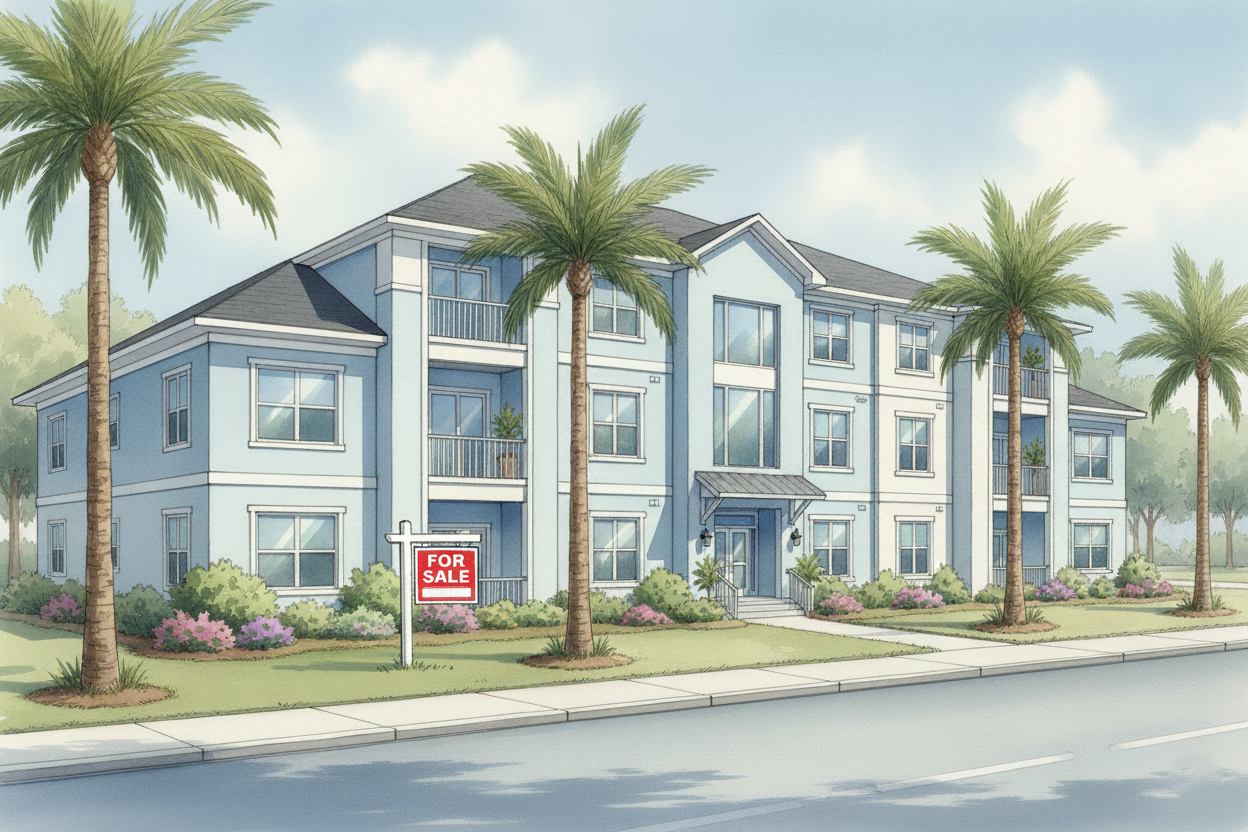
The residential market in Northeast Florida saw a striking 40% price surge during the COVID period, followed by a notable correction that pulled values back by 10% to 15% across the city, according to Tobin Bossola of Coldwell Banker Vanguard Realty. In a recent interview, Bossola discussed how this price volatility is reshaping Jacksonville’s real estate landscape.
Market Overview
“We saw about a 40% increase in the two and a half years of COVID. Pretty dramatic increase,” said Bossola, who has nearly 20 years of experience in Jacksonville real estate and has closed over 400 listings in the past seven years. The subsequent correction has varied by location, with some areas experiencing steeper declines depending on demand.
Jacksonville’s price trajectory reflects broader affordability challenges that have altered buyer behavior and seller expectations. Current pricing is primarily driven by interest rate impacts rather than underlying value.
Key Factors Driving Price Changes
According to Bossola, interest rates are the main factor behind current pricing pressures. He uses a straightforward example in seller consultations: homeowners with existing mortgages around $2,000 monthly now expect buyers to pay $4,000 monthly for similar properties due to higher financing costs.
“It’s all interest rates. It’s all interest rate driven,” Bossola said. “I say, ‘Okay, your mortgage is $2,000 a month?’ Most of the time I’m pretty right, and they go ‘Yep.’ And I go, ‘Okay, so you want someone to pay $4,000 a month for your exact same home? Would you pay $4,000 a month for your home today?’ And then they go, ‘No, absolutely not.’”
The correction has created a split market where high-demand locations can still achieve sales despite increased inventory, while less desirable areas struggle. Properties in areas with limited new construction or appeal face particular challenges as buyers have more choices.
Neighborhood Spotlight
Bossola identified historic areas and the condo market as seeing the most significant slowdowns when market conditions changed about 18 months ago. The historic segment was especially surprising due to the speed and severity of the decline in interest.
“The thing that caught me off guard was that the Historic Areas in Jacksonville, and the condo market saw the most dramatic slowdown when things started slowing down,” he said. The condo market has been particularly hard hit, with values dropping 30% or more over the past two years.
A recent condo closing demonstrates the severity of price corrections in this segment. A property that might have been worth $275,000 two years ago was listed at $220,000 and ultimately sold for $184,000—representing a nearly 33% decline from peak values. Increased HOA fees due to higher insurance costs and 7% interest rates pushed monthly ownership costs to $2,500, while comparable rental apartments offered better amenities for $1,900 monthly.
Advice for Sellers and Buyers
For those entering the Jacksonville market, Bossola emphasizes the importance of realistic pricing and considering alternatives. Sellers unable to achieve their desired price should consider renting, as Jacksonville’s rental market generally remains strong enough to cover mortgage payments for properties purchased seven or more years ago.
The rental conversion strategy has become more common, with Bossola converting four failed sales to rentals this year—more than in his entire prior career. “I’ve had four this year where we tried selling, didn’t work, we decided to pull it and rent it. So that is a very strong dynamic within this market.”
Buyers should focus on high-demand locations with strong fundamentals, as these areas maintain better pricing stability even in challenging conditions. The luxury segment continues to perform relatively well due to cash buyers who are less affected by interest rate changes.
Future Outlook
Looking ahead, Bossola expects pricing will remain under pressure until interest rates decline significantly. The main constraint is affordability, with current financing costs making homeownership prohibitive for many traditional move-up buyers, who make up a large portion of Jacksonville’s market.
“The middle range is stuck, and the middle range is the bulk of our market. So we’re locked up. You’re getting some activity on the margins, on the high end and on the low end, but the middle buyer is really challenged,” he said.
The correction may continue as sellers adjust their expectations to match buyer capacity in the current interest rate environment. Properties that don’t meet high demand criteria will likely face continued pricing pressure until financing costs improve or seller expectations align with market conditions.
Similar Articles
Explore similar articles from Our Team of Experts.