
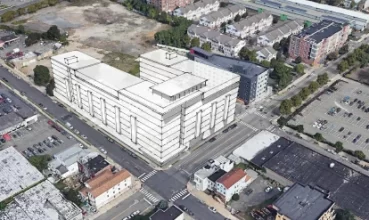
New Jersey-based TAY Investments has closed on its largest acquisition to date, securing a fully approved development site at 212-230 Culver Avenue in Jersey City’s West Side neighborh...

Industrial Outdoor Storage Faces Reality Check as Market Dynamics Shift

Written by:
Date:
05 Jan 2026
Share via Facebook

Share via Linkedin

Share via X

Copy to clipboard


The industrial outdoor storage (IOS) sector has attracted significant institutional capital over the past 18 months, with $1.7 billion raised and several high-profile acquisitions. Despite these headline numbers, market participants are encountering challenges that complicate the sector’s narrative of steady growth and resilience.
Daniel Levin, Senior Associate at CorePoint Real Estate and a specialist in sourcing industrial deals across Florida, provides a detailed view of how the IOS surge is unfolding on the ground. His firm works with a range of acquisition groups, from private family offices to major institutional investors, offering insight into the shifting strategies and expectations in this asset class.
The Path to Industrial Specialization
Levin’s career in industrial real estate began in a community where real estate investment was a common path to financial independence. He was drawn to the sector by its reputation for stable net leases and steady cash flow.
“You want net leases. You want recession-proof assets,” Levin says. “Industrial will have all that – those net leases, that steady cash flow, that opportunity to become financially independent.”
However, Levin notes that the day-to-day reality of IOS investment is more complex than its reputation suggests. The promise of recession resistance, in particular, is being tested as the sector matures.
Questioning Long-Term Resilience
IOS rents have climbed 123% since 2020, but Levin questions whether the sector is truly insulated from economic downturns. “If you’re going to ask me personally how I feel about IOS, I don’t think it’s recession-proof at all,” he says. “Things like small bay – there’s always going to be a need for those smaller units for local businesses. Those are recession-proof investments.”
Patterns in other industrial segments inform Levin’s skepticism. For example, in Fort Pierce, large-format industrial buildings have become challenging to lease or sell, raising concerns that IOS could face a similar oversupply if not carefully managed.
Zoning: The Hidden Deal Killer
A major operational challenge in the IOS market is zoning. Many deals fall apart during due diligence when buyers discover that intended uses are not permitted. “I can’t tell you how many properties I’ve had under contract this year fall apart because they thought they could use it for IOS, or they thought they’d be able to get it rezoned for IOS, and that just didn’t happen,” Levin says.
These zoning complications often lead to extended due diligence periods, failed deals, and reduced transaction velocity. Properties with ambiguous or outdated zoning classifications require extensive negotiation with local officials to determine permitted uses, sometimes derailing transactions worth tens of millions of dollars.
Institutional vs. Private Capital Behavior
Distinct patterns are emerging between institutional and private investors. Institutional buyers are showing greater risk tolerance and a willingness to pay premiums, while private capital is increasingly selective.
“Institutional guys tend to get more aggressive in terms of purchase price,” Levin observes. “We’ll see them overpay for a better product compared to the smaller, maybe family office, or smaller private office. Those guys are more basis driven, more cap rate focused.”
This divergence is creating pronounced geographic pricing differences. In Miami submarkets like Sweetwater, institutional buyers are offering over $300 per square foot—levels that were unheard of just two years ago. In contrast, private offices are pursuing opportunities in secondary markets at prices closer to $150 per square foot, avoiding the aggressive bidding in core locations.
Market Correction Signals
There are clear signs that the IOS market is beginning to recalibrate. Levin notes that both institutional and private investors are rethinking offers they made just a few months earlier. In Atlanta-area submarkets such as Norcross and Peachtree Corners, properties that recently sold for over $150 per square foot are now struggling to attract offers above $130 per square foot.
“Those who purchased buildings for $150-160 a foot four months ago have an instant loss of 20% on the building in terms of what they can sell it for today,” Levin reports.
This shift suggests that the market is moving from an early-stage boom to a more mature phase, with buyers applying stricter underwriting standards and sellers facing increased pressure to adjust expectations.
Vacancy Challenges Emerge
Contrary to assumptions about perpetual demand, IOS properties are experiencing longer lease-up periods, even in high-demand markets. Levin points to a recent $52 million transaction for 17 acres near Miami International Airport: “It’s been vacant for a year, and it’s a one-of-one site—a gorgeous paved IOS outdoor site right off the runway, and they can’t lease it up.”
Extended vacancies pose a serious risk to investors, as many acquisition models do not account for prolonged periods without cash flow, especially on high-value sites.
Sophistication Gaps Among New Entrants
The influx of institutional capital has brought many new entrants to the IOS sector, but Levin notes a clear gap in operational knowledge. Experienced IOS investors focus on critical details, including slab thickness, paving quality, fencing, and lighting. In contrast, less experienced buyers frequently ask fundamental questions about tenant types or request easily accessible market analysis, indicating a lack of familiarity with the sector’s complexities.
Geographic Risk and Opportunity
Looking ahead, Levin identifies the most significant risks—and potential rewards—in markets that institutional investors do not yet dominate. “Markets that aren’t heavily institutionalized carry the biggest risk, but also carry the biggest reward,” he says, citing Daytona Beach and Fort Myers as examples.
He cautions against over-specialization, noting that some investors miss profitable deals by focusing too narrowly on a single asset class. “The biggest thing that gets overlooked is guys getting too niche,” Levin explains. “The smaller groups we’re seeing miss out on deals that would be right up their alley just because they’re only doing small bay or only doing IOS.”
The Relationship Factor
Despite advances in technology and data analysis, Levin emphasizes that personal relationships remain central to success in IOS and industrial real estate more broadly. “It’s all about relationships and staying in touch. Having good relationships with people like brokers, guys who work in leasing, guys who work in financing—relationships are key.”
This focus on relationships is becoming even more critical as market conditions become more competitive and operational hurdles increase.
Market Outlook
The IOS sector is moving from a period of rapid growth and institutional enthusiasm to a phase characterized by more measured evaluation and operational scrutiny. While capital continues to flow into the sector, investors are encountering challenges related to zoning, vacancies, and variable market dynamics that complicate the investment thesis.
Levin’s experience suggests that long-term success in IOS will depend on investors’ ability to address these operational challenges and maintain realistic expectations regarding returns and risk. The central question, as he puts it, is whether IOS will sustain its current momentum or follow other industrial segments that saw rapid expansion followed by a market correction.
For now, the sector’s trajectory will be shaped by investors’ ability to adapt to a more complex, competitive, and nuanced landscape—one where headline figures tell only part of the story.
Similar Articles
Explore similar articles from Our Team of Experts.


Perspectives, Real Estate Investment, Industry News, Residential Real Estate, Market Analysis & Policy
The Midwest multifamily market has undergone a dramatic transformation over three decades, evolving from a fragmented, locally-owned market to one that now attracts sophisticated institution...