For a region where sellers have historically held the advantage, the Asheville, North Carolina metro area is experiencing something unfamiliar: a buyer’s market. Inventory in Buncombe and Henderson County is now more than 60 percent higher than it was a year ago, according to Debbie Hrncir, an agent with Howard Hanna who has worked the market for nearly a decade. The surge reflects not a construction boom but a collision of pent-up seller activity and shrinking buyer demand – and property condition, not just price, is determining which homes move.
Condition Is the Dividing Line
Sellers who delayed listing after Hurricane Helene disrupted the area have now entered the market, while higher interest rates have pushed many buyers – particularly those dependent on financing – to the sidelines. The combination has produced a market that sorts sharply by condition.
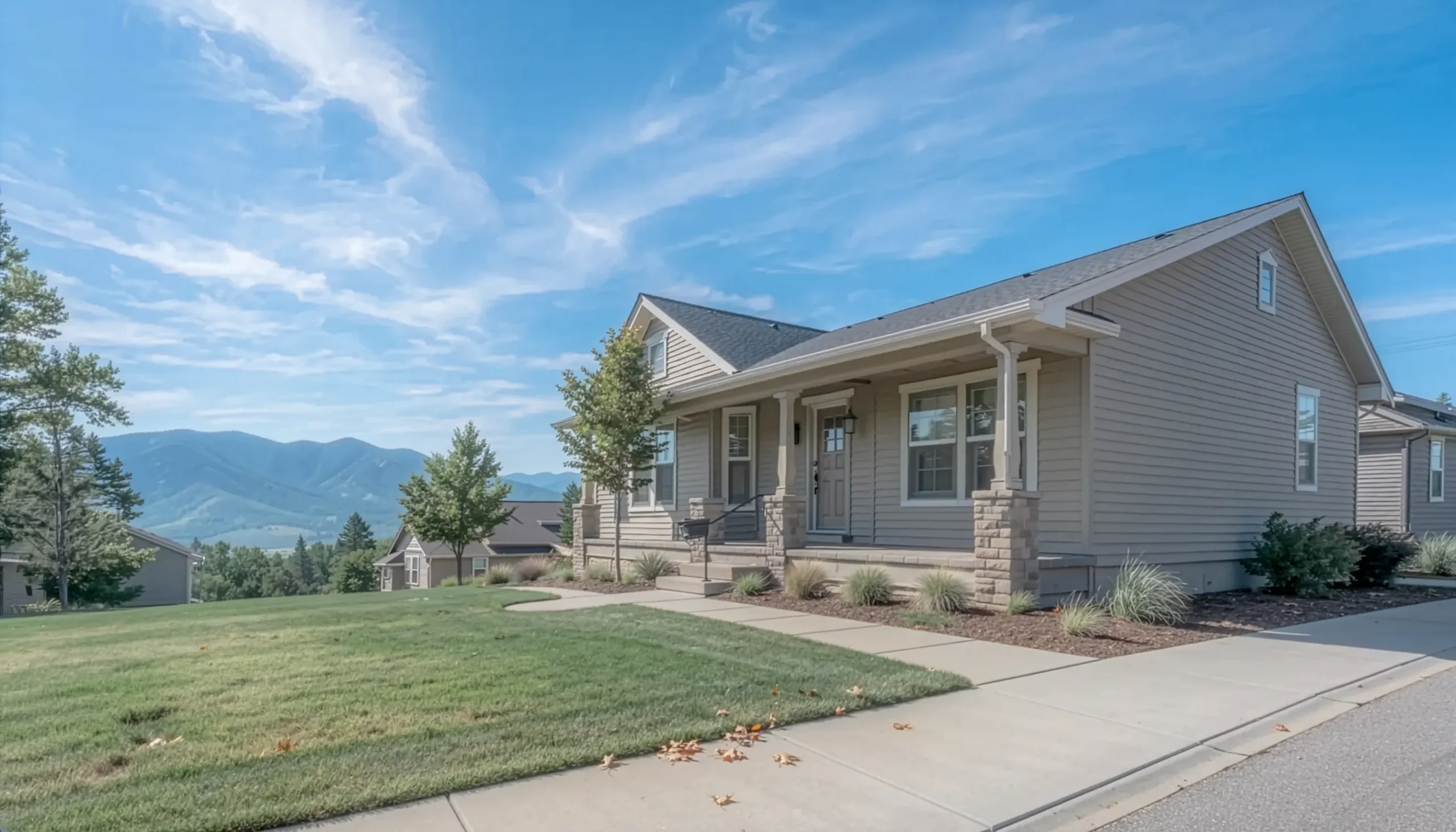
Homes built in 2020 or later and older homes that have been updated and well maintained are selling. Homes that haven’t been updated are sitting, even when sellers lower prices. Debbie says buyers with more choices have become more selective, and they are not interested in taking on renovation work. “Even with sellers that are willing to lower their prices on those homes, buyers seem like they don’t care,” she says. “They don’t want to have to put in a bunch of work to update a home.”
Her advice to sellers is direct: regardless of a home’s age, it needs to show well before it hits the market. “Don’t feel like you’re just going to put it on the market and let the buyers do whatever they want with it,” she says.
New Construction Is Competing Hard
Builders are responding to the slower market with aggressive incentives – interest rate buydowns, closing cost credits, and free upgrades. That strategy is drawing buyers, but it creates a problem for resale listings that cannot match those offers. “It makes it hard sometimes for resale to compete with the new construction because it’s the builders that are offering a lot of these incentives,” Debbie says.
Much of the new construction she works with focuses on one-level living, a design choice that draws buyers across age groups but particularly appeals to buyers over 50. That niche aligns with the market’s broader buyer profile: retirees, second-home purchasers from Florida seeking milder summers, and medical professionals relocating to work at one of the area’s three major hospitals. Sellers listing older, multi-story homes against this inventory face both a condition gap and a format disadvantage.
The Million-Dollar Line Changes the Transaction
One of the clearest patterns in the current market is the split around a million dollars. Homes in the $700,000 to $800,000 range – where buyers typically need financing – are among those sitting longest. Above a million, the dynamic reverses. Debbie says the majority of buyers purchasing homes over a million dollars in this market are paying cash. “They’re not going to finance a million dollars, especially at these interest rates,” she says.
The most active segment, according to Debbie, falls between $1 million and $1.5 million, where cash buyers – often second-home purchasers or retirees – are driving sales. The interest rate environment that constrains the lower end of the market has far less effect on this group. For sellers pricing a home just below a million, the implication is counterintuitive: a home at $850,000 may face more resistance than one at $1.2 million, because the buyer pools are fundamentally different.
Post-Storm Perception Still Lingers
Hurricane Helene created flooding along the French Broad River that affected specific pockets of the region. But media coverage left many prospective buyers with the impression that the entire western North Carolina market had been devastated. Debbie says she was fielding calls from clients more than a year later asking whether roads were passable. “People just assumed this area was devastated, which parts were,” she says. “But it was just certain areas.”
The practical aftermath extends beyond perception. Property disclosure forms now include more detailed questions about flood history and FEMA assistance. County stormwater approvals for new construction have tightened, with drainage systems being built to standards Debbie describes as “almost overkill.” Buyers are more cautious about proximity to flood zones – a shift in due diligence that has become a routine part of the transaction process.
Debbie emphasizes that the flooding was concentrated near the river and that much of the broader area was untouched. She says the market suffered for a period because of the assumption that the entire region was affected, but that the area has largely recovered.
Where the Market Goes From Here
The biggest variable for the area’s near-term trajectory is interest rates. First-time buyers have largely disappeared from the market, and movement below a million dollars remains constrained by financing costs. Debbie expects that when rates decline, activity in those lower price ranges will pick up.
In the meantime, the second-home and retiree segments continue to provide a floor. The area’s draw – year-round outdoor activities, mild climate, four distinct seasons, and a tourism economy anchored by the Biltmore Estate, hundreds of hiking trails, and a concentration of microbreweries and vineyards – keeps attracting buyers who are less sensitive to interest rates because they are paying cash.
For the luxury end of the market, the Cliffs at Walnut Cove – a gated community with a Jack Nicklaus signature golf course – continues to anchor the area’s high-end appeal. And for investors, Debbie points to the short-term rental market as the strongest opportunity, given the region’s steady tourism traffic. Properties in good condition, in locations convenient to area attractions, are the ones that perform.
The market’s near-term direction depends on whether rates come down enough to bring financed buyers back. Until they do, cash buyers above a million dollars will continue to set the pace, and sellers below that line will need to compete on condition – not just price – to find a buyer.
About the Expert: Debbie Hrncir is an agent with Howard Hanna covering the Asheville, North Carolina metro area, including Buncombe and Henderson counties, and has worked the market for nearly a decade.
This article is based on information provided by the expert source cited above. It is intended for general informational purposes only and does not constitute legal, financial, or real estate advice. Readers should conduct their own research and consult qualified professionals before making any real estate or financial decisions.