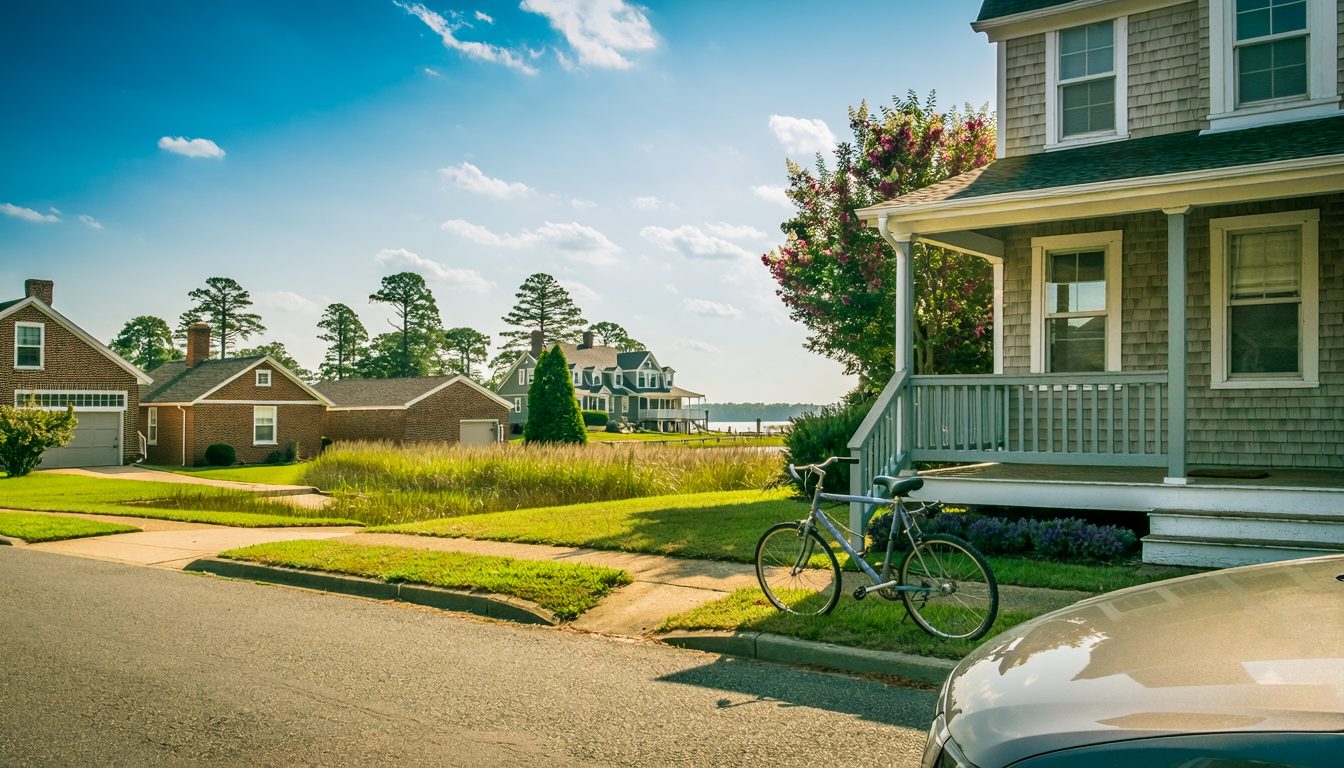
A sudden rise in mortgage rates has not landed evenly across Hampton Roads, Virginia. Over three weeks to a month, rates climbed almost a full percentage point, according to Bubba Hutchison, who leads Hutchison & Co. at RE/MAX Connect in Yorktown. Freddie Mac’s weekly survey tracked the same climb: the average 30-year fixed rate rose from 6.76 percent in early September to 7.40 percent on October 8.
The increase has frozen activity in some price ranges while barely registering in others. Homes under $400,000 keep moving, Hutchison says, and homes under $300,000 rarely last long. Above $1 million, cash buyers carry the market. “I’ve done three sales this year over a million that were all cash, and so the interest rates don’t affect those guys,” he says. The slowdown he describes falls outside those two bands.
Buyers Adjust, but Not Overnight
That uneven freeze follows a cycle Hutchison has watched repeat since rates began rising from pandemic-era lows. “Every time they go up, everyone acts like it’s the end of the world,” he says. Buyers eventually accept the new rate as normal and go back to buying, but the adjustment takes time. This increase arrived fast enough to strain household budgets, producing a freeze in certain price ranges that he had not seen in the last few years.
The region also has more inventory than it has had in a while, Hutchison says, and homes are taking longer to sell. That supply was already building before the spike. In June, the region’s multiple listing service counted 5,752 active listings, the most since June 2020, while pending sales still ran 14.7 percent ahead of the year before.
Hutchison expects the freeze to ease over the coming months as buyers adjust, and rates have already given back some ground. Over the past few days, he says, they slipped from about 7.5 percent to closer to 7.25. His concern is a renewed climb: “You get over that seven-and-a-half point and you get up to eight, you’re naturally going to see sales slow down.”
Military Turnover Balances Market
The region’s military presence gives it a cushion during shocks like this one. Several bases keep families arriving and departing on permanent change of station orders throughout the year, so new buyers and new sellers enter the market in roughly equal measure. “That does insulate us a little bit from huge market swings that you see in other parts of the country,” Hutchison says.
That turnover also shapes how deals come together. Many military buyers use VA loans, which require no down payment, and some arrive with thinner cash reserves than a conventional buyer might hold. As a result, Hutchison says, many of them ask sellers for help with closing costs.
During the pandemic, sellers rarely granted that request unless the buyer offered more than the asking price. Now, with prices and rates both higher, many offers include closing cost requests again, much as they did when Hutchison entered the business seven years ago. His team prepares sellers to expect them. “That’s a good thing for the military,” he says. “It’s a good thing for any buyer right now.”
Roofs and Flood Zones
Beyond closing costs, insurance now shapes deals in two specific ways. Standard homeowners coverage rarely surprises buyers, Hutchison says, because lenders build conservative estimates into the monthly payment. Flood coverage is different. Much of the region borders the Chesapeake Bay or the rivers that feed it, and lenders require flood policies on homes in designated zones. When a buyer targets one of those homes, Hutchison’s team collects multiple flood insurance estimates before writing an offer.
Roof age has caused more disruption. Hutchison calls this past year “the year of the roof,” as insurers have grown much tighter about which roofs they will cover, especially those 20 to 25 years old. In about four purchases this year, his buyers knew going in that the roof was older. During the inspection contingency, they confirmed they were having trouble getting insurance and took that problem to the seller. In each case, the seller paid for a new roof or had it replaced before closing. The pressure runs the other way when Hutchison represents sellers: one client who didn’t know the roof’s age ended up giving the buyer a large credit to replace it.
State law now sets some limits on insurers. Bills Virginia enacted this year bar them from refusing or dropping an owner-occupied policy solely because an asphalt shingle roof is under 15 years old. For older roofs, insurers must allow an inspection before requiring replacement, and they can’t refuse coverage based on condition if the roof has at least five years of useful life left. That leaves roofs near the end of their life exposed, the same roofs at the center of Hutchison’s deals. “It’s one more thing that sellers got to understand – what these insurers are looking for now – because you don’t want them to be surprised,” he says.
Landlords Hold, Local Investors Buy
On the rental side, rents at an all-time high give most landlords little reason to sell. “Most landlords are sitting pretty right now and holding tight because rents are really strong,” Hutchison says. Sales still happen case by case. Some landlords sell one property to buy others, and some reach a breaking point with tenants. Hutchison has represented three landlords this year who sold after difficult tenant experiences, the most recent last week.
When those properties sell, local buyers take them. Hutchison says he has not encountered any large out-of-state companies buying rentals in the region. His investor buyers are local, many of them young investors building portfolios one property at a time.
Rates Will Decide the Next Six Months
For buyers, sellers and investors alike, Hutchison names interest rates as the region’s biggest headwind. Buyer resilience has limits, he notes: even with buyers adapting to each increase, home sales remain well below where they stood four years ago. “If we can get it over the course of the next six months either staying where they’re at or back into the sixes, back in the high sixes, we’ll be fine,” he says. “And the market will really continue to move around here.”
The market’s split comes down to that same variable. Military turnover keeps buyers and sellers arriving, homes under $400,000 keep selling, and cash buyers above $1 million don’t depend on rates at all. Whether the frozen price ranges thaw depends on rates holding near 7.25 percent or easing into the high sixes. If they push past 7.5 percent toward 8, Hutchison expects sales to slow.
About the Expert: Bubba Hutchison leads Hutchison & Co. at RE/MAX Connect in Yorktown, Virginia, serving buyers, sellers, investors, and military families across Hampton Roads.