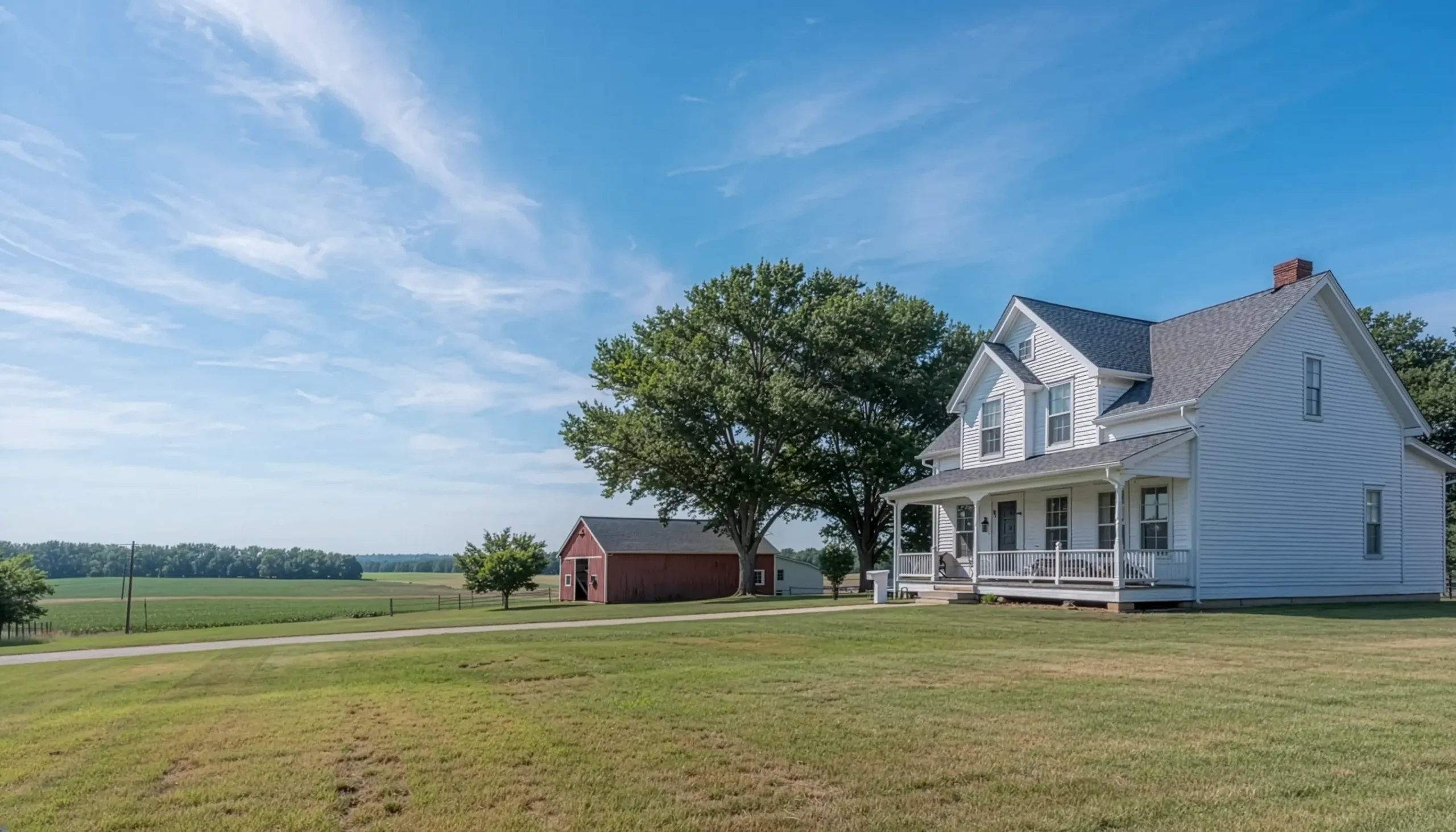
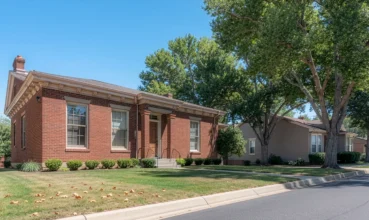
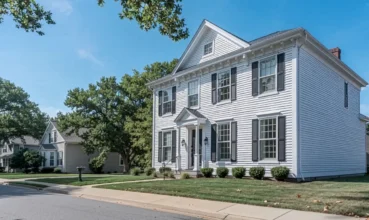
A town of fewer than a thousand people would not normally register on an investor’s radar. But in Paw Paw, Illinois – roughly an hour south of Rockford and a couple hours west of Chicago – residential listings are moving under contract within weeks, prices have climbed from the $50,000–$70,000 range to the mid-$200s in recent years, and rental inventory is essentially nonexistent. The driver is not a single employer or a new highway interchange. It is a steady flow of young families leaving Chicago’s suburbs for communities small enough that the local festival – named after the pawpaw fruit – draws roughly 7,000 people to a town of fewer than a thousand.
That pattern, described by Aubrey Marks of Gaines Realty, a brokerage that has operated in the Paw Paw area since 1962, is producing market conditions more commonly associated with tight suburban corridors than with rural Lee County.
Who Is Moving and Why
The typical buyer in this market is a young couple or a family with small children. Most are coming from Chicago’s suburbs or from towns between the suburbs and Paw Paw, not from out of state. The appeal is straightforward: smaller schools, lower cost of entry, and the kind of community infrastructure – Lions Clubs, local businesses, annual festivals – that buyers associate with stability.
“Everyone wants to live out here, and prices have definitely gone up,” Marks says. “It wasn’t that long ago people were buying houses out here for like $50,000, $70,000, and now they’re selling in the mid-$200s.”
That influx of younger households is producing a concrete effect in towns that might otherwise face demographic decline. As longtime residents age out, new arrivals are opening businesses and filling school seats. According to Marks, this growth is driven almost entirely by residential demand rather than commercial development.
Inventory Stays Tight Because Nobody Leaves
The supply constraint in this market is structural. These are small towns where homeowners tend to stay for decades. One recent listing Marks handled belonged to a man who had owned the home since the early 1960s and lived to 102. His sons sold the estate to a young engaged couple – a transaction Marks describes as representative of how homes change hands in Paw Paw.
“These forever family homes – it can feel like such a harsh ending, but instead it turns into a new beginning for somebody else,” she says.
Because turnover is so infrequent, well-priced listings rarely last. Marks says that in 2025, homes were selling within a week of listing. The pace has moderated slightly, but properties priced correctly still go under contract within a month. The most sought-after property type is a three-to-five-acre lot with a house and an outbuilding. “If that comes up, that’s gone,” Marks says.
Older Homes and the Infrastructure Gap
Many of the available homes are old – some date to the 1800s – and while Marks says she has not encountered major appraisal problems, the infrastructure surrounding these properties can present real costs. In towns outside Paw Paw that lack municipal sewer systems, older homes still rely on original septic tanks. According to Marks, a replacement can run $20,000, a figure large enough to derail a deal for a first-time buyer.
Paw Paw itself has city water and a municipal sewer system, which insulates it from that particular problem. But surrounding towns are not as well positioned. Marks says she has been working with a local bank on funding efforts aimed at helping those communities upgrade their infrastructure. The challenge is per-capita funding: smaller populations mean less public money for the kind of upgrades that would make older housing stock accessible to buyers.
For buyers drawn to these towns, the practical question is whether a property sits inside a municipal sewer system or depends on private septic – a distinction that can add five figures to the true cost of ownership.
Financing in a Rural Market
Local lenders play an outsized role in keeping deals together. Marks says her preferred lenders specialize in rural properties and are skilled at identifying IDA grants and down payment assistance programs that help buyers manage higher interest rates. She contrasts this with online pre-approvals, which she says carry less credibility with sellers and attorneys in the area.
“I’ve had a couple instances where for sure they’re like, no, it could never work out,” Marks says of buyers who assumed they could not qualify. “But the lenders really work so hard to figure out a way to keep people buying homes in these towns.”
The difference between a generic online lender and a local one familiar with rural programs can determine whether a buyer qualifies at all. Marks says several buyers she worked with were able to purchase only because their lender found grant programs or down payment assistance they did not know existed.
Where Investors Might Look
For investors considering rural Illinois, Marks points to rentals as the clearest opportunity. Demand for rental housing – apartments and houses – consistently outstrips supply, and she maintains a running list of people looking for units that do not exist. The flip market, by contrast, is harder to make work. According to Marks, prices are near recent highs, which makes it difficult to buy and resell profitably unless a property is in notably poor condition.
Older homes on acreage represent another category Marks highlights. Rural properties with a few acres that receive investment in repairs and updates appreciate significantly in this market, she says, because the supply of that specific type is so limited.
Buyer Confidence Holds Despite Rate Uncertainty
Marks currently has seven houses under contract and says buyer confidence remains solid, in part because low inventory discourages hesitation. Buyers in this market know that waiting for a better deal means risking months without another suitable listing appearing.
Interest rates add a layer of uncertainty. Marks says that when rates appeared to be declining, some buyers paused to see if they would drop further. Now that rates have moved back up, buyers are trying to lock in before costs rise again. “You see it, and you like it, and the inspection is good – go for it,” Marks says.
The national market narrative – rising rates, softening demand, longer days on market – does not map cleanly onto what is happening in Paw Paw and the surrounding towns. Marks says she expects the trend of families moving to small communities to continue, sustained by the same factors that brought them in the first place: affordable entry prices, tight-knit communities, and housing that still costs a fraction of what comparable properties command closer to Chicago.
About the Expert: Aubrey Marks is with Gaines Realty, a brokerage that has operated in the Paw Paw, Illinois area since 1962, covering Paw Paw and surrounding towns in Lee County.
This article is based on information provided by the expert source cited above. It is intended for general informational purposes only and does not constitute legal, financial, or real estate advice. Readers should conduct their own research and consult qualified professionals before making any real estate or financial decisions.