Most vacation-home markets draw a narrow buyer profile – retirees, weekenders, or investors chasing rental yield. The Pocono Mountains region of northeastern Pennsylvania pulls all three at once, plus a growing number of full-time commuters. That breadth is reshaping what buyers want from a property and what sellers need to offer.
Suzanne Kasperski, a real estate professional with Christian Saunders Real Estate in Stroudsburg, Pennsylvania, describes a market where the line between primary residence and investment property has blurred. Buyers purchasing a home to live in full time still want to know whether the property could generate short-term rental income – either immediately or later. “A lot of my buyers love the fact that if it’s a second home or even a home they’re purchasing as a primary home now, they love the fact that it can also be a short-term rental at the same time,” she says. “It offsets their investment dollars.”
That dual-use calculus is not incidental. It is increasingly central to how properties are evaluated in a region that spans five counties across northeastern Pennsylvania.
A Market With No Single Buyer Profile
The Poconos attract first-time homebuyers who grew up in the area, relocating professionals who commute into New York City, second-home buyers looking for a weekend retreat, and investors focused on short-term rental income. What connects these groups is geography. Route 80 runs through the center of the region, putting New York City under an hour and a half away by car.
That proximity creates overlapping demand. Full-time residents value the lower tax burden relative to New York and New Jersey while maintaining access to urban employment. Investors draw their rental guests from those same metro areas. “For investors, that’s where their potential renters are coming from – vacationers,” Kasperski says.
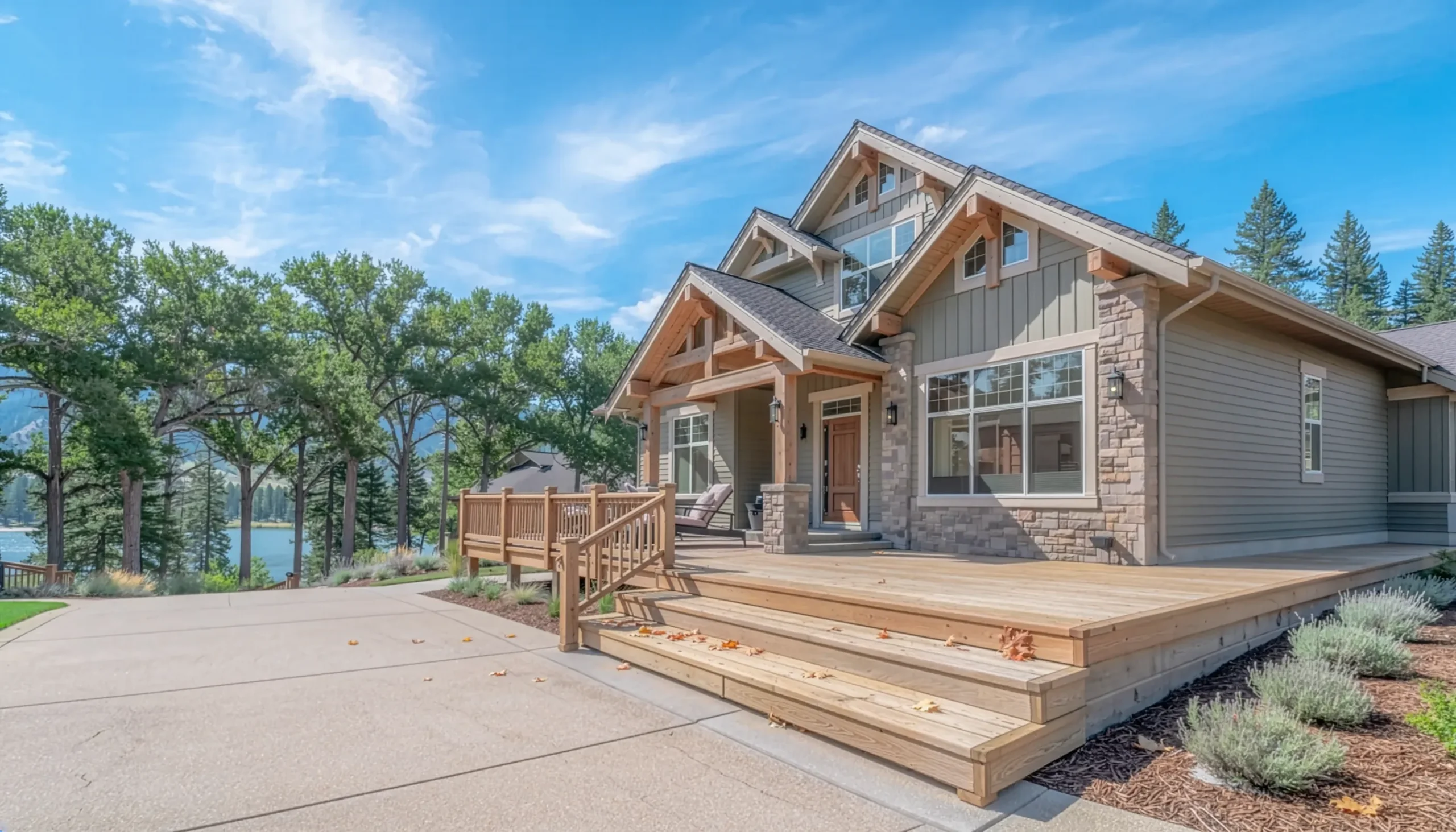
The same property can appeal to multiple buyer types depending on how it is used. Amenity-rich communities – those offering lakes, pools, tennis courts, clubhouses, and fitness centers – attract outsized interest from both groups. For owner-occupants, those amenities improve daily life. For buyers focused on short-term rentals, they give future guests activities beyond the region’s natural attractions. “Those communities are appealing because they give their guests other options other than going out and seeing all the beautiful things in the Poconos,” Kasperski notes.
For sellers, this means that properties in communities with built-in amenities reach a wider pool of potential buyers than standalone homes without them – a listing that appeals to both an owner-occupant and an investor draws competing offers that a single-use property does not.
What Moves and What Sits
Buyer preferences in the Poconos split along a practical axis. Properties in amenity communities draw the most attention, particularly from buyers evaluating rental potential alongside personal use. But the market is not uniform across its five-county footprint.
Kasperski describes the region’s sub-markets as distinct enough that showing homes across the full Poconos in a single day is impractical. “You would drive an hour between those properties sometimes because it’s such a large area,” she says. Each county carries its own character, proximity to towns, and set of tradeoffs for buyers.
Within walkable towns like Jim Thorpe and Stroudsburg, older homes with architectural charm hold strong appeal for full-time residents. Jim Thorpe in particular has built a national reputation. Kasperski says it regularly appears on published lists of the most beautiful towns in America. Buyers describe it as a “Harry Potter town,” she says – a reference to the mountain setting and historic architecture.
But charm competes with a practical concern that cuts across buyer types: maintenance. “I have a lot of buyers that are also looking for low maintenance,” Kasperski says. “Sometimes an older home doesn’t fit the bill.”
That tension – character versus upkeep – shapes which listings generate quick interest and which linger, particularly among second-home buyers and investors who are not on-site to manage ongoing repairs. A historic home in Jim Thorpe may attract admiration from visitors, but a buyer weighing it against a newer property in an amenity community often chooses the option that requires less hands-on attention.
Proximity as the Underlying Driver
The Poconos’ appeal rests on a geographic fact that many prospective buyers from the New York and New Jersey metro areas underestimate. Kasperski says out-of-area buyers are often surprised by the ease of access. “Route 80 runs right through the center of the Poconos, so everything is very easy and accessible,” she says.
That accessibility underpins every segment of demand. Commuters can hold New York jobs while living in a lower-cost region. Weekend visitors can reach a second home without a half-day drive. Short-term rental guests can book a mountain getaway without flying. The region has also added commercial attractions – multiple indoor and outdoor water parks, Mount Airy casino, and concert venues like Penn’s Peak – that extend its draw beyond hiking trails, waterfalls, and lakes. Kasperski describes the area as becoming “the water park capital of the world.”
For buyers weighing whether a Pocono property can serve double duty as both a home and an income-producing asset, that accessibility is the variable that makes the math work. A short-term rental in a region that requires a flight or a four-hour drive draws from a smaller guest pool than one reachable in 90 minutes from the country’s largest metro area. “Whether it’s a full-time residence and they like the convenience of being able to get to New York or New Jersey, or for investors – that’s where their potential renters are coming from,” Kasperski says.
What Dual-Use Demand Means for the Market Ahead
The Poconos’ buyer diversity creates a degree of insulation that single-profile vacation markets lack. When investor demand softens, local and commuter buyers still need housing. When commuter interest dips, vacation and rental demand continues. No single segment dominates enough to destabilize the market if it pulls back.
That resilience, however, depends on the same factor driving current demand: proximity to New York and northern New Jersey. Properties that combine easy highway access with community amenities and low maintenance sit at the intersection of what every major buyer group is looking for. Sellers offering that combination are positioned to attract competing interest across segments. Those whose properties lack amenities or require significant upkeep face a narrower buyer pool – and longer timelines to close.
Kasperski, who has lived in the Poconos her entire life and spent 30 years running a restaurant in the region before entering real estate, says the area’s appeal is durable precisely because it serves so many needs at once. The buyers change – from local families to New York commuters to short-term rental investors – but the underlying draw stays the same.
About the Expert: Suzanne Kasperski is a real estate professional with Christian Saunders Real Estate in Stroudsburg, Pennsylvania, covering the Pocono Mountains region of northeastern Pennsylvania. She has lived in the Poconos her entire life and previously spent 30 years running a restaurant in the region.
This article is based on information provided by the expert source cited above. It is intended for general informational purposes only and does not constitute legal, financial, or real estate advice. Readers should conduct their own research and consult qualified professionals before making any real estate or financial decisions.