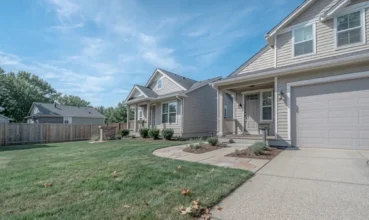
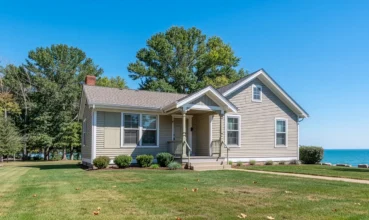
The short-term rental industry has gone through a significant reset since the pandemic-era boom of 2021 and 2022. Markets that once seemed endlessly profitable have cooled, supply has grown, and investors are recalibrating expectations. Yet in the Finger Lakes region of upstate New York, one management company has built a portfolio of over 100 properties generating more than $5 million in annual rental revenue in just four years – largely by being selective about which properties it takes on.
Vibe, a short-term rental management company founded by Joshua Briner, has grown to become one of the fastest-expanding operators in its region. The company’s approach runs counter to the scale-at-all-costs model that has defined many national players: stay in one market, know it deeply, and only work with properties genuinely suited to short-term rental.
A Market Correction That Was Predictable
The post-pandemic slowdown caught many investors off guard, but Briner says the signs were obvious. The surge in travel demand during COVID was driven by temporary conditions, people flush with cash and time, eager to escape cities, and it was never going to last.
Rather than viewing the correction as a threat, Briner sees it as a natural filtering process. The properties struggling most are those that should never have been short-term rentals to begin with, smaller homes in the six-to-eight guest range that would better serve communities as primary residences or long-term rentals.
“There’s a housing crisis, especially in New York,” he notes. “It’s pretty rare that I’ll take on a house that could be a primary residence for somebody. Those houses don’t make a lot of money as short-term rentals anyway.” The properties thriving are a different category entirely, large homes, lakefront locations, cabins, and distinctive experiences. According to Briner, the top 10% of the market continues to earn more each year.
The Saturation Question
Concerns about oversupply dominate investor conversations right now, but Briner is largely unmoved, at least in his market. His reasoning comes down to a distinction between volume and quality.
The Finger Lakes region has very few properties he calls “super properties,” listings with professional design, strong amenities, good location, and high occupancy potential. He uses a restaurant analogy: if a market has 100 fast-food outlets, that says nothing about demand for a high-end steakhouse. The two serve different customers entirely.
“When the Finger Lakes market gets enough properties that are up to snuff to support the amount of tourists we get, then I will be concerned about saturation,” he says. “Until that point, I am not concerned.”
Where Owners Go Wrong
Managing over 100 properties gives Briner a clear view of the recurring mistakes that undermine performance. At the top of the list: design and amenities.
Many owners overestimate their design skills and, more critically, fail to understand that short-term rental design serves a different purpose from residential design. The goal is to create a photographable, sellable experience, not simply a livable space. If a property doesn’t photograph well, the listing can’t compete.
Investors coming from long-term rental or house-flipping backgrounds tend to be the most resistant to this thinking. They’re accustomed to a different standard of finish and often balk at the investment required to create a compelling short-term rental. Half-measures, a game room with cheap equipment, a deck without a hot tub, check a box on a listing, but fail to create the visual or experiential distinction that drives bookings.
The amenities Briner consistently pushes clients toward, barrel saunas, hot tubs, proper game rooms with quality lighting and equipment, and pools, are backed by performance data across his portfolio. “I have tons and tons of proof of it working,” he says. “Being able to convince people to go spend seven or eight grand on a barrel sauna, to get a pool, to get the hot tub – it’s tough to do. But that’s the biggest battle I run into with new owners.”
Revenue Management as a Discipline
Pricing short-term rentals is more complex than many owners realize, and Briner treats it as an ongoing operational discipline rather than a set-and-forget function. Vibe uses dynamic pricing software as a foundation, but the real edge comes from accumulated market knowledge and close oversight.
The company divides its calendar into five distinct seasons, each with its own pricing strategies and revenue goals. One principle Briner emphasizes is the importance of launch strategy, pricing aggressively at the start to generate bookings and reviews, which in turn improves algorithmic visibility on listing platforms. “You’re never going to launch a property and have pricing exactly right from the start,” he says. “Six months from now, everything’s going to be where you want it,” but only if the initial momentum is there.
Shifting Owner Expectations
The investor profile coming to Vibe today looks different from a few years ago. Many are no longer chasing the outsized cash flow that defined the pandemic period and are instead focused on a more balanced set of returns.
Short-term rentals offer tax advantages that many investors underestimate. Through 100% bonus depreciation and cost segregation, a method that breaks a property down to its material components for accelerated depreciation, owners can typically find 25 to 30% of the purchase price in tax savings, according to Briner.
With that context, the investment case changes. Many of Briner’s newer clients are content to break even on cash flow while benefiting from mortgage paydown, appreciation, occasional personal use, and tax benefits. “When you really think about it, that is a win,” he says.
What’s Next for the Space
Two trends are shaping the near-term outlook for short-term rentals, according to Briner. The first is the gradual exit of unsuitable properties – homes that were never strong candidates and are now reverting to long-term use. As that happens, he expects some demand to shift back toward hospitality, but in a different form than traditional hotels. “What we call boutique motels, that’s something investors should be watching,” he says.
The second trend reinforces his core thesis about quality: the continued outperformance of large, amenity-rich properties. Homes accommodating 16 or more guests with full amenity stacks and professional design represent the strongest growth segment in this market.
For investors navigating a more demanding landscape since its pandemic peak, the lesson from the Finger Lakes is consistent: the fundamentals still work, but only when the right property is paired with the right setup and disciplined management. The era of any property performing well as a short-term rental is over; what remains is a market that rewards intentionality over volume.
About the Expert: Joshua Briner is the Owner and CEO of Vibe Short Term Rental Management, a short-term rental management company with a portfolio of over 100 properties. He also holds a real estate license and works with buyers at the acquisition stage, combining property management, revenue analysis, and acquisition consulting under one operation.
This article is based on information provided by the expert source cited above. It is intended for general informational purposes only and does not constitute legal, financial, or real estate advice. Readers should conduct their own research and consult qualified professionals before making any real estate or financial decisions.