New York City’s small multifamily market has split into two distinct economies operating under the same skyline. Rent-stabilized buildings are trading at steep discounts as owners contend with a rent freeze, rising taxes, and climbing utility costs – with no mechanism to increase income. Market-rate properties, meanwhile, are appreciating 5 to 10 percent annually, according to Anthony Morena, founder of Mortar Group, a Brooklyn-based vertically integrated development firm that has completed dozens of projects over 25 years.
That divergence is reshaping how developers and investors approach acquisitions, financing, and unit design in Brooklyn and Queens – and the two playbooks look almost nothing alike.
A Rent Freeze on One Side, Rising Demand on the Other
Rent-stabilized buildings are generating less income each year in real terms. “Rents can’t be increased. Taxes are going up, utilities, everything is going up except rents,” Morena says. Buyers purchasing stabilized buildings today are doing so at distressed pricing, betting on a long-term hold in hopes that the regulatory environment eventually moderates. Morena says there is no foreseeable way for these assets to increase in value under current rules.
Market-rate assets face the opposite dynamic. Fewer buildings are being constructed – a function of both high interest rates and expiring tax abatements – so supply remains tight. Elevated mortgage rates have simultaneously pushed would-be buyers into the rental market, adding demand to an already constrained pipeline. Competition for available units is intense. Morena says market-rate apartments routinely draw five to ten offers.
The financing side reflects this split. Banks have grown less comfortable lending against rent-stabilized assets, according to Morena, while market-rate construction debt remains accessible for sponsors with established track records. “Banks get to know you; they know what kind of work that you do, that you’re going to finish the job, you’re going to pay them back,” he says. “That’s ultimately what they care about.”
How Interest Rates Are Changing What Gets Built
The rate environment is not just affecting who rents versus who buys – it is changing what developers design. When rates were lower, smaller units like studios and one-bedrooms attracted younger renters entering the market. With rates elevated, those renters face monthly costs that have climbed sharply, making smaller units in less established neighborhoods harder to fill.
Morena says the shift has pushed his firm toward larger units in established neighborhoods, targeting families who are less sensitive to rate fluctuations. “If you have someone that is in their first job after college and they had a mortgage that was two or three thousand and all of a sudden because rates went up, it’s now five or six thousand, they can’t afford that,” he says. “You’ve got to design in neighborhoods that are more for established families, larger units where they are less rate dependent.”
The geographic implications follow directly. Developing in gentrifying or up-and-coming areas carries more risk in a high-rate environment because buyers are paying more for less proven locations. Morena says the firm’s current strategy favors neighborhoods with demonstrated demand, where buyers and renters are already willing to pay premium prices for quality housing.
Staying As-of-Right in a Bureaucratic City
Mortar Group’s development timeline runs 24 to 30 months from acquisition to completion. That window shapes nearly every structural decision, including a firm commitment to as-of-right projects – those that conform to existing zoning without requiring special variances or community board approval.
“If you need special approvals or certain variances, it takes a lot longer,” Morena says. The tradeoff is real: as-of-right sites typically cost more to acquire because the development path is clearer and competition for them is stronger. But the time savings and reduced regulatory risk make that premium worthwhile for a firm running five to ten concurrent projects.
Morena describes the regulatory landscape as constantly shifting. “Things we could do three years ago, we cannot do today because the laws changed,” he says. That instability makes speed and predictability valuable on their own.
What Investors Are Asking Now
Investor sentiment toward New York has improved compared to the pandemic years, when negative press about population outflows and political uncertainty made capital harder to attract. Morena says the conversations have stabilized, though investors remain focused on a few specific concerns: interest rate exposure, sponsor alignment, and how projects are structured to manage mid-construction cost overruns.
Morena says the most effective way to address those concerns is demonstrating personal financial commitment to each deal – co-investing capital, providing lender guarantees, and funding mid-project shortfalls. “They always want to know how you are aligned with them,” he says. “And I think any good sponsor will be able to explain that in detail.”
For investors weighing New York against other markets, Morena frames the calculus as a matter of working with experienced local operators. Every market has its own regulatory and political complications, he says. New York’s are well-documented but navigable for sponsors who know the terrain.
Architecture as a Development Advantage
Morena is a licensed architect, and Mortar Group’s structure reflects that background. The firm handles architecture, development, asset management, and property management under one roof with fewer than ten people.
That technical foundation changes how the firm evaluates acquisitions. An architect-developer can identify where costs are likely to surface during construction, extract more usable square footage from a site by understanding zoning and building code in detail, and control schedule more tightly than a developer relying on outside design teams. Morena says the combination allows the firm to deliver more sellable space per project – not by doing anything unusual, but by understanding the code better than most.
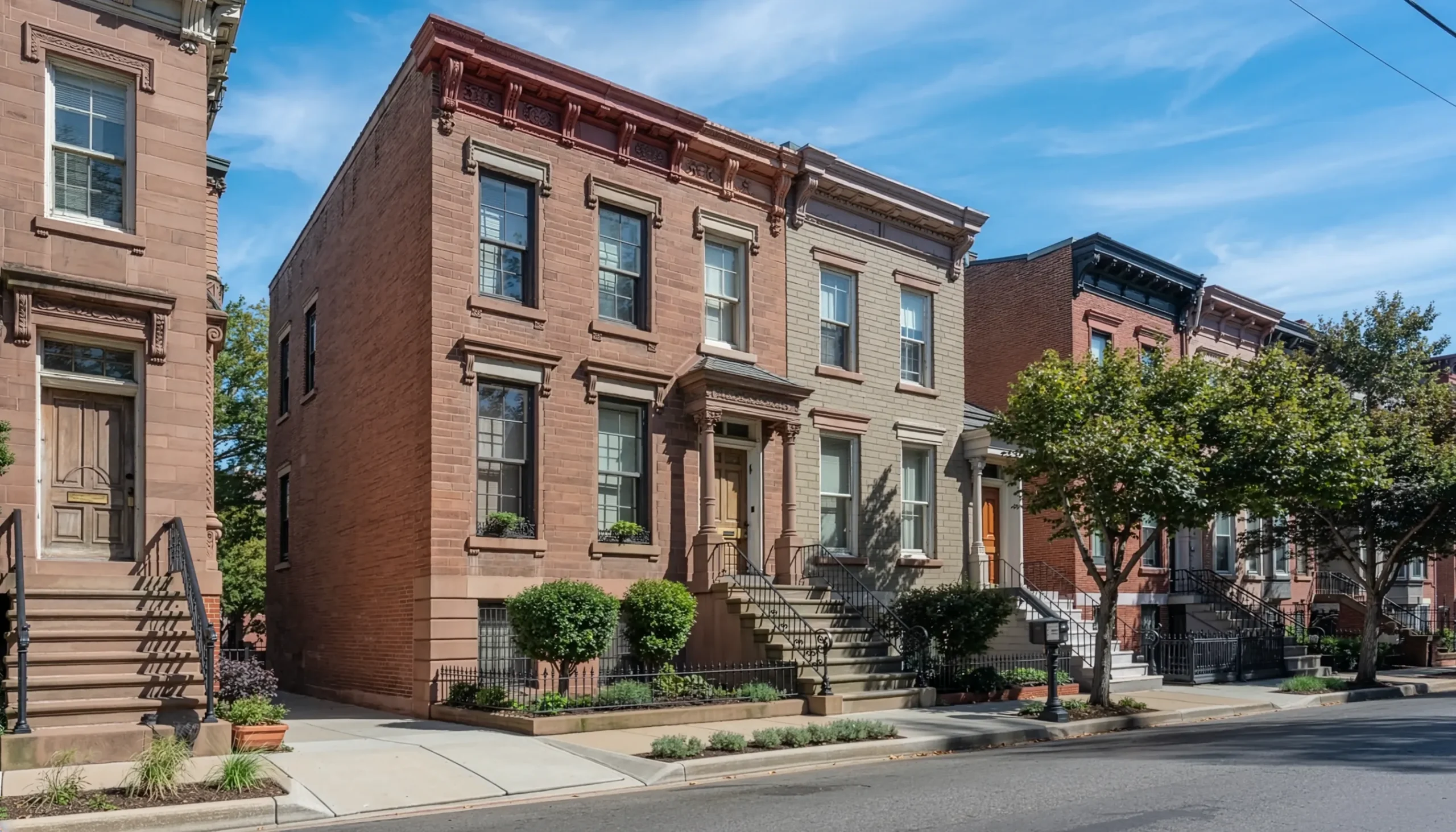
The Brooklyn Heights project illustrates the approach. The firm purchased a vacant brownstone on Joralemon Street – an empty shell with a crumbling facade that had not been occupied. The team performed a full gut renovation down to the wood joists, rebuilt the brownstone facade using historical photos from roughly 90 years ago to recreate original ornamentation, and designed the interior around the neighborhood’s buyer profile: families looking for larger three- and four-bedroom units with outdoor and recreational space. The project is nearing completion.
Looking ahead, the firm expects to sign three new projects in the coming months, building out its pipeline through 2027 and 2028. “The market’s pretty good for what we do,” Morena says.
About the Expert: Anthony Morena is the founder of Mortar Group, a Brooklyn-based real estate development firm. A licensed architect, he leads a vertically integrated operation spanning architecture, development, asset management, and property management.
This article is based on information provided by the expert source cited above. It is intended for general informational purposes only and does not constitute legal, financial, or real estate advice. Readers should conduct their own research and consult qualified professionals before making any real estate or financial decisions.