Industry veteran says AI computing demands are forcing fundamental changes in how data centers approach power infrastructure.
The rise of AI computing is creating unprecedented challenges for data center power management, according to Everett Thompson, CEO of Wired Real Estate Group (WiredRE). “The load following challenges of these AI data centers are well documented now, and that cuts both ways,” Thompson says, referring to difficulties faced by both power grids and facility operators.
The Power Integration Imperative
Thompson, who began his career as a power plant developer before entering the data center industry, says the sector is at a critical inflection point: “Our perspective is to go where the puck is heading, we have what we’re calling a power first strategy where on-site generation is our base case.”
This represents a significant shift from traditional data center approaches that relied primarily on grid power with backup generation. According to Thompson, the future requires a more integrated approach to power management.
Learning from Cryptocurrency’s Legacy
“The cryptocurrency industry created some very interesting ideas,” Thompson notes, explaining how that sector’s extreme power demands helped pioneer new approaches to data center power management.
These lessons are particularly relevant as AI computing creates similar challenges:
- High power density requirements
- Variable load profiles
- Need for reliable, scalable power solutions
The Microgrid Solution
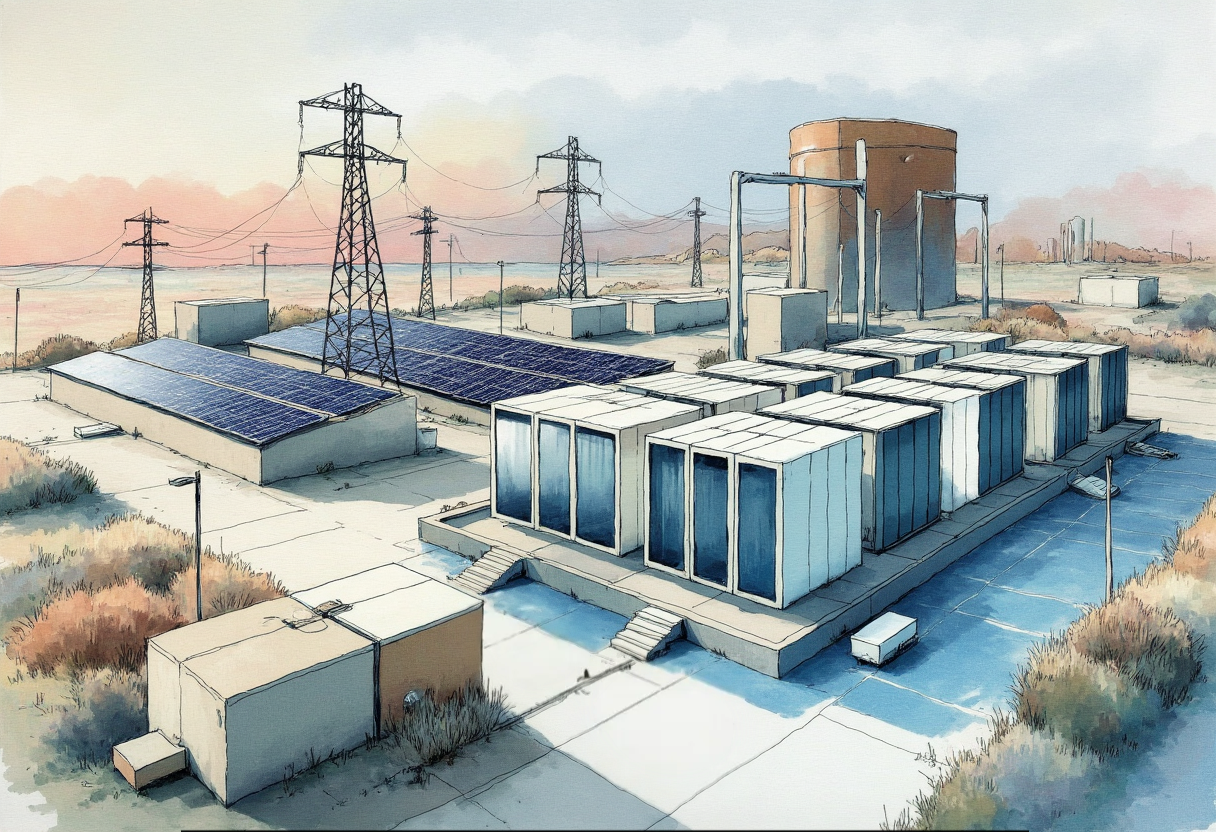
Thompson’s firm is developing what he calls “distributed redundant microgrid architecture” to address these challenges. The approach involves “picking up the generators and the batteries and moving them outside the envelope and putting them between the grid and the data center.”
This solution offers several advantages:
- Enhanced reliability
- Improved load following capability
- Capital expenditure avoidance
- Potentially lower energy costs
The Warning for Investors
Thompson issues a clear warning for those considering data center investments: “If the things that you’re looking at don’t incorporate an integration of the data center on-site generation in the grid, then be careful, because that’s not where the future is going.”
Solutions for the Future
Through Wired Real Estate Group, Thompson is working to implement these next-generation power solutions. The firm recently demonstrated the potential of this approach through what Thompson describes as “the largest interconnection agreement in ERCOT history,” a 1,000-megawatt project in Texas that significantly exceeded the scale of previous developments.
“To put that in perspective,” Thompson explains, “the Abilene project only had 200 megawatts, and so it was five times the capacity.” This scale of power integration represents what Thompson sees as the future of data center development.