

The real estate industry is experiencing a fundamental shift in how professionals manage and leverage client conversations, according to Ryan Brassel, Principal at Rosso Commercial Real Esta...

How Weather-Technology Intelligence Is Transforming Property Management

Written by:
Date:
12 Dec 2025
Share via Facebook

Share via Linkedin

Share via X

Copy to clipboard

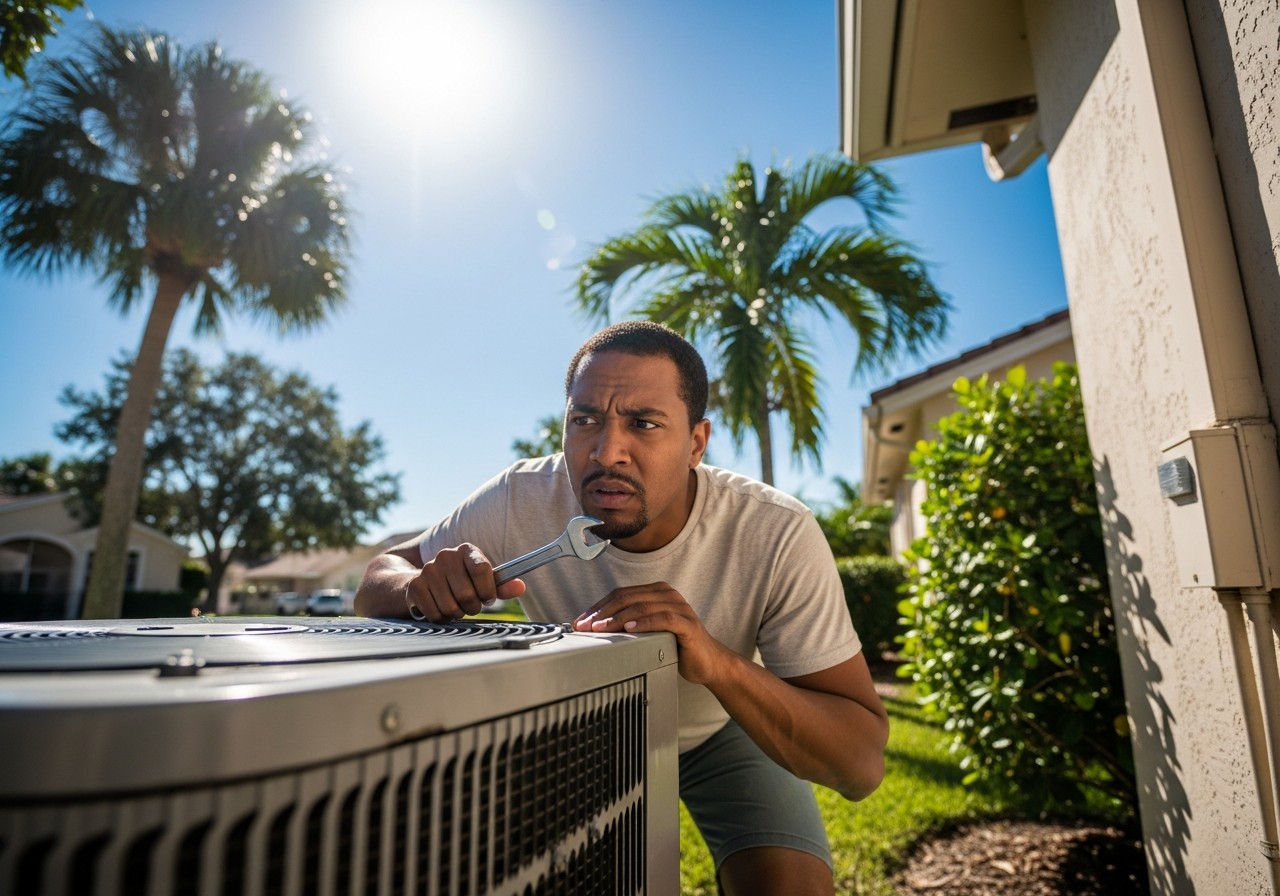
Image Source: KeyCrew Media, generated with Google Imagen 4
Weather influences property operations in ways that aren’t always obvious until something goes wrong. Extreme heat can turn a maintenance ticket into a health-and-safety emergency. Freezing temperatures can turn a small leak into a burst pipe. Storms create a cascade of issues, from clogged gutters to structural damage. Yet the systems that property teams use to manage repairs don’t consistently capture the environmental context behind those problems, particularly in a way that becomes part of the permanent record.
Sean Landsberg has been working to change that. His team built a weather-intelligence feature that automatically inserts temperature, humidity, and real-time conditions into work orders and incident reports. The goal isn’t to simply remind property teams what the weather is like outside. It’s to ensure that verified, time-stamped data is captured at the moment a request is made. That level of detail helps maintenance teams prioritize issues, provides clarity for managers reviewing incidents later, and gives insurers an objective view of the circumstances surrounding a claim.
Why weather?
Landsberg sees weather as an essential signal for understanding both the urgency and the long-term context of a maintenance request. “Weather indicates the priority of work orders,” he explains. A broken AC on a mild day and a broken AC during triple-digit heat may look identical in the system unless the conditions are captured automatically – and that distinction becomes important later, when teams review response times or when insurers evaluate how an issue was handled.
The same principle applies in winter. A leak submitted during freezing temperatures can escalate quickly, but without a time-stamped record of the conditions, it can be hard to show why the request was triaged the way it was. By attaching verified weather data the moment a ticket is created, the system removes guesswork months down the line, strengthens the documentation trail, and gives both maintenance teams and insurers a clearer view of the circumstances surrounding each incident.
Here’s a revised version that builds in more explanation about why this matters operationally — not just what the data shows:
Faster Fixes
Real-time weather data helps technicians diagnose issues more accurately before they arrive on site, which means they can show up with the right tools, materials, and expectations. If a leak is reported during heavy rain, Landsberg notes, the likely cause shifts immediately. “If it was raining at the time, that’s likely some kind of roof leak or siding leak. If it was sunny, that would mean there’s probably a leak inside the building.”
That kind of clarity prevents technicians from walking into a situation blind. Instead of discovering the true cause halfway through the visit – and needing to return with different equipment or schedule a second appointment – they can prepare appropriately from the start.
Humidity readings add another layer of intelligence. “If somebody says they have a leak and the humidity is really high, that’s a high indication mold is going to develop really fast if we don’t take care of that,” Landsberg says. Knowing that in advance helps teams prioritize inspections that carry real health and safety implications, rather than treating all leaks as equal.
This additional context cuts down on unnecessary return visits, shortens repair timelines, and gives residents a sense that their issues are being handled with a full understanding of the conditions on the ground.
Here’s a revised version that adds more explanation about why the weather data matters, what problems it solves, and how it changes the downstream process for insurers, investigators, and property teams:
Better Risk Management
Weather intelligence has become just as valuable for risk management as it is for maintenance. Many incident investigations – especially those involving slips, falls, or exterior damage – depend on recreating the exact conditions at the time of the event. Otherwise, property teams have to rely on recollection, scattered notes, or after-the-fact assumptions, all of which weaken the documentation trail months later.
“It happens all the time – residents slip and fall,” Landsberg says. “No one ever bothers to check: Was it raining at the time they slipped and fell?” That detail can meaningfully shape how liability is interpreted. A wet walkway during active rainfall may be considered an unavoidable hazard, while dry conditions may raise different questions about maintenance or site conditions.
The same logic applies to storm-related damage. “If it was thunderstorming at the time the tree fell, that’s relevant,” Landsberg explains. “If it was sunny, what actually happened there?” For insurers and legal teams, that distinction helps determine whether the loss was weather-related, preventable, or potentially caused by another factor entirely.
By attaching real-time weather data to incident reports automatically, properties gain a more reliable, defensible record that removes ambiguity. Claims teams can act faster, insurers have clearer information, and property managers avoid the disputes that arise when details are missing or reconstructed long after the event.
Here’s a revised version that expands the insurance angle and explains why weather-intelligence tools matter in underwriting, claims handling, and renewal negotiations:
An Insurance Asset
For many early adopters, the biggest draw of weather-intelligence tools wasn’t operational efficiency – it was the reduction of insurance exposure. Documentation drives nearly every claims decision, and the difference between a smooth payout and a prolonged dispute often comes down to how well a property can demonstrate what was happening at the moment an incident occurred. Weather data adds a layer of objective evidence that typical work-order and incident systems don’t capture on their own.
By embedding verified weather conditions directly into tickets and incident reports, properties can show not just what they did, but why they did it. Insurers can assess claims more quickly, liability questions become easier to resolve, and renewal discussions are strengthened by a consistent record of diligence and transparency. For many properties, that combination leads to fewer disputes, faster resolutions, and a more favorable position when policies come up for review.
The Bigger Picture
Weather-technology intelligence doesn’t just improve individual work orders or incident reports – it changes how properties operate at scale. With environmental context automatically flowing into maintenance and risk-management systems, teams can spot broader patterns: which buildings struggle during heat spikes, where leaks tend to appear after storms, or how humidity affects mold-related complaints across a portfolio. Those insights help managers make more informed decisions about capital planning, seasonal preparation, and preventive maintenance.
For residents, the benefits show up in moments that matter: faster responses during extreme weather, clearer communication during outages or events, and fewer surprises when conditions outside put pressure on building systems. When teams understand the environmental context from the outset, they can anticipate problems earlier and provide a smoother, more transparent experience.
Landsberg sees this shift as part of a larger evolution toward data-supported property operations. “Weather intelligence can be game-changing,” he says. And not just because it sharpens documentation, but because it helps managers move from reacting to conditions to planning around them. For an industry facing more volatile weather and rising insurance pressures, that shift is becoming increasingly important.
Similar Articles
Explore similar articles from Our Team of Experts.