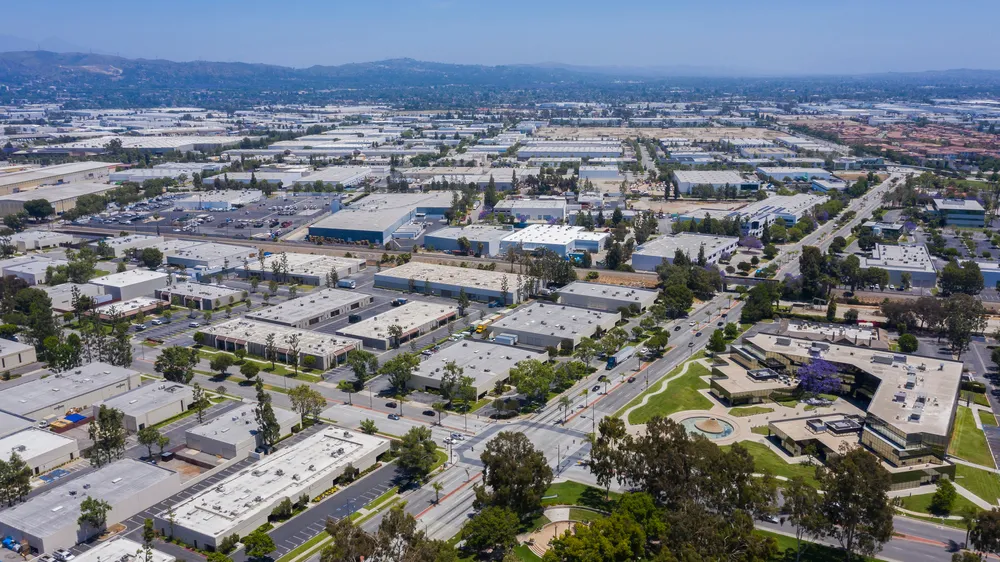
Commercial real estate development in Southern California is widely regarded as one of the most difficult operating environments in the country. Strict zoning regulations, complex entitlement processes, and competitive land markets create barriers that stop many developers before they ever break ground. Yet for Southern California Equity, those same obstacles have become the foundation of a repeatable investment strategy built over 25 years and across roughly 250 transactions.
At the center of that strategy is Daren Laureano, CEO and co-founder, whose background spans architecture, entertainment production, and capital markets. That unusual combination of disciplines shaped an approach to commercial real estate that prioritizes speed, precision, and conflict resolution over conventional ground-up development.
What Deep Repositioning Actually Means
The term “repositioning” gets used loosely in commercial real estate, sometimes describing little more than cosmetic updates. Southern California Equity’s version involves stripping a distressed industrial property down to its most essential structural elements, expanding the footprint through mezzanines and added floor area, and rebuilding it as a Class A facility suited to media, technology, or creative tenants.
Laureano describes the process as “a radical, invasive process of ripping down the asset and keeping only its most core, critical, important elements.” The result is a building that bears little resemblance to what existed before, often in neighborhoods where the surrounding stock remains visibly worn.
The firm organizes its work around three distinct phases. The first is a diagnostic phase centered on what they call an acquisition targeting system, a proprietary algorithm developed over decades to evaluate commercial assets before any capital is committed. The second is a planning phase focused on identifying specific conflicts or complications in a property that have suppressed its price and can be resolved before closing. The third is execution, handled through a vertically integrated platform that manages acquisition, design, entitlement, development, lease-up, and disposition internally.
Finding Value in Conflict
Where most investors avoid properties with title issues, code violations, regulatory entanglements, or deferred maintenance, Southern California Equity has built a methodology around resolving exactly those problems before a deal closes.
“We love to find conflicts,” Daren Laureano says. “The conflicts that scared every other investor away from an asset.” The firm targets properties where high development skill can resolve identifiable problems, allowing it to negotiate a lower acquisition price that both parties accept.
The acquisition targeting system is designed to distinguish between genuinely solvable conflicts and those that are not. Deals that would require excessively long development timelines, or that face regulatory obstacles without clear resolution paths, are eliminated early. The ones that remain are properties where the firm’s experience gives it a meaningful advantage in both pricing and execution.
Four Questions Before Committing Capital
Laureano distills the firm’s pre-acquisition discipline into four questions that he argues every commercial real estate investor should answer before committing capital: What can be built on the site? How much of it can be built? Where exactly can it be built? And how long will it take to receive the necessary approvals?
The emphasis on answering these questions before ownership reflects a pattern the firm observed repeatedly in the broader market. Outside deal sources, whether brokers, intermediaries, or third-party analysts, often provide information that turns out to be inaccurate or incomplete. By the time investors discover the gap between projected and actual development parameters, they have already closed.
“What I found was most people only get those answers, or they get radically different answers, after they end up owning it,” Laureano says.
Southern California Equity addresses this by sourcing deals entirely in-house. The firm does not rely on outside deal shops or broker pipelines for its acquisition targets. All research, underwriting, and conflict analysis is conducted internally using the proprietary system the firm has refined over three decades.
Bringing Decision-Makers Closer to Capital
The expansion into private equity under the Southern California Equity banner reflects a deliberate effort to restructure how institutional capital connects with real estate decision-making. In traditional fund models, multiple layers of intermediaries sit between the person making development decisions and the limited partners whose capital is at risk.
Laureano’s approach removes those layers. “I’m bringing the real estate decision maker directly to those institutional LPs who put capital at risk,” he explains.
That direct relationship also supports what the firm considers a commitment to investor education. Rather than limiting communication to performance reports and quarterly updates, Southern California Equity helps institutional partners develop a stronger working understanding of commercial development fundamentals, with the goal of making investors better at evaluating deals across the board, not only the ones the firm brings to them.
A Strategy Built for Difficult Markets
With $7.5 billion in repositioned assets across multiple market cycles, Southern California Equity has tested its approach in both favorable and challenging conditions. The firm’s value creation model is built around manufactured appreciation through deep repositioning rather than reliance on broader market tailwinds.
That distinction matters particularly in periods of market stress. The sale of the Bad Robot facilities, completed at a profit during a period of weakness in the Los Angeles commercial market, illustrates how the strategy performs when conditions are unfavorable.
As the firm expands its geographic reach, the core methodology remains unchanged: find the right asset, resolve the conflicts others cannot, and build something that tenants actually want to occupy. In a market where development timelines and regulatory complexity continue to increase, that combination of skills may be more relevant now than when Laureano first developed it.
About the Expert: Daren Laureano is CEO and co-founder of Southern California Equity, a commercial real estate firm with 25 years of experience and approximately 250 transactions across the Los Angeles market, specializing in repositioning distressed industrial and commercial properties for media, technology, and creative tenants.
This article is based on information provided by the expert source cited above. It is intended for general informational purposes only and does not constitute legal, financial, or real estate advice. Readers should conduct their own research and consult qualified professionals before making any real estate or financial decisions.