The Greater Hartford metropolitan area has rapidly become one of the most active housing markets in the country, creating both new opportunities and complex challenges for development officials. The heightened demand is driving a wave of investment in residential construction, office-to-housing conversions, and infrastructure upgrades throughout Connecticut’s capital region.
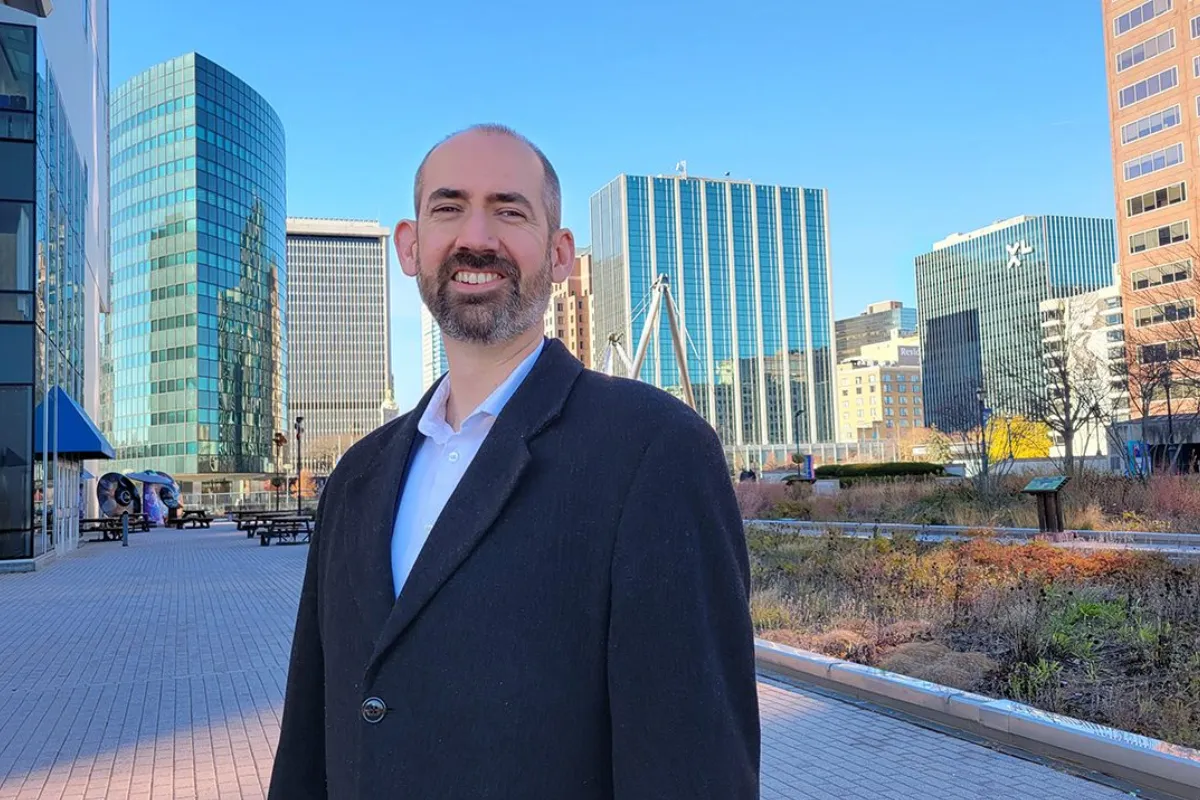
David Steuber, Executive Director of the Capital Region Development Authority (CRDA), oversees these efforts. The quasi-public agency acts as both a real estate investment facilitator and the operator of major regional facilities, including the Connecticut Convention Center and PeoplesBank Arena.
Steuber says the current pace of activity is unprecedented in Hartford’s recent history. “Hartford, the Greater Hartford metro region, is one of the hottest housing markets in the country by some recent measures,” he says. Steuber emphasizes that the authority’s main goal is to increase the housing supply to keep pace with demand. “We’re very keen to help add additional housing supply to the market. So we’re trying to build more units of housing wherever we can.”
Building on Momentum
The CRDA’s track record shows the scale of recent development. Since its creation a little over a decade ago, the authority has facilitated the construction of about 3,300 new residential units in downtown Hartford, with several hundred more in progress. This surge reflects a deliberate effort to address the city’s housing shortage and revitalize its urban core.
The CRDA’s strategy relies on blending public investment with private capital to make projects feasible. “We offer low-interest loans alongside private lenders to support private developers in building additional, largely multifamily housing,” Steuber explains. The authority’s aim is to close financing gaps that might otherwise stall projects by leveraging public investment to attract larger private commitments.
A recent example demonstrates this approach. The CRDA provided a $13.5 million loan as part of a $63 million renovation of a former state office building that previously housed the Attorney General’s office. The project created 164 residential units in a prime location overlooking Bushnell Park, Hartford’s oldest public park and a central gathering space.
Development is also concentrated in this area, with several adjacent properties under construction and plans for new builds nearby. Steuber says this focus is intentional, aiming to create a critical mass of new housing and amenities within walking distance of downtown attractions.
Confronting Office Vacancy with Conversion Projects
Hartford, like many cities, faces persistent office vacancy as remote work reshapes demand for commercial space. The CRDA is tackling this challenge by identifying office buildings suitable for residential conversion, though Steuber acknowledges the process is far from straightforward.
“Conversion projects are tricky because it’s hard to take an older building and reconfigure it to a new use, and there are always challenges relative to each individual building,” he notes. Many older office buildings are not easily adapted for housing due to their floor plate design or outdated infrastructure.
To address this, the CRDA is systematically assessing the city’s office inventory to identify viable candidates for conversion. “A lot aren’t convertible. A lot of that’s down to the floor plate configuration of individual structures,” Steuber says. The authority is focused on deepening its understanding of the local building stock to set priorities and identify the most promising opportunities for adaptive reuse.
Regional Expansion: East Hartford and Beyond
The CRDA’s focus extends beyond Hartford’s city limits. In East Hartford, the authority is working with local officials to redevelop several strategic parcels, including former strip malls, an old movie theater, and waterfront properties along the Connecticut River. These sites offer opportunities for mixed-use development, with a strong emphasis on new housing.
East Hartford leaders are reimagining their riverfront, aiming to create new residential and commercial spaces that connect the community to the water. “They’re also engaged in the project of re-envisioning what their waterfront on the Connecticut River looks like,” Steuber says. The CRDA is helping to plan and finance projects that will bring new housing and amenities to these underutilized areas.
Navigating Connecticut’s Local Governance
For developers considering projects in the Hartford area, Connecticut’s fragmented system of local government presents a unique challenge. With 169 separate towns, each with its own zoning and building codes, the regulatory landscape is complex and can be difficult for newcomers to navigate.
Steuber points out that many out-of-state developers are surprised by the lack of county-level coordination. “Each one has some of their own custom rules, which can be new terrain for a developer who hasn’t worked in the state previously,” he says. The CRDA acts as a guide, helping private sector partners understand and comply with local requirements. “This is part of what we do. We help translate the world of government to folks in the private sector and try to catalyze private investment.”
Major Projects on the Horizon
The CRDA’s current priorities include the $140 million renovation of People’s Bank Arena, a key downtown venue. Scheduled for completion by summer 2026, the project is designed to boost the arena’s capacity to host more events and strengthen Hartford’s downtown as a destination.
Several large residential projects are also nearing completion. Notably, a 240-unit apartment complex is rising in the downtown north area, near Hartford Yard Goats Ball Park, which is recognized as one of the top minor league baseball venues in the country. These developments are expected to draw new residents and increase foot traffic in the city center.
Steuber believes the visible impact of these efforts will soon be clear. “There’s a good amount of activity that’s ongoing right now that I think is going to make a noticeable impact for folks walking around Hartford,” he says.
The CRDA maintains a flexible approach to new development partnerships, operating what Steuber describes as a “consistently open rolling RFP.” This means developers can propose projects at any time, allowing the authority to respond quickly to emerging opportunities. Coordination with local government leaders is a key part of this strategy, ensuring that new projects align with community priorities and regulatory requirements.
What Comes Next for Hartford
Hartford’s status as one of the nation’s most in-demand housing markets is reshaping the city and the surrounding region. The CRDA’s dual role as both development facilitator and civic infrastructure operator allows it to address immediate needs while planning for long-term growth. For developers, the authority offers a combination of financial partnership and local expertise that can help navigate the area’s regulatory complexities and capitalize on current market momentum.
As the city continues to add new housing, upgrade key venues, and attract investment to previously overlooked sites, Hartford is positioned to convert its housing boom into broader economic revitalization. The coming years will test how well these coordinated efforts can sustain growth, expand opportunity, and create a more vibrant and resilient capital region.
This article was sourced from a live expert interview.
Every month we conduct hundreds of interviews with active market practitioners - thousands to date.
A veteran multifamily operator says shifting institutional strategies are creating new opportunities for specialized property managers, particularly in the workforce housing sector. Ron Kuta...
Chicago’s luxury real estate market is undergoing significant changes, driven by the largest generational wealth transfer in U.S. history and a shift in work habits that is redrawing the c...
“What gets measured gets done. You can’t evaluate what you can’t measure.” – Larry Stone, Santa Clara County Assessor In Silicon Valley, where tech innovations and ...
A year ago, Naples condos moved quickly, with buyers snapping up units amid steady demand and relatively predictable monthly costs. That dynamic has now reversed. While single-family home pr...
The North Alabama real estate market has moved past the volatility of the pandemic years and is settling into a more stable, sustainable rhythm. While the days of weekend sales and bidding w...
Naples’ condo market is facing what one experienced agent calls a structural affordability crisis: post-hurricane assessment hikes of 20 to 30 percent are changing buyer behavior and widen...