
Doug Ressler, Manager of Business Intelligence at Yardi Matrix, reports that major real estate investment trusts (REITs) and other institutional investors are rapidly expanding their involve...

From Paper Cities to Real Development: How Farmington Hills is Responding to Post-Pandemic Market Demands

Written by:
Date:
30 Dec 2025
Share via Facebook

Share via Linkedin

Share via X

Copy to clipboard

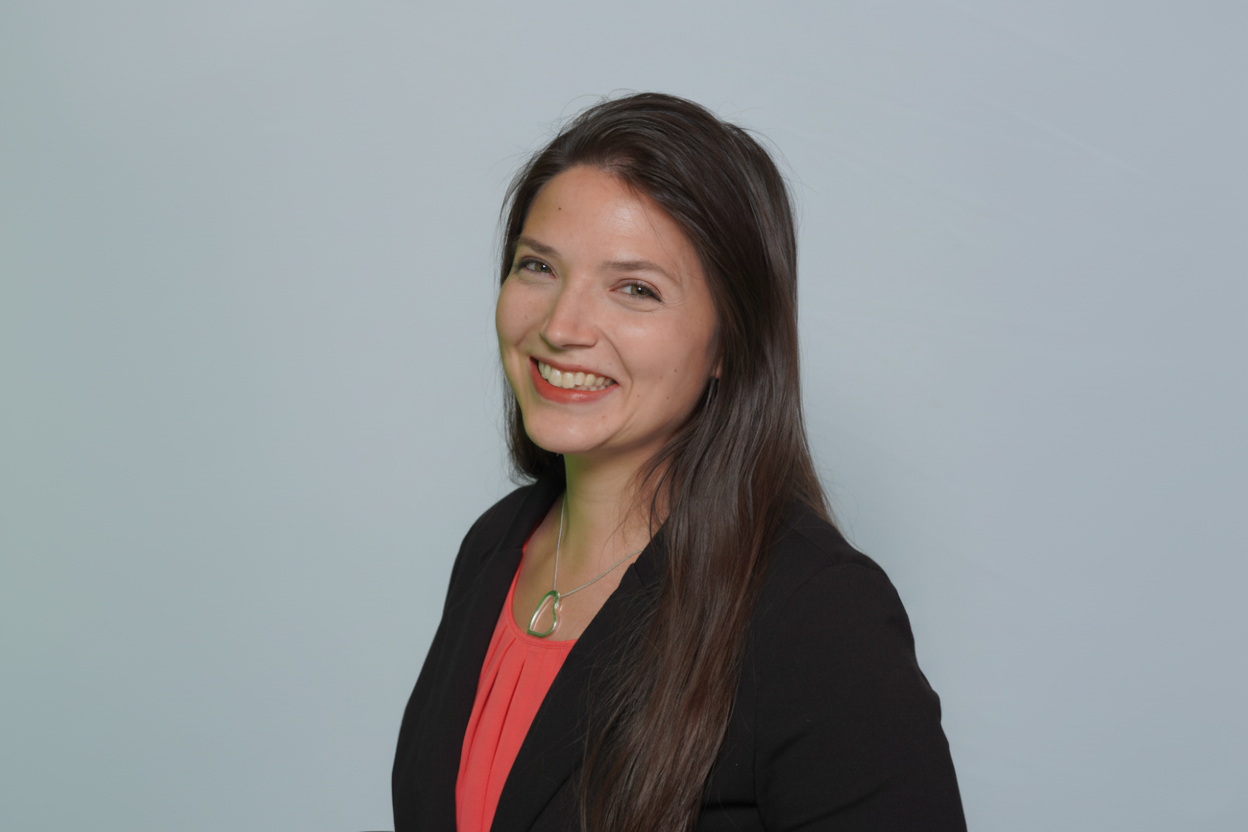
Cristia Brockway’s interest in urban planning began in childhood, when she built miniature cities from paper in her bedroom. Now, as Director of Economic Development for Farmington Hills, Michigan, she applies that early fascination to the practical challenges of guiding one of Michigan’s key suburban markets through a period of rapid change.
A Personal Connection to Place
Brockway’s approach to economic development is grounded in family history and firsthand experience of metropolitan Detroit’s evolution. Her grandfather ran Warholak Tire Service, a family business in Detroit that operated for 92 years before closing recently. Childhood visits to the tire shop included trips downtown, where the city’s scale and vibrancy struck Brockway.
“I was a little kid looking at these buildings that were way taller than me, and just the way everything was set up—I thought it was always so fascinating,” she recalls. Her mother’s stories of a bustling Detroit, with crowded sidewalks and a million residents, provided early lessons in the dynamics of urban vitality and decline.
These experiences shaped Brockway’s professional mission. “I felt that I needed to understand how to do as much as possible to add that energy back into my hometown—that energy and feeling, the nostalgia that I wanted to give to my kids and my family.”
Strategic Market Positioning
Farmington Hills is adapting its economic strategy to address changes in consumer and business behavior since the pandemic. Rather than simply updating the city’s master plan, Brockway’s team is analyzing how shifts in work patterns, consumer preferences, and spending affect future development.
“We said, okay, so we know we want to do these things, but we need to understand what the new market is. What do people want in their community? What are we lacking? What are our assets?” Brockway explains. “What is the consumer traffic post-pandemic? What do we know about office-to-residential? What do we know about people who are working remotely?”
Research identified strong market fundamentals across the city’s three major corridors. Twelve Mile Road is the most affluent, home to corporate headquarters for Bosch, Nissan, and Akebono. Orchard Lake Road is a consumer-focused corridor featuring medical facilities, shopping, and a wide range of international dining options. The Grand River Corridor, located between Orchard Lake Road and Inkster Road, stands out for its dense population and workforce.
“We have 120,000 residents within a retail trade area, and that’s a five-minute drive time. We have 45,000 workers within that same area,” Brockway notes. This concentration creates a strong local market and draws regional interest from potential businesses.
Streamlined Development Process
To encourage investment, Farmington Hills has introduced a streamlined information session for prospective businesses and developers. This free service convenes all relevant city departments in a single meeting, enabling companies to review preliminary site plans, clarify engineering requirements, and address potential issues before submitting formal applications.
“When they are ready to build or ready to submit their plans, they have their best opportunity to submit their plans the first time, and it doesn’t have to go back and forth multiple times because they missed something,” Brockway says.
This approach helped Jing-Jin Electric, which owned land in the city and wanted to clarify requirements before moving forward with expansion. The company benefited from direct feedback and clear expectations, accelerating the development process.
Major Development Wins
Farmington Hills is seeing significant new investment in both retail and residential projects. Two developments highlight this momentum.
Hunters Square, a former mall, is being redeveloped with a new mix of retail anchors. The northern portion has been demolished to make way for a major grocery store, and several new restaurants facing Orchard Lake Road.
“This is changing because it is going to be more of a place where you can not only shop, you can dine, and they’re utilizing a lot of the parking spaces to do exactly those things,” Brockway says. The project reflects a shift away from traditional suburban retail toward spaces that combine shopping and dining experiences.
Another major project is the redevelopment of the former Sarah Fisher orphanage site. The Village at Pebble Creek will include 76 condominiums, environmental remediation, and the preservation of the original chapel as a community center. This development represents a significant new investment in the city’s residential options.
Addressing Market Imbalances
Despite recent successes, Farmington Hills faces apparent supply-demand gaps in the restaurant and retail sectors, especially along the Grand River Corridor. With 120,000 residents in the immediate trade area, demand for dining and shopping outpaces current offerings.
“We have thirty million dollars in new consumer spending capture potential in this small square mile area alone between Orchard Lake and Inkster on Grand River,” Brockway reports. “We have one hundred million dollars in existing retail household spending based on our research.”
To address this, the city is implementing targeted zoning changes that permit additional commercial uses in areas previously zoned for office use only. These adjustments are designed to reflect new workplace patterns and meet employee expectations for nearby amenities.
Regulatory Flexibility for Changing Markets
The city has responded to post-pandemic changes in office use by allowing office-to-residential conversions by right along 12 Mile Road. Farmington Hills has also expanded commercial zoning into areas that were previously limited to office development.
“We are responding to the growing need for amenities that maybe don’t exist in some office spaces that were built in a certain timeline,” Brockway explains. “If you have amenities that are outside in the parking lot, you have them on site. It benefits the employees, also benefits those who are passing by and visit, and adds value to the property owners.”
Looking Forward
Brockway expects development activity to accelerate in 2026, as the city’s flexible approach attracts new investment. Recent data shows a 10% increase in visits to the International District along Orchard Lake Road, indicating a growing regional draw.
“The type of growth and excitement that we’re anticipating is really because we’re looking for areas where we can add flexibility. We’re looking at areas where people have asked for things, and we can listen and supply them,” she says.
The city’s strategy is to balance immediate market needs with long-term sustainability. “We’re thinking in today’s terms, but it is a conscious effort to make sure that we can keep it so that it is going to be something viable for the next many years to come.”
For real estate professionals and developers, Brockway emphasizes Farmington Hills’ openness to new ideas and creative projects. “We are open for families, we are open for businesses. We love creative ideas and artists. We have become much more ingrained and in tune with public art, murals, sculptures, and landscaping.”
With strong demographics, efficient development processes, and regulatory flexibility, Farmington Hills is positioning itself to meet new post-pandemic development patterns. For Brockway, whose passion for city building began with paper models, the chance to guide real-world growth is both a professional achievement and a fulfillment of her personal mission.
Similar Articles
Explore similar articles from Our Team of Experts.


Real Estate Investment, Perspectives, Industry News, Commercial Real Estate, Market Analysis & Policy
The idea that regional banks have pulled back entirely from commercial real estate lending oversimplifies the reality, according to Stephen Haase, Director of Capital Markets at Greysteel. W...