Finding a single-family home under $350,000 in Lombard, a western suburb of Chicago, is now nearly impossible, according to Angie Corcione, who leads The COR Team at Fulton Grace Realty and has spent nearly 30 years in the western suburbs market. That price floor, which not long ago marked a comfortable entry point for first-time buyers, has shifted upward – pushing new buyers into a range between $400,000 and $550,000 that historically attracted second- or third-time purchasers. First-time and repeat buyers are now competing for the same homes, and the dynamics that follow – multiple offers, buyer hesitation, and post-contract regret – are shaping how transactions play out on the ground.
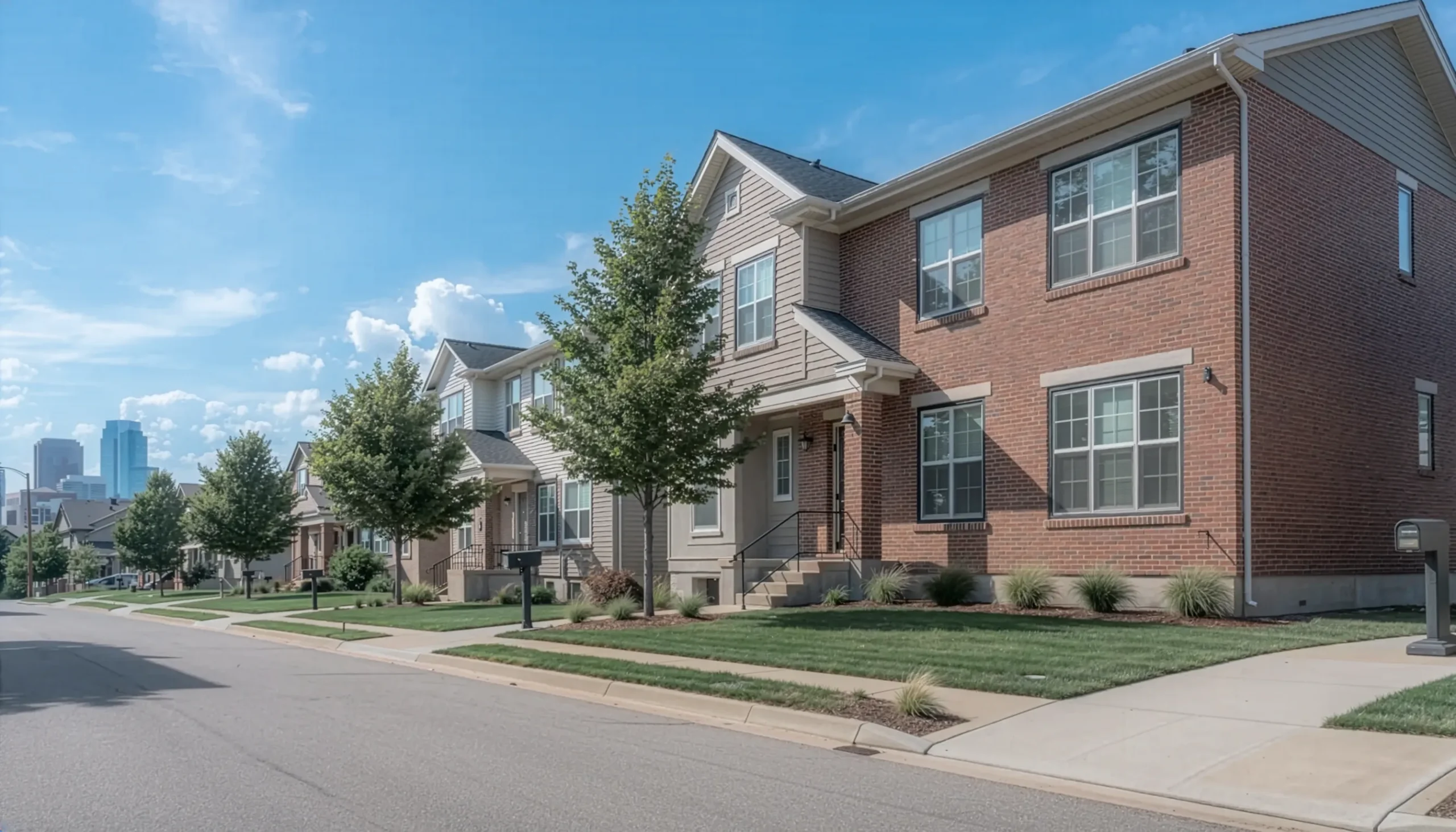
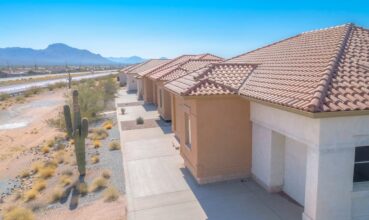
The pattern is visible in a new construction townhome development Corcione’s team is marketing in Lombard called Fairfield Enclave. The six-unit project is priced between $470,000 and roughly $550,000, and Corcione says most of the interest is coming from first-time buyers. “It’s still a good price point for your first-time buyers,” she says. “Although it’s a higher price point – you know what’s going on in our market. Prices have increased dramatically.”
Why Lombard Attracts Buyers Priced Out of Neighboring Towns
Part of what sustains demand in Lombard is its position relative to more expensive neighbors. Communities like Elmhurst and Oak Brook carry significantly higher price tags, and Corcione notes that Lombard can offer entry at roughly half the cost. The town has a walkable downtown, proximity to commuter rail, access to expressways, and the Illinois Prairie Path – an amenity she calls an anchor for the community.
That combination of infrastructure and relative affordability is drawing attention. Corcione compares Lombard’s trajectory to its pricier neighbors, describing it as a community that is developing a similar identity at a lower cost. She groups it alongside Villa Park and similar towns that share the downtown-and-transit profile, distinguishing them from places farther out that lack those features. Properties in communities without strong shopping districts, restaurants, transit access, or good school districts, she says, are the ones sitting longer on the market.
The Inventory Squeeze and What Sells Fastest
Listings that are updated, well maintained, and move-in ready are moving quickly. Corcione is direct about buyer expectations: “Buyers want to walk in and not have to do anything.” Homes that do not meet that standard take longer to sell.
Tight inventory – Corcione describes situations where five to ten buyers compete for a single property – has largely eliminated seller concessions. Credits and major repairs are uncommon because sellers have little incentive to negotiate. “If these buyers start making ridiculous requests, the seller is just going to cancel the contract and move on to the next one,” she says. Minor repairs to keep a deal together still happen, but the leverage sits firmly with sellers.
Recent rate increases have slowed activity slightly, producing what Corcione describes as a stabilization. But sellers still hold the stronger position in most transactions.
Buyer’s Remorse Is the Leading Deal-Killer
When transactions fall apart in the current market, the cause is not typically financing or inspection disputes – it is buyer’s remorse. Corcione identifies it as the single most common reason deals collapse, and she traces it directly to competitive bidding. Buyers stretch to win a multiple-offer situation, then second-guess themselves overnight. “They did what they had to do to get the property because they were fighting with maybe five to ten other buyers,” she says. “And then once they secure it, they take the night to sleep on it – ‘Are we overpaying for this property?'”
Corcione says these buyers are not overpaying – that current prices reflect where the market has settled. “This is where we’re at. This is what the prices have come to, and this is where they’re going to stay,” she says. The challenge for agents, in her view, is educating buyers before they reach that moment of doubt. Buyers who trust their agent’s guidance on pricing and offer strategy are less likely to back out after winning a bidding war.
Rate Sensitivity Is Creating a Window
Interest rates are the dominant variable Corcione is watching. Recent increases have introduced hesitation among buyers, but she frames the slowdown as a tactical opportunity rather than a sign of market weakness. With fewer buyers competing, those willing to act face less pressure. “The fact that the rates have come up right now, it’s scaring other buyers, so they’re sitting on the sidelines,” she says. “Take the time and use it to your advantage – you’re not fighting with as many people.”
The risk she sees is on the other side of a rate drop. When rates fall, more sellers will be willing to give up their current locked-in rates and list their homes, bringing more inventory but also more buyers. “When the rates do come down, it’s going to be complete chaos again,” Corcione says. “It’s just going to drive prices up.” Her advice to buyers is straightforward: get into a property now and refinance when rates decline, rather than waiting for conditions that will bring fiercer competition.
For investors considering the Lombard market, Corcione points to new construction as a strong option when the numbers support it, and single-family homes in towns with good schools and location fundamentals as reliable rental plays. “An investor can buy anything as long as the numbers work,” she says.
What the Current Window Means for Buyers
The period of elevated rates has created a gap between what buyers feel comfortable doing and what the market requires. Corcione says the broader economy and world affairs are adding to buyer caution, layering uncertainty on top of rate sensitivity. But she argues that hesitation carries its own cost. Buyers who wait for lower rates may find themselves back in the same multiple-offer situations they are trying to avoid – only at higher prices.
In Lombard, the fundamentals that drive demand – transit access, school quality, walkable downtown, proximity to higher-cost neighbors – are not changing. What is changing is the number of competing buyers at any given moment. For those who can act now, the math may look better today than it will when rates drop and competition returns.
About the Expert: Angie Corcione leads The COR Team at Fulton Grace Realty, covering Lombard, Illinois, and the surrounding western suburbs of Chicago, for nearly 30 years.
This article is based on information provided by the expert source cited above. It is intended for general informational purposes only and does not constitute legal, financial, or real estate advice. Readers should conduct their own research and consult qualified professionals before making any real estate or financial decisions.