Central Jersey’s residential market is experiencing a new friction point that headline statistics fail to capture: inspection negotiations have become the top reason real estate transactio...

Self-Storage Market Trends Toward Mega-Facilities Amid Cost Pressures

Written by:
Date:
23 Sep 2025
Share via Facebook

Share via Linkedin

Share via X

Copy to clipboard

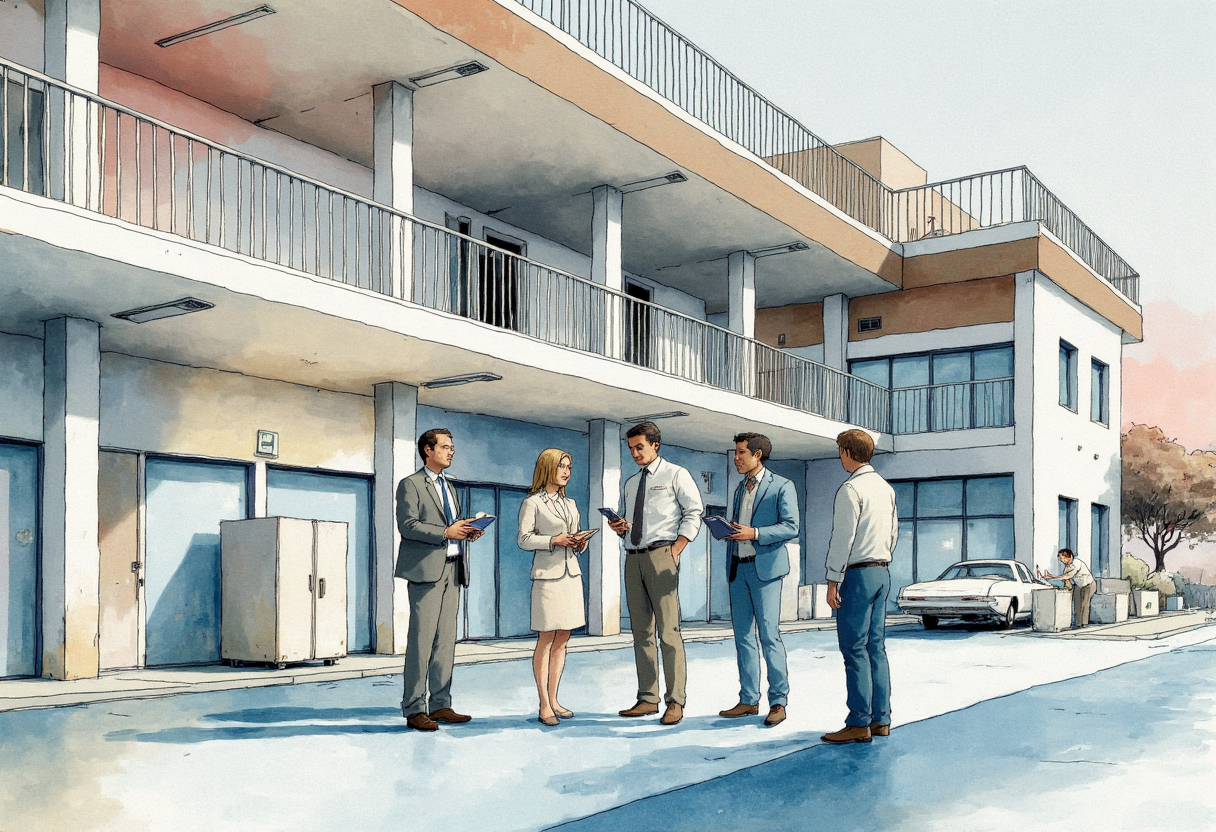
The self-storage industry is experiencing a dramatic shift toward larger facilities as rising costs and operational efficiencies push developers to build bigger, according to Charles Kao, Managing Partner at Twin Oaks Capital. This trend marks a significant departure from historical development patterns and signals changing economics in the sector.
The New Minimum Viable Size
“We’re seeing fewer builds now that are under 50,000 [square feet],” Kao observes. “Now you’re starting to see them like, ‘No, we really need to get into 60,000 square feet.'” This represents a substantial increase from just a few years ago when facilities as small as 30,000-35,000 square feet were still common.
The driving forces behind this shift, Kao explains, are twofold: “One, we need to basically bring our costs down with scale. But then the other thing as well is that management costs are also starting to rise. Labor costs are starting to rise. So you need to aggregate the cost of that labor over a larger facility.”
Technology Enabling Scale
To manage these larger facilities efficiently, operators are increasingly turning to technology solutions. “Our after-hours calls get routed to AI call center,” Kao says, noting that artificial intelligence is proving particularly effective for customer service. “The nice thing about AI is that you don’t have to worry about them losing their temper. They’re patient, you know, and they work 24/7.”
The industry is also embracing a range of outsourcing solutions. “Everybody in the industry is doing that. They’re either doing a combination of outsourcing to the Philippines, Mexico or VA and/or outsourcing to AI,” Kao notes.
Market Implications
This trend toward larger self-storage facilities is reshaping the competitive landscape in several ways. Smaller markets are seeing reduced competition as major players concentrate on large, high-volume sites. The cost and complexity of building these mega-facilities create higher barriers to entry for new developers, limiting fresh competition. Operators are also prioritizing operational efficiency, streamlining management, staffing, and maintenance to handle the scale, while leaning more heavily on advanced technology for security, automation, and customer service.
“You’re not seeing much smaller facilities unless you go into a very Mom-and-Pop type person,” Kao observes.
Investment Landscape
Despite the push toward larger facilities, Kao isn’t seeing distressed sales yet, though he notes this could change. “That could be the fact that the debt that people locked in three, five years ago hasn’t come due yet, so I think that could happen the next year or two,” he suggests.
Recent transactions suggest cap rates have expanded slightly, with Kao reporting recent offers “around a six cap in place, which is, I would say, a little bit of a cap rate expansion from a few years ago.”
The Future of Facility Development
The trend toward larger facilities appears set to continue as operators seek to maximize efficiency and spread rising costs across larger revenue bases. This evolution suggests a future where successful self-storage development increasingly requires sophisticated operational systems and substantial capital investment.
Similar Articles
Explore similar articles from Our Team of Experts.


Perspectives, Commercial Real Estate, Property Technology, Market Analysis & Policy, Industry News, Top Articles
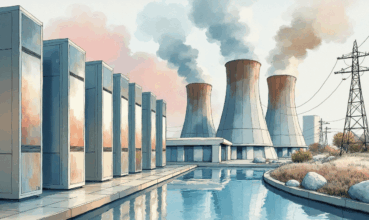
The explosive growth of artificial intelligence is driving data center developers to consider nuclear power as a solution to their massive energy needs, according to a leading real estate at...