Rework consumes an estimated 5 to 12 percent of total project cost on the average commercial build, according to research from the Construction Industry Institute and other industry studies, and design errors and omissions account for roughly a quarter of that figure. On a $50 million project, that’s millions of dollars in avoidable cost, much of it traceable to mistakes that existed on paper months before anyone broke ground: mismatched specifications, coordination conflicts between mechanical, electrical, and structural drawings, load calculations that no longer match the current design.
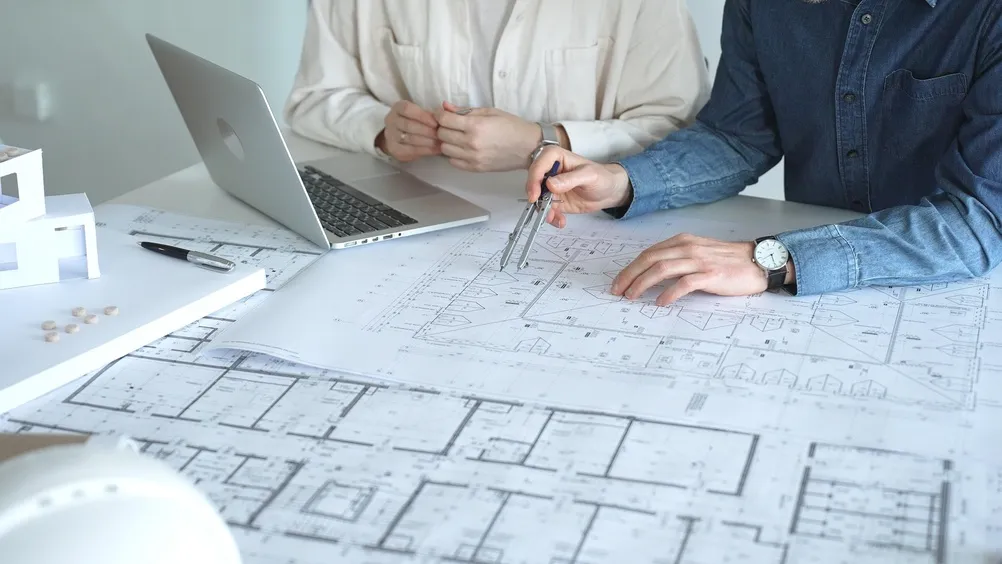
The problem isn’t that nobody checks drawings. It’s that thorough review, across hundreds or thousands of pages, reconciling work from multiple firms each with its own drafting conventions, has historically required teams of trained professionals working weeks of long stretches, and things still slip through. Manual review of a mid-sized drawing set can take a review team the better part of two weeks and still miss a meaningful share of the errors present, according to industry analyses of design-review workflows.
That gap is what a growing category of computer-vision tools has emerged to close over the past several years. At least a handful of venture-backed startups, along with some larger platforms, now run AI models against construction drawing sets specifically to flag the kind of cross-discipline errors that used to depend on a reviewer catching them by hand.
Where the Money Goes
The financial exposure from drawing errors spans a wide range. Minor coordination mistakes, a wiring error in an electrical diagram, a mismatched circuit breaker specification, might cost tens of thousands of dollars if they reach the field. Structural or foundational errors that go undetected through multiple construction phases can reach into the millions: a foundation error discovered after several stories of concrete have been poured doesn’t just require a fix; it requires demolition, re-engineering, and reconstruction.
Manas Gandhi, Co-Founder & CTO of Helonic, one of the companies building AI models for this kind of drawing review, points to a retaining-wall design his tool caught where weep holes were piercing a waterproofing membrane, compromising the wall’s integrity. “That’s not stuff you want to figure out on site,” he says. “That’s going to be huge issues that compound and have downstream impacts.” It’s a small example of a pattern that shows up across the industry’s rework data: the earlier an error is caught, the cheaper it is to fix, and the cost curve steepens sharply once concrete is poured.
Why Manual Review Keeps Failing
Construction drawings are inherently complex, and every building is different. Specifications get copy-pasted between schedules; electrical diagrams carry forward load calculations that may no longer match the current design; different subcontractors use different drafting conventions. A general contractor coordinating between trades is reconciling work products from multiple firms with no single shared standard.
Smaller firms face a version of this problem with fewer resources to throw at it. “When you have three or four people doing your design review process, that’s really difficult,” Gandhi says. “They’re looking through hundreds of pages, if not thousands of pages, on a daily basis and have to catch everything.” Larger firms have bigger review teams, but the underlying difficulty scales with the project rather than disappearing; the volume of pages, the number of coordinating disciplines, and the uniqueness of each building set make comprehensive manual review structurally incomplete regardless of team size, across multifamily, commercial, and institutional projects alike.
What AI Drawing Review Actually Does
The tools now on the market scan drawing sets to flag inconsistencies, mismatched specifications, coordination conflicts between systems, wiring or load-calculation errors, in a fraction of the time manual review takes. According to Gandhi, review work on Helonic’s platform that previously took two full weeks at long hours can be reduced to a few days with AI assistance; other companies in the category report similar time reductions, though methods and baselines vary by tool.
None of the people building these tools describe them as a replacement for human reviewers. “AI will never replace a human,” Gandhi says. “There’s so much value in having a human being check it in a way that an AI model just cannot replicate.” The framing that comes up across the category is closer to a safety net — an additional check that catches items that compound if they reach the field, rather than a substitute for professional review. Where these tools differ from each other is mainly in scope and timing: some run only at specific milestones, others continuously from early design development through construction documents, and some run on-site when new drawing sets arrive mid-construction.
Who Is Adopting This, and Why It’s Spreading
General contractors, owner’s representatives, architects, and engineering firms have all begun integrating AI into design-review workflows over the past few years. The driver across the category is pragmatic rather than novel: these tools reduce time, reduce cost, and catch items that manual review tends to miss, and the tools doing this didn’t really exist five years ago.
For developers and investors, that shift is changing how preconstruction review gets treated. It’s moved from a fixed-cost administrative phase to a more active stage where errors can be intercepted before they become expensive field problems, and adoption is accelerating largely because the cost of skipping it shows up directly in change orders and schedule delays.
The construction industry has long accepted drawing errors as inevitable. What’s changing isn’t that inevitability; it’s the window between when an error exists on paper and when someone catches it. For builders operating on tight margins and tighter timelines, compressing that window is where the money gets saved.
About the Expert: Manas Gandhi is Co-Founder and CTO of Helonic, a company building AI models for construction drawing review.
This article is based on information provided by the expert source cited above. It is intended for general informational purposes only and does not constitute legal, financial, or real estate advice. Readers should conduct their own research and consult qualified professionals before making any real estate or financial decisions.