
Palm Beach County’s real estate market is known for luxury and high price tags, but one agent is challenging established norms with a business model that stands out in the industry. Jason ...

Connecticut Commercial Real Estate Veteran Returns to Brokerage After 23-Year Management Hiatus

Written by:
Date:
14 Jan 2026
Share via Facebook

Share via Linkedin

Share via X

Copy to clipboard

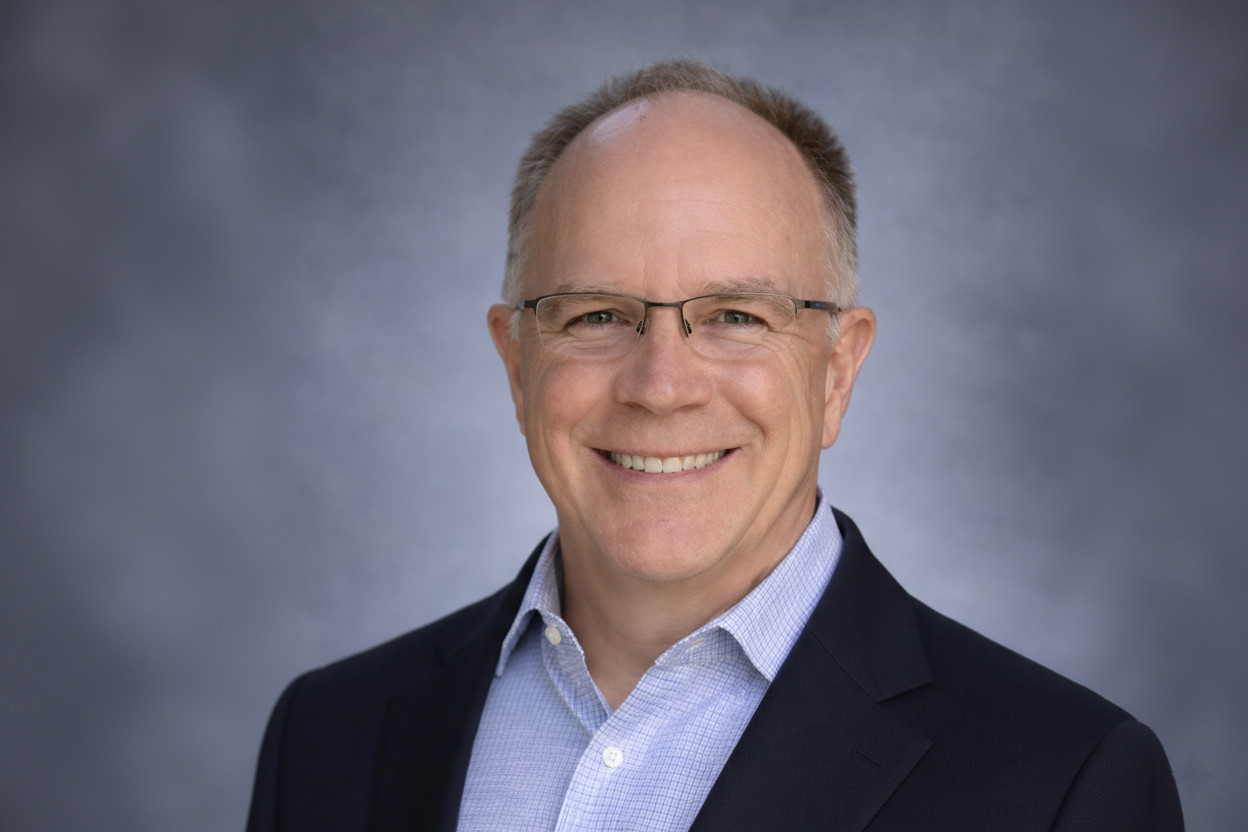
After more than two decades in management, Scott Cooney has returned to active commercial real estate brokerage in Connecticut, bringing with him three decades of industry expertise and a network that is already generating substantial business. Cooney, who began his real estate career in 1995, resumed active brokerage in September 2025 after serving in management roles at Coldwell Banker Commercial. His return comes amid widespread industry consolidation, including Compass’s recent acquisition of Anywhere, which has triggered organizational changes across the real estate sector.
“I started as a commercial broker back in 1995 and was pretty successful pretty quickly,” Cooney says. “Then I had the opportunity to create a residential company that we spun out of our commercial business, and eventually it got acquired by Coldwell Banker.”
Now, after 23 years away from direct transactions, Cooney reports rapid business growth, with referrals from both former colleagues and past competitors fueling his early momentum.
Connecticut’s Market Sees Renewed Interest
Connecticut’s commercial real estate market is seeing renewed activity, primarily driven by demographic shifts that began during the COVID-19 pandemic. The state experienced a significant influx of new residents from urban centers such as Manhattan and Boston, which has impacted both residential and commercial sectors.
“We had a huge influx of folks coming into Connecticut. They were getting out of the urban centers and getting out of Manhattan, getting out of Boston,” Cooney notes. “That’s what’s driving the lack of inventory for residential property, and those people who are coming in want to shop and go to downtown sections.”
This population growth has created new opportunities across the commercial real estate sector. Industrial properties remain in high demand, with Connecticut attracting startups and small industrial operations. Cooney is currently assisting several buyers seeking industrial sites across the state.
Retail Sector Recovery
The retail sector, which faced significant setbacks during the pandemic, is also seeing a resurgence. Cooney attributes this to a renewed consumer preference for in-person shopping.
“People still have a desire to touch and feel what they want to buy,” he explains. “We’re seeing a re-emergence into that market, not big box huge opportunities like we used to see, but more experiential, smaller type of scenarios.”
This recovery is especially evident in smaller Connecticut towns. Cooney cites Ridgefield as an example: “COVID hurt it in terms of retail. Now it’s booming. There’s no space for retail in Ridgefield right now. People want to go into small shops and know who they’re dealing with, talk and share.”
The trend extends to professional services as well. Cooney notes that after years of remote work, agents are returning to office environments. “Before COVID, at any given moment, of my 80 agents, we would have 20 to 25 agents in the office all day long. After COVID, only my admin and I. Now we’re seeing agents coming back in, because in the office environment, people collaborate.”
Office Market Stabilization
The office sector in Connecticut is showing signs of stabilization, with vacancy rates declining. Cooney believes this improvement is tied to the need for in-person collaboration.
“Companies like Google, Apple, and Amazon would never have been born in this current environment, because all of those companies were born together. They collaborated, they huddled in an office, they shared ideas,” he says. “There’s something about being chest to chest, knee to knee with somebody to say they’re having trouble, I have this problem, I need help.”
Cautious Optimism Defines the Market
Despite these positive developments, Cooney describes the prevailing mood as “cautious optimism.” Ongoing economic uncertainty and regulatory changes have led both investors and businesses to adopt a more conservative approach to real estate decisions.
“When I talk about all that optimism, it’s heavily couched by caution,” he explains. “Maybe you don’t have the company that wants to come in and do a big box, 75,000 square foot location. Now they want to tip their toe into the market and see where it goes.”
This caution extends to financing and investment. Lending standards today are stricter than in the pre-2008 era, and while the mortgage business has loosened somewhat over time, it remains far more regulated than in previous decades. “The mortgage business has become more cautious, and over time, it’s become less cautious, but there are still certain parameters that are keeping everybody on the straight and narrow.”
Consolidation Reshapes the Industry
Cooney has observed significant consolidation across multiple industries, including real estate and healthcare. In Connecticut’s medical sector, large healthcare organizations are absorbing smaller practices to increase bargaining power with insurance companies.
“I was talking to a friend of mine who’s a dermatologist, and he said he can only think of maybe five individual practitioners that are dermatologists not connected to a group right now,” Cooney says. “They’re all coming under big umbrellas because they have more ability to negotiate their rates with insurance companies.”
A similar trend is playing out in real estate, with smaller independent brokerages being acquired by national firms. Cooney himself experienced this after selling his company to Coldwell Banker. “It was probably the best decision I ever made in business, because I was getting crushed by the big boys.”
Launching a Coaching Practice
Alongside his return to brokerage, Cooney is launching Scott Cooney Leadership and Performance LLC, a coaching practice aimed at experienced real estate professionals seeking to overcome growth barriers. His focus is not on new agents, but on established agents and team leaders looking to move beyond performance plateaus.
“I’m not the guy to teach you how to do a listing presentation or how to put things on MLS,” he says. “I’m more like, if you’re a $10 million agent, how are you getting to $15 million? What’s stopping you? Why have you been stuck at $10 million for the last three years?”
His coaching draws on 31 years of industry experience and focuses on identifying psychological barriers. “My approach is not necessarily the old ‘you have to make 50 calls in a week to get two appointments.’ My approach is: why aren’t you picking up the phone? What is it about you that stops you from picking up the phone?”
The coaching business, scheduled to launch in early 2026, will offer one-on-one sessions, group training, and in-person workshops through local real estate boards.
Looking Ahead
As Connecticut’s commercial real estate market recovers, Cooney sees opportunities emerging in multiple sectors. Demographic shifts, new work patterns, and evolving consumer preferences are creating new sources of demand for brokers and investors who understand the current landscape.
However, succeeding in this environment requires a clear understanding of new market dynamics and a willingness to proceed with measured optimism. For Cooney, returning to active brokerage after decades in management is both a personal and professional renewal, positioning him for the next phase of his career.
“I’m re-energized,” he says. “It’s been mind-boggling how successful it’s been in terms of referrals. I’m excited to be back out there.”
Similar Articles
Explore similar articles from Our Team of Experts.




Industry Profiles, Property Technology, Real Estate Investment, Residential Real Estate, Featured Articles
“We want to be the Four Seasons and the Ritz Carlton instead of the motel,” says Ting Qiao, CEO and Founder of Wan Bridge Group, describing his vision for the company’s rol...

