


Wellington’s real estate market has changed sharply since the post-COVID surge, but Jim Corbin, an associate at Illustrated Properties with nearly five decades in the business, says the sl...

Condos and Houses Near Town Command Higher Prices as Suburban Buyers Prioritize Walkability

Written by:
Date:
28 Jan 2026
Share via Facebook

Share via Linkedin

Share via X

Copy to clipboard

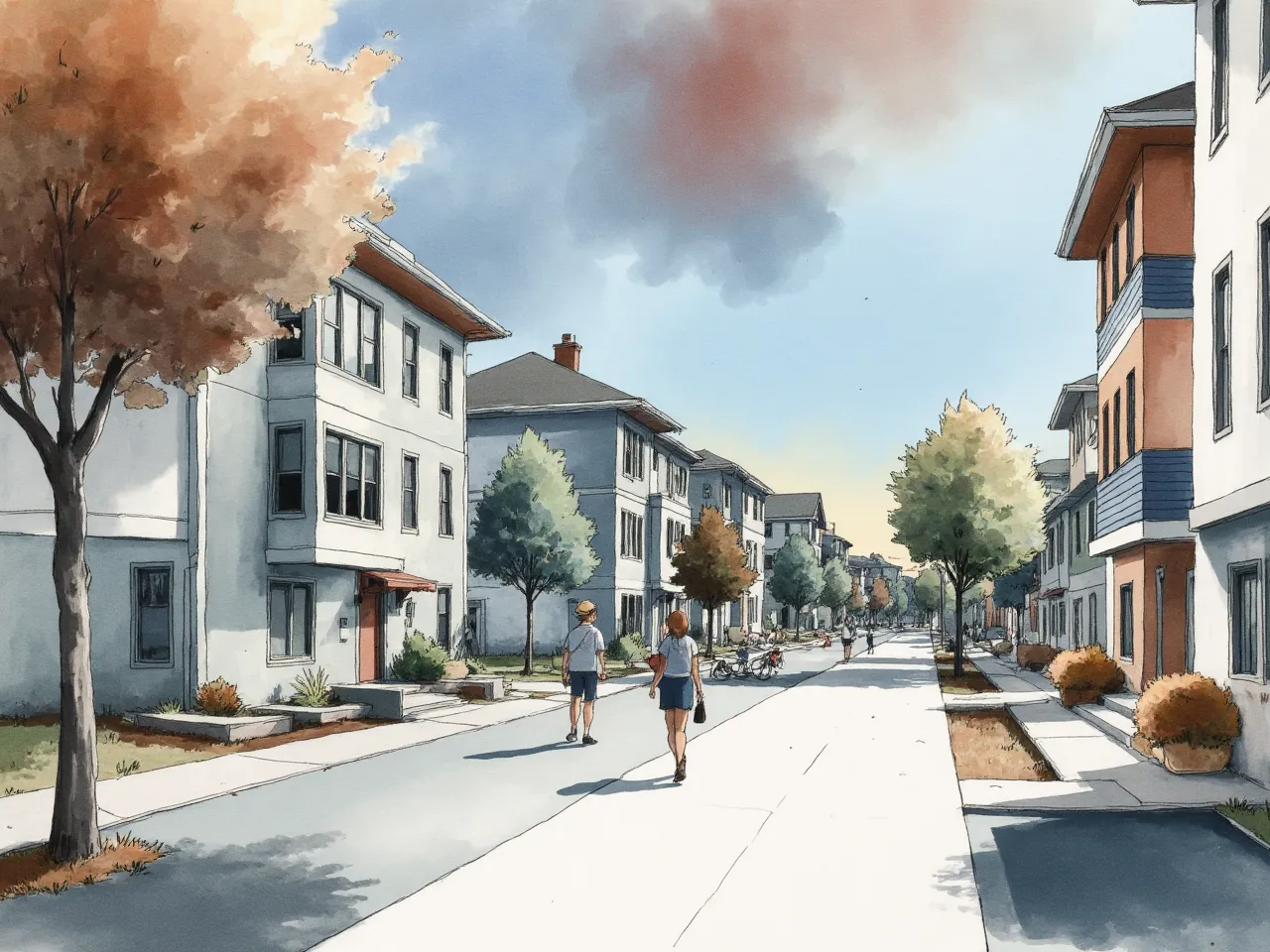
Suburban real estate values are being redefined, according to Connecticut broker Todd Gibbons, who says the longstanding appeal of rural seclusion has given way to a new priority: paying more for homes and condos within walking distance of shops, restaurants, and downtown amenities.
Gibbons, Founder and Principal of Boost Real Estate Group, points to recent transaction patterns showing clear buyer preference for proximity. “There’s been a big trend to be closer to amenities and shops and restaurants and transportation,” Gibbons says. “People like to be able to walk and get a cup of coffee. People like to be able to walk to the beach or walk to shops and restaurants. It’s kind of a little bit more of in-town living or near-town living versus being 20 minutes out in a rural area. Condos and houses near town have seen a lot of appreciation.”
This shift is not a short-term response to pandemic disruptions, but a durable change in how suburban buyers value location. The growing premium for walkable homes is influencing how developers, investors, and municipal planners evaluate where growth and appreciation are most likely in the years ahead.
The Five-Minute Rule: A New Valuation Benchmark
Gibbons describes what he calls the “five-minute rule,” in which homes and condos within a five-minute walk or drive of key amenities attract the most buyer interest and command higher prices. “If you’re within five minutes of everything, those houses and condos seem to become more and more desirable,” he says.
This new calculus marks a significant break from historic suburban development, where larger lots and separation from commercial areas were seen as status symbols. Gibbons notes that the price gap between in-town and rural properties has widened in recent years, though he does not cite specific figures. The trend is evident among buyers who lived in cities during the pandemic and now want suburban space without sacrificing convenience.
Instead of trading proximity for privacy, today’s buyers are seeking a blend: suburban homes with easy access to town centers, shopping, and dining. This has increased demand for properties previously seen as less desirable due to their location or lot size.
Why the Walkability Premium Looks Permanent
Gibbons argues that the preference for walkability is not just a lingering effect of pandemic anxieties. The desire for in-town living has continued to strengthen into 2025, even as health concerns have faded. “We’ve just seen this kind of flight to in-town living,” he says, noting that homes near town centers have consistently outperformed more remote properties in the same towns.
Several factors are reinforcing this behavior. Many buyers who moved to the suburbs during the pandemic have attracted friends and family to follow, creating a self-reinforcing cycle where proximity to amenities becomes even more valued. As more people prioritize walkability, the relative scarcity of these properties is pushing prices higher.
For developers and investors, this persistence suggests that traditional land acquisition strategies may be outdated. Parcels close to retail, transportation, or downtown cores—once considered less attractive because of smaller lots or limited privacy—are now seeing significant appreciation. This challenges established pricing models and requires a new approach to evaluating suburban opportunities.
Impact on Development and Investment
The walkability premium is especially relevant for residential developers deciding where to focus new projects. Gibbons notes that condo developments near town centers are selling quickly, even when units are smaller than those in single-family homes. His firm is marketing a downtown Westport condominium project that has sold over half its units, with seven units moving in just the past two to three months. “The buyer pool is a little bit smaller” for condos, Gibbons says, as they often suit couples more than families, but well-located projects are still seeing strong demand.
This suggests that smaller homes and condos with walkable locations are now competing more effectively against larger, more isolated properties. The conventional wisdom that bigger homes on larger lots will always command higher prices in the suburbs no longer holds across all market segments.
For institutional investors and build-to-rent operators, Gibbons’ experience implies that walkability should be a key factor in site selection. Properties scoring high on walkability metrics may offer better risk-adjusted returns than developments in outlying areas, even when the latter provide more space for the money.
A Boutique Approach to the New Suburban Market
Boost Real Estate Group has adjusted its strategy to focus on in-town properties that align with these evolving buyer preferences. The four-agent firm is currently marketing the Gables Condos project in downtown Westport, matching the demand for walkable living.
Gibbons notes that technology allows his small team to compete effectively without a significant physical presence. “With technology, you don’t necessarily need a big office and a big presence with a lot of agents to accomplish the same thing,” he explains.
The willingness of buyers to pay more for walkable homes is already shaping how new projects are conceived and marketed. Developers and investors who ignore this trend risk missing out on the strongest pockets of demand in the suburban market.
Looking Ahead: How Walkability Will Shape Suburban Growth
The long-term effects of the walkability premium are still unfolding, but current transaction data indicate that this is more than a passing trend. As buyers continue to prioritize minimizing time in cars and maximizing convenience, suburban land values are being reordered around proximity to town centers.
For developers, this means that future projects will need to offer more than just space; they must deliver access, convenience, and a connection to the surrounding community. Investors will need to adjust their models to reflect the new reality that walkable locations can command lasting premiums.
The trade-off between space and isolation no longer defines the suburban market. Instead, the most desirable properties are those that offer both suburban comfort and urban convenience—a combination that is likely to drive appreciation and shape development for years to come.
Similar Articles
Explore similar articles from Our Team of Experts.




Perspectives, Residential Real Estate, Commercial Real Estate, Market Analysis & Policy, Industry News
St. Joseph’s housing market is using a state incentive program to address local housing shortages and support development, according to Kelly Ewalt, Development Director for the city, St. ...

