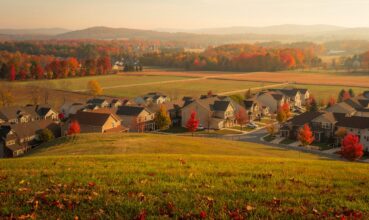
Vail Valley’s real estate market has cooled, not crashed, but the cracks are showing. After years of frenzied pandemic buying that sent home prices soaring and inventory plummeting, Eagle County is now a market where homes sit, buyers walk, and the short-term rental income that sold so many on ownership is quietly falling short of expectations.
Heidi Trueblood, Managing Broker and Team Lead at The Trueblood Team with 8z Real Estate, who has worked the Vail Valley market since 2004, breaks down what’s actually happening across Eagle County. Buyers have stopped rushing, deals are collapsing more often, and the workforce holding the valley together is getting priced out fast.
Buyers Are Done Rushing
The buyers coming into Vail Valley today are not in a hurry. More than half of all purchases are completed in cash, which means no mortgage deadlines, no rate anxiety, and no pressure to move fast. These are mostly second-home buyers from major U.S. cities who fly in on direct flights from New York, Chicago, Houston, and Los Angeles. They are shopping for a lifestyle, not a necessity, and that changes everything about how they behave in a negotiation.
That patience is now working against sellers. Properties that would have moved quickly three years ago are now sitting if they are not priced correctly or properly prepared. Buyers are looking for homes that are genuinely ready and are willing to wait for the right one. Sellers who assume demand will cover up deferred maintenance or an aggressive price are finding out this market no longer works that way.
500 Listings, Zero Relief
Before the pandemic, Vail Valley typically had around 1,000 active listings at any given time. That number collapsed during the COVID buying surge and has only partially recovered, with inventory now at just above 500 homes, its seasonal low. Late February is historically the weakest period for listings because ski season keeps owners in residence or their properties rented out, off the market.
The shortage will not be solved by new construction. Vail and Beaver Creek sit within a narrow mountain corridor with almost no room to build, and the surrounding communities offer no affordable alternatives, as they carry their own resort pricing and supply problems. Until more owners decide to sell, buyers will keep competing over a pool of homes that falls well short of what this market looked like five years ago.
Deals Die at Inspection
Transaction volume has remained relatively steady, but more deals are falling apart before closing. The breaking point is almost always the inspection, where repair requests and concession lists have grown longer and more specific. Sellers are often caught off guard by how much buyers now expect to negotiate after an offer is accepted.
The tension is not just about money but about what each side thinks is reasonable. Buyers expect a move-in-ready home even at resort prices, while sellers believe they have already priced in the property’s condition. Neither side is entirely wrong, and that standoff is where deals are dying. Agents are spending more time managing expectations on both ends just to keep transactions alive.
Short-Term Rentals Lied to You
The pitch was simple: buy in Vail, rent it out when you are not there, and let the property pay for itself. That math has never been clean, and it is getting harder to ignore. Cash buyers might cover their monthly costs through rental income, but anyone carrying a mortgage is unlikely to break even. The numbers used to sell buyers on investment potential are often best-case scenarios rather than realistic ones.
Regulation has made ownership even more complicated. Every town in Eagle County plays by different rules: Vail requires a licensed property manager within 60 miles, Avon has capped short-term rental participation at 15 percent per HOA in certain areas, and Beaver Creek operates under its own county-level structure with an evolving tax setup. Licenses do not transfer between sellers and buyers, which affects how properties get valued. Outside Vail Village and Beaver Creek proper, occupancy rates have also dropped as rental supply has grown without a matching increase in visitors.
Workers Leave, Resort Crumbles
A single-family home in Edwards, one of the more accessible mid-valley communities, now sells for around $2 million, compared to roughly $800,000 before the pandemic. The people who cook in restaurants, staff medical clinics, and keep the resort running day-to-day cannot afford to live anywhere near where they work, and that gap is now wide enough to threaten how the valley functions.
When service workers cannot afford to live in a community, they leave. When they leave, restaurants close earlier, wait times grow longer, and the experience that wealthy buyers pay a premium for starts to fall apart. If the valley loses the people who make it livable, the buyers paying millions for a home there will have less and less reason to show up. The resort market’s biggest long-term risk is not a drop in demand at the top. It is the collapse of everything underneath it.
About the Expert: Heidi Trueblood is managing broker and team lead at The Trueblood Team, 8z Real Estate, based in Eagle County, Colorado. Her practice covers residential real estate across the Vail Valley market, including Vail, Beaver Creek, Edwards, and surrounding communities in the Eagle County resort corridor.
This article is based on information provided by the expert source cited above. It is intended for general informational purposes only and does not constitute legal, financial, or real estate advice. Readers should conduct their own research and consult qualified professionals before making any real estate or financial decisions.