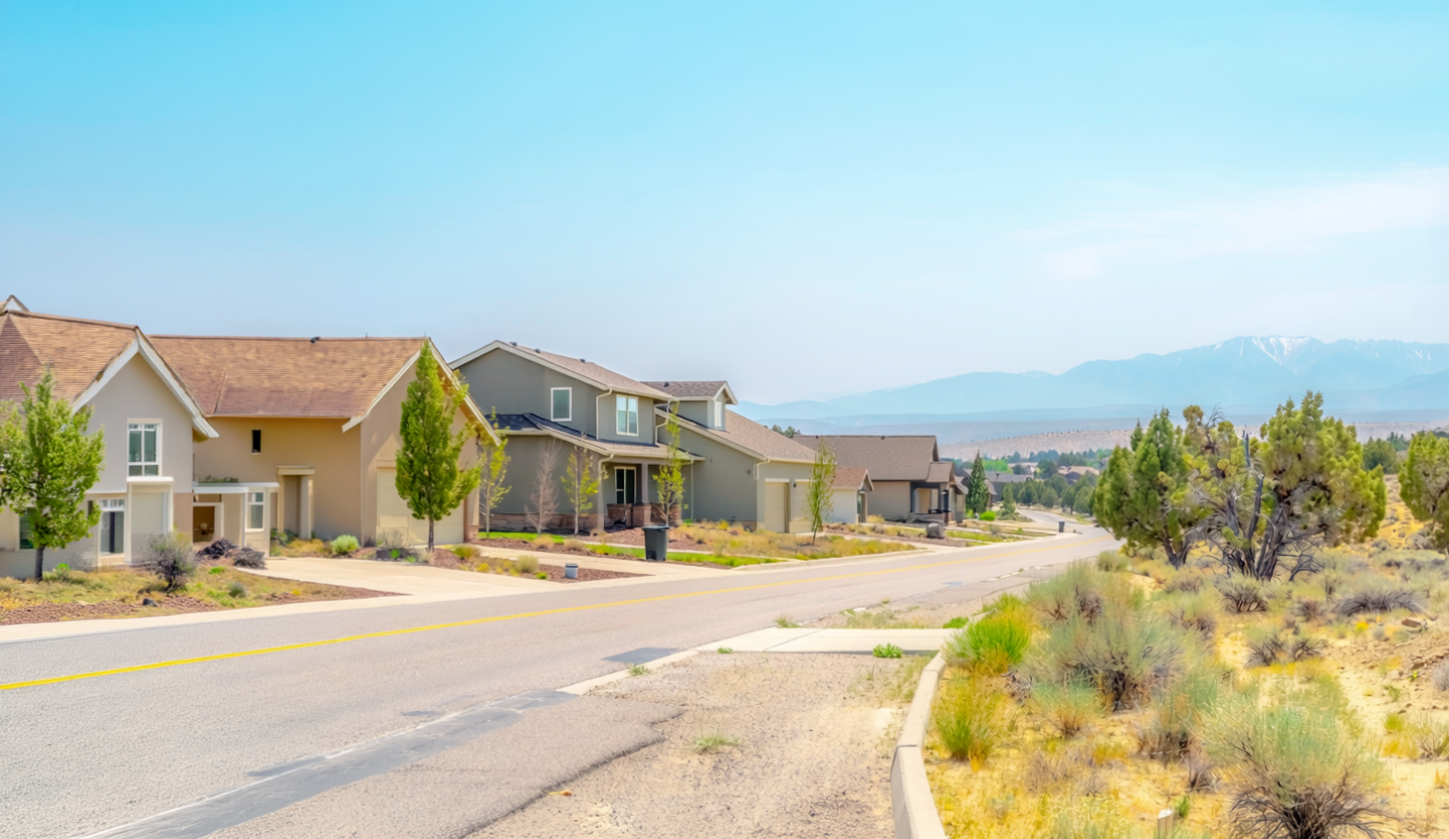
Most housing markets expand outward when demand rises. Central Oregon cannot. Oregon’s land-use framework defines where developers can build neighborhoods, and those boundaries do not move just because more people want to live in Bend. On one side of a street sits a subdivision; on the other, a five-acre parcel that no developer can turn into 20 houses. The result is a market where supply stays structurally limited, density increases in place, and affordability pressure has nowhere to release. For some buyers who arrived during the pandemic, that pressure has become one of the reasons they are now leaving.
Steve LaCrosse, a principal broker with the Ladd Group at Cascade Hasson Sotheby’s International Realty, says the constraint is straightforward. “You can’t go buy 100 acres and turn it into a neighborhood. That just doesn’t work like that here,” he says. “Zoning is very strict. Land use is very strict.”
Prices Peaked in 2022
The supply constraint has not pushed prices higher since 2022, but it has kept central Oregon expensive. The region’s median home price sits in the low $700,000s, with the west side of Bend – closer to trails and the mountain – running between $1 million and $1.1 million. Prices peaked around 2022 as interest rates rose and the pandemic-era rush ended. Since then, the market has been essentially flat, with normal seasonal cycles but no meaningful appreciation.
That combination of high prices and no growth has consequences for pandemic-era buyers now trying to sell. LaCrosse says turnover among people who bought three or four years ago runs well above pre-pandemic norms. Return-to-office mandates are not the driver. “We really haven’t seen that,” he says. Instead, some buyers acted too fast, others left the jobs they had and are pursuing new opportunities, and affordability pushes some out. Still others have found that Bend’s relative isolation, with direct flights to about eight airports, does not suit families who need to be near children or parents.
For those who bought in 2022, the math is often unfavorable. “Unless they happened to get a steal at that point or made some improvements that brought the value up, they are often looking to recoup maybe some expenses, but oftentimes taking a small loss,” LaCrosse says.
The clearest example of pandemic-era turnover has played out in land sales, and rising construction costs, not flat prices, drove it. During 2021 and 2022, buyers purchased vacant lots intending to build custom homes. Build costs have since climbed well beyond where they stood when those buyers purchased, and as a number of those owners now get ready to move, they are selling their lots and buying resale homes instead.
LaCrosse says the turnover does not concentrate in neighborhoods that ran up during the pandemic. The land sales are the pattern that stands out. “People that bought land in that time period have maybe been priced out,” he says.
Rural Due Diligence
At $1 million and above, the buyer pool is almost entirely new arrivals, mostly from western states – Seattle, Portland, California, Texas, Arizona, and Colorado, LaCrosse says. Some are drawn to the idea of acreage outside town, but the practical realities of rural ownership in central Oregon catch them off guard.
Irrigation rights are layered across multiple districts, some holding more senior rights than others. During drought, districts pull back on deliveries, which can directly affect what a property can support. Owners of irrigated land must keep using the irrigation – growing crops like alfalfa, for instance – or risk losing those rights. Wells occasionally stop pulling what they once did and need to be redrilled or drilled deeper. A septic system rated for three bedrooms cannot support a planned guest house until the owner expands it or has it rerated.
LaCrosse says the appeal of acreage often obscures what ownership actually requires. “People don’t understand with irrigation rights, they’ve got to work the land, they’ve got to continue to use the irrigation or they’ll lose it,” he says. “Growing five acres of alfalfa might not be something that everyone’s interested in doing.”
These issues rarely kill deals outright, but they regularly trigger renegotiations. LaCrosse describes a 20-year-old pump that no longer pulls like it used to, and a property with four wells – two no longer in use, two never tagged – that required working with the local water master. “It creates a lot more due diligence,” he says.
For out-of-state buyers, the first questions are about intended use and lifestyle: whether they want to farm, whether they need water rights, and what matters most to them. A five-acre parcel 25 minutes outside Bend may sound close to someone from Fort Lauderdale, but in central Oregon that drive means 20 miles from town, and it can feel far removed.
Insurance Splits at the City Limits
Within Bend’s city limits, insurance has not become a transaction obstacle beyond rising premiums. Outside town, on forested properties, the picture changes. Some providers decline to write policies for homes in the woods, and most neighborhoods are adopting Firewise standards, which call for defensible space around structures and limits on tree density. Roof material matters too: insurers covering forested properties often reject cedar shake and want concrete tile or metal, which better resist embers and ash.
“If you live up in the woods or outside of town in the forest, there’s a good chance you’re going to have at least a few insurance providers that say we’re not interested,” LaCrosse says.
About the Expert: Steve LaCrosse is a principal broker with the Ladd Group at Cascade Hasson Sotheby’s International Realty in central Oregon, where he leads the team’s market updates, operations, and systems.
This article is based on information provided by the expert source cited above. It is intended for general informational purposes only and does not constitute legal, financial, or real estate advice. Readers should conduct their own research and consult qualified professionals before making any real estate or financial decisions.