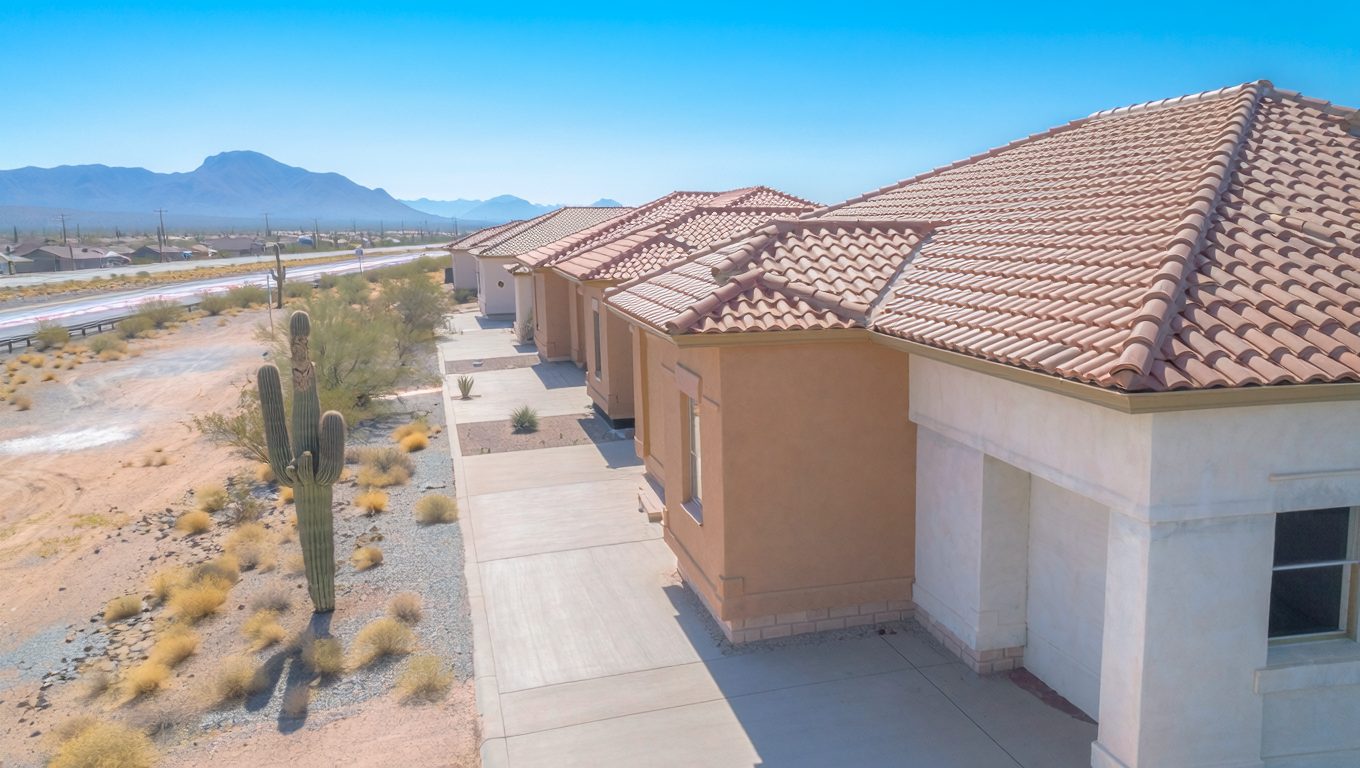
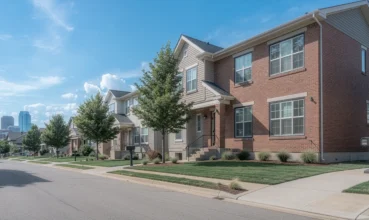
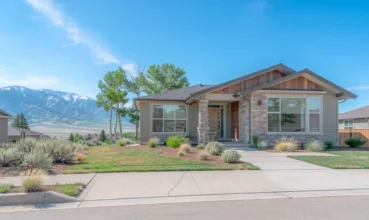
For years, Casa Grande sat south of the Phoenix metropolitan area as a place most Valley residents associated with outlet shopping and agriculture – not homeownership. That perception is changing, driven by a widening of Interstate 10, a state water designation that clears the way for more than 80,000 new homes across Casa Grande and the surrounding area, and corporate employers that have chosen the area for its space and lower land costs.
The result, according to April Shumway, a 30-year industry veteran with over two decades in production homebuilding, is a market in its “early infancy of growing” – a phase where land is still affordable relative to the broader Valley, but the conditions that typically precede rapid price appreciation are already falling into place.
Location and Price Work Together
The I-10 corridor has long been Casa Grande’s link to the Phoenix metro, and the stretch between the two has long been its weak point. A widening project now under construction is expanding the last two-lane section of I-10 between Phoenix and Tucson to three lanes in each direction. The Arizona Department of Transportation is building it in segments, with full completion scheduled for late 2029.
Once that work is done, Casa Grande’s location becomes an asset in two directions at once. Shumway says she already has clients commuting from the area to the north end of Tucson, which places the city between Arizona’s two largest employment centers. A faster, wider route north would make it a practical base for commuters to either one.
What makes that location worth the drive is price. The gap between Casa Grande and the Phoenix metro is substantial enough to surprise even buyers who expect a discount. Shumway says buyers can still find homes in Casa Grande for under $300,000, and the gap extends well beyond starter homes. For buyers seeking acreage, she says comparable land in the Valley costs “double to three times or more.” That differential applies across the spectrum, from entry-level housing to custom construction and estate-sized properties.
Shumway says out-of-town buyers are particularly struck by the combination of Arizona’s climate and landscape with prices well below what Phoenix or Tucson commands. “It surprises them that they can still do it affordably,” she says.
Jobs Before Rooftops
The same low costs that draw homebuyers also draw industry. Lucid Motors builds its electric vehicles at a plant in Casa Grande, and data center developers have begun pursuing projects in the surrounding county, drawn by available land and lower commercial real estate costs. Shumway sees the employment base and the housing market as mutually reinforcing: the space and pricing that attract large employers are the same factors drawing homebuyers.
“They have the space,” she says of the corporate arrivals. “And financially you can get a little bit better of a deal on the real estate you’re needing for those big large companies.”
Housing supply is the piece that lags behind. The water designation, which the state awarded to Arizona Water Company in March 2026 for its service area around Casa Grande and Coolidge, has opened the door for larger production builders to evaluate Casa Grande – a market most would not have considered a decade ago. But Shumway’s two decades in production homebuilding give her a practical view of the timeline between regulatory approval and a model home opening its doors.
“The shortest timeframe for most builders is about six months to a year,” she says. “Six months is actually being very generous. That’s if everything’s already been completed” – referring to public reports and preliminary infrastructure work. A more realistic minimum, in her assessment, is a year, with additional time depending on what parcels builders acquire and how those fit into their broader development portfolios.
For buyers and investors, that lag matters. The demand signals – employer arrivals, the highway widening, the water designation – are visible now, but the housing inventory those signals will eventually generate is still months or more from reaching the market.
Where the Investment Opportunity Is
That gap between demand and supply shapes Shumway’s advice to investors: buy land, and buy as much as possible while the growth cycle is still early. Her reasoning is that density will come – larger builders are already scouting parcels – and with it, sizable lots will grow scarcer.
She also notes a demand pattern she sees firsthand: families purchasing larger parcels to build what she calls “family compounds,” where multiple generations live on a single property. “You can’t do that on a small little postage stamp lot,” she says. “But you can do that if you can buy a nicer parcel.”
Her advice to buyers weighing whether to wait for lower interest rates is similarly direct. She describes clients who are purchasing now with the intention of refinancing later, reasoning that a rate drop would bring a wave of sidelined buyers into the market and push prices up. Buyers who act now, in her view, can deal with financing as it becomes relevant “rather than have to worry about prices escalating because everyone jumps off the sidelines at once.”
Shumway says the biggest headwind she watches is interest rates and their effect on first-time buyers. For those buyers, she looks at what support they need – rate buydowns, closing cost coverage, or other incentives. More experienced buyers, she says, care less about financing and more about finding the right home with the right finishes at a competitive price.
About the Expert: April Shumway is a real estate professional based in the Casa Grande, Arizona area, with 30 years in the industry, including more than two decades as a vice president in production homebuilding with national builders. She focuses on resale and custom construction.