As housing affordability continues to challenge families across California, Accessory Dwelling Units (ADUs) have emerged as a compelling solution for homeowners seeking to address multi-generational living needs while making sound investments. At the forefront of this movement stands Acton ADU, a company that has evolved from a traditional remodeling business into one of the largest ADU specialists in the San Francisco Bay Area.
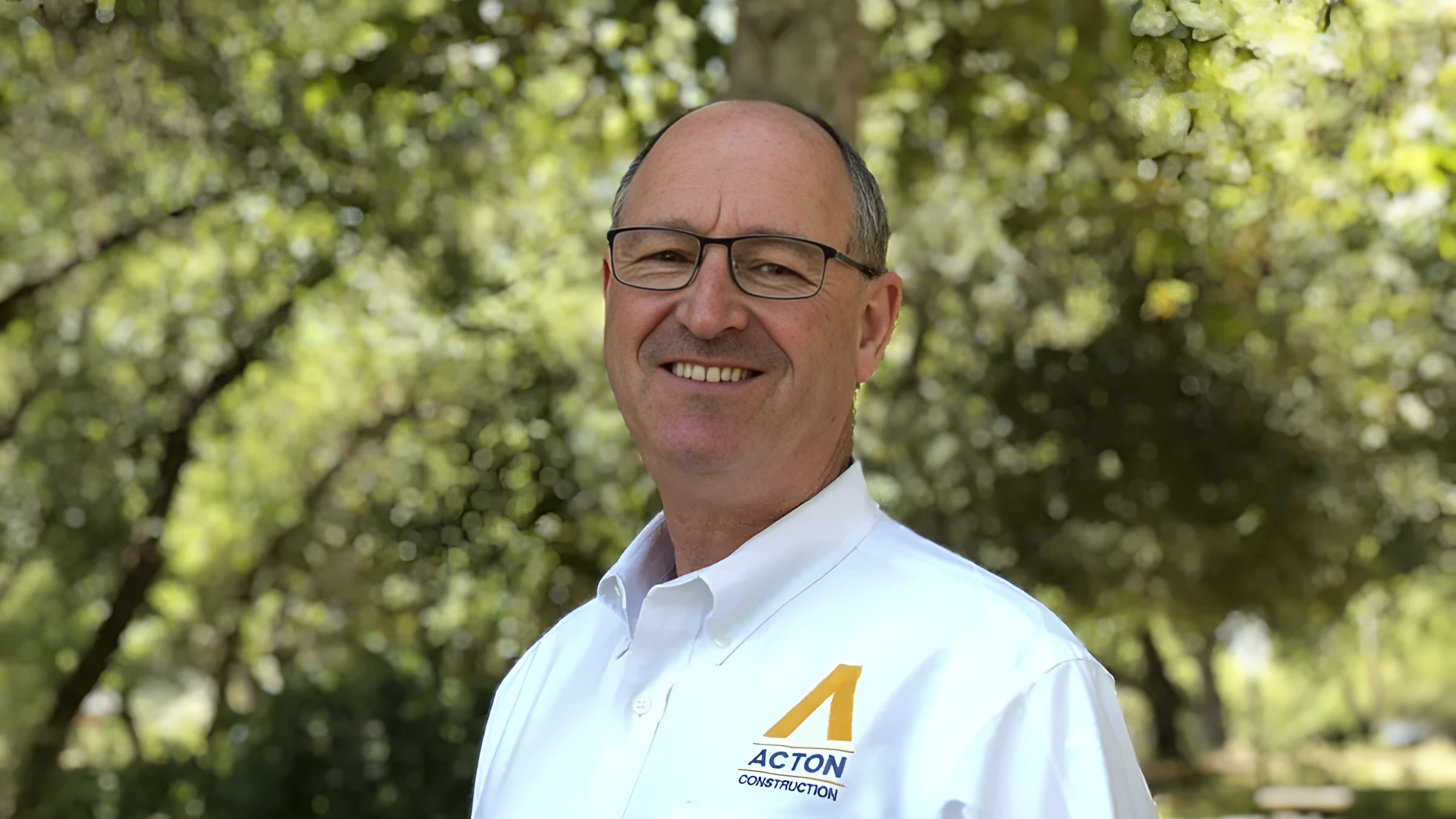
“Once ADU laws were passed, it really clicked with me that this is what I wanted to do for the rest of my career. It resonated in so many ways. I love small architecture, helping families, and creating lasting, functional, multi-generational spaces,” says Stan Acton, Founder and CEO of Acton ADU.
From Kitchens to Backyard Homes: A Career Transformation
For Stan Acton, the journey to becoming a leader in the ADU space began with a profound moment of clarity. After 35 years in residential construction, primarily focused on kitchen and bath remodels, Acton found himself increasingly unfulfilled by projects that merely made homes “prettier” without addressing fundamental needs.
“I would receive many requests from people saying, ‘We’d like to make our houses better prepared for multi-generational living,’ but none of the laws allowed for that,” Acton recalls. “Once ADU laws were passed, it really clicked with me that this is what I wanted to do for the rest of my career.”
That epiphany came suddenly, Acton describes making the decision to pivot his business in “about 15 seconds” one morning while getting ready for work. What began as a personal vision quickly attracted others who shared his passion for creating housing solutions.
“I spoke with a good friend in marketing about the idea and asked, ‘What do you think of this?’ He immediately responded, ‘Man, I want to be a part of that,'” Acton explains. “Then I talked to a few other people, and they wanted to join too. It became clear there was genuine interest from people wanting to be part of a solution.”
By 2016, before California’s ADU laws had even fully changed, Acton had renamed his company from Acton Construction to Acton ADU, signaling a complete commitment to this new direction.
One Neck to Ring: The Full-Service Advantage
What distinguishes Acton ADU in the marketplace is their comprehensive design-build approach. Rather than requiring homeowners to coordinate between separate architects, engineers, contractors, and permitting specialists, Acton provides end-to-end service.
“The vast majority of our work is what’s called design-build, where clients come to us wanting, for lack of a better term, one neck to ring,” Acton explains. “That always ends up being my neck, which means I must be careful about ensuring we provide a quality experience throughout the entire process.”
This integrated approach has allowed Acton to serve diverse communities throughout the Bay Area. “There are certainly people in wealthier neighborhoods without budget concerns who focus more on architecture,” Acton notes. “But there’s also a significant portion of the population facing pressing family housing issues that need economical, long-lasting, strategic solutions.”
The company is currently expanding its service area from Burlingame through the bottom of the Bay and up to Point Richmond, with plans to eventually cover the entire Bay Area and parts of Southern California.
“Close But Not Too Close”: The Multi-Generational Solution
While ADUs can serve various purposes, from home offices to rental properties, Acton has found its niche in addressing family housing challenges, particularly multi-generational living arrangements.
“I have this conversation two or three times weekly,” Acton says. “It’s driven by people who call us with an initial need: ‘My mother-in-law is reaching a point where we need to be geographically closer to care for her properly, but we don’t want to just spend money for the next five years. We’re looking for something that can later accommodate our children returning from college, or perhaps we can move into it while the kids take the main house.'”
This pattern has allowed Acton to develop specialized expertise in designing spaces that serve immediate family needs while providing long-term flexibility and value.
Beyond the Backyard: The Economics of ADUs
For many families, the decision to build an ADU involves careful economic consideration. Acton emphasizes that an ADU isn’t always the right solution. Sometimes buying a condo or modifying an existing home makes more sense, especially for short-term needs.
“People who decide to proceed with an ADU typically have multiple objectives,” Acton explains. “They want a good investment and a solution for short-term family needs. All these factors come into play.”
The financial advantages of ADUs can be substantial. “A major consideration is the cost of providing housing. You don’t need to purchase new property in Silicon Valley to provide a home,” Acton points out. “The investment value is exceptional compared to other real estate investments, because you’re spending $1 and almost immediately, your asset is worth between $1.06 and $1.18, plus you have potential ongoing revenue if you decide to rent it.”
Beyond economics, there’s also the “close but not too close” factor that makes ADUs ideal for multi-generational living. “People want proximity without excessive closeness, they don’t want family members moving directly into the house. They want to provide space and independence while maintaining close oversight,” Acton says.
“Can I Build an ADU?”: Clearing Up Common Misconceptions
Despite growing awareness, misconceptions about ADUs persist. One of the most common questions Acton receives is simply: “Can I build an ADU in my backyard?”
“The answer varies almost from lot to lot, let alone from city to city or neighborhood to neighborhood,” Acton explains. “There are easements, setbacks, and neighborhood-specific restrictions. Some areas have flood issues. Some neighborhoods have historic requirements.”
Another misconception is that ADUs are simple to implement. “The perception that you can just order one and have it dropped in the backyard” overlooks the complex pre-construction process. “Navigating all the pre-construction elements is remarkably complex,” Acton emphasizes. “Once all documentation is complete, permits are issued, engineering is done, and setbacks are determined—then construction becomes straightforward. The complexity lies in the preparation.”
Families Coming Home: Emerging Trends in the ADU Space
As the ADU market matures, Acton has observed several significant trends. One is the increasing emphasis on flexibility in design. “The trend is definitely toward flexibility, ensuring designs serve multiple needs, whether for aging parents, rental income, future care, or adult children,” Acton notes.
Perhaps most striking is the shift toward more nuclear family arrangements. “With so much uncertainty in today’s world, we’re seeing families wanting to become more nuclear, to reunite, share common space, and support each other,” Acton observes. “Historically, families have dispersed geographically. What we’re witnessing now is a partial reversal, with families pulling back together and increasing their interdependence.”
The industry itself is evolving toward more integrated service models. “In the ADU world specifically, we see a trend toward single-point accountability, where clients want one company handling design, permitting, construction, and warranty,” Acton says. “Design-build creates less friction. It’s easier for people to manage when they have just one entity to hold accountable rather than sixteen.”
Perhaps most encouraging is the growing public awareness and acceptance of ADUs. “When we started, people didn’t even know what ADU stood for, making it somewhat risky to name the company Acton ADU,” Acton recalls. “Now the term is widely understood, and public awareness about their benefits, uses, and value has significantly increased.”
As housing challenges persist across California and beyond, companies like Acton ADU demonstrate that innovative approaches to existing residential properties can create meaningful solutions for families while strengthening communities. By transforming backyards into homes, they’re building bridges between generations.