The Idaho real estate market has undergone significant change over the past several years, driven by corporate migrations, changing demographics, and evolving investment strategies. At the c...

Building Real Estate Success Through Cash Flow Instead of Relying on Appreciation

Written by:
Date:
29 Oct 2025
Share via Facebook

Share via Linkedin

Share via X

Copy to clipboard

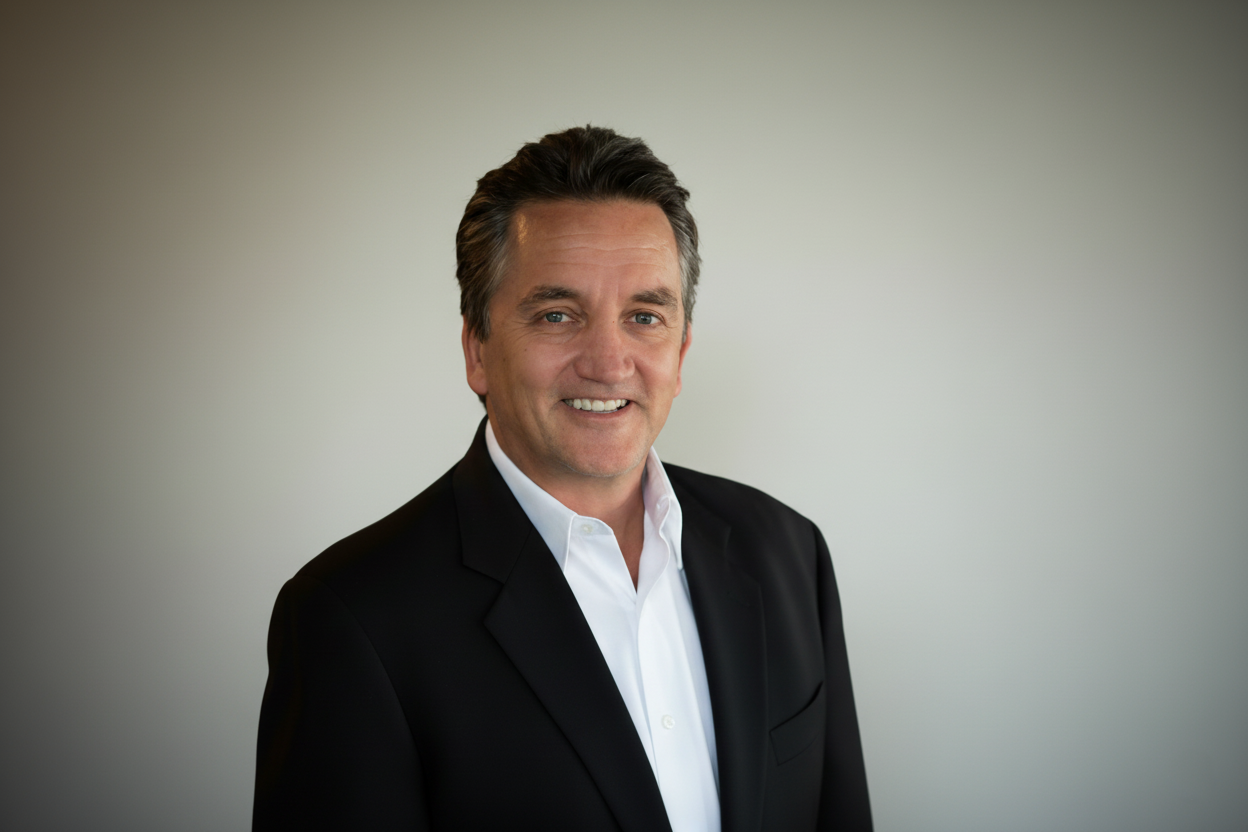
The transition from analyzing investments to operating them can reveal uncomfortable truths about market dynamics. For Justin Ford, founder and CEO of Pax Properties, that realization came during the 2008 financial crisis, when his real estate portfolio went from significant value to underwater in a matter of months.
“I woke up one morning in 2008 about three in the morning and said, ‘Boy, everything I got is underwater. What am I going to do?'” Ford recalls. “And I thought, well, what would I do if I didn’t have these properties? Oh, I would buy.”
That clarity during a difficult period would define Ford’s investment philosophy and drive Pax Properties from 40 units to 1,600 units over the following years.
The Foundation in Financial Publishing
Ford’s approach to real estate investing was shaped by 17 years in financial publishing at Agora, where he worked alongside Austrian School economist Dr. Kurt Richebächer, former head of Dresden Bank. Late-night conversations about economics and market fundamentals in Europe became invaluable when Ford entered real estate in 2002.
“I really had an appreciation for the fundamentals and a real understanding that people can get infatuated and get carried away,” Ford explains. “I also understood that if I am doing something real, the first part of the word real estate is real, then I have to provide a service and earn my return, not just make my money on price appreciation.”
This perspective led Ford to develop a contrarian investment philosophy focused on the three controllable elements of real estate returns: cash flow, amortization, and positive leverage. Appreciation, he believes, is uncertain.
The Four Pillars of Real Estate Returns
Ford breaks down real estate returns into four components, with particular emphasis on the power of amortization. “Amortization comes from the Latin word meaning death, and that’s basically, with every mortgage payment on a fixed rate mortgage, you’re paying down your mortgage,” he explains. “So your tenants can actually pay your mortgage off entirely over time.”
His mathematical example illustrates this approach: “Let’s say you bought a $300,000 home and put $10,000 down with an FHA loan. What you’re paying in principal, interest, tax, and insurance is roughly equal to what you would pay for rent. But over the next 20 years, that’s going to stay largely stable while rent doubles or triples. At the end of 30 years, your mortgage has gone down to zero. Your $10,000 has turned into $300,000, even if real estate prices never go up by a single dollar.”
This focus on fundamentals served as both a strategy and a safeguard. “By focusing on those fundamentals, they act as a constraint against your own excessive enthusiasm,” Ford notes. “You have to check yourself.”
Vertical Integration as Risk Management
Unlike most syndicators who outsource operations, Pax Properties has built an integrated platform that includes construction, roofing, and property management companies. Ford’s reasoning is rooted in fiduciary responsibility: “When I started using other people’s money, I became very, very conservative. I can’t trust someone who tells me, ‘We’re going to manage you fantastically. We’re going to build it right at this budget.'”
The learning curve was steep. “Sometimes I call ourselves vertically disintegrated,” Ford admits. “We made plenty of mistakes, and we learned from most of them and hopefully got a bit better.”
The construction savings add up over time. On a hypothetical $2 million renovation, Ford explains, “We can do it for maybe $1.2 million after I price it out. After we go in there and make our mistakes, we probably come in at $1.8 or $1.9 million, we don’t save a lot on the first one. But the next time, that same $5 million job, we think we can do for $3 million, and we do it for maybe $4 million because our mistakes cost less.”
These cost savings enable Pax Properties to serve working-class markets that many developers avoid. “It allows us to have a price basis that allows us to rent and sell at a basis that can serve the actual working class market,” Ford says.
Florida Market Dynamics
Operating across Florida from Jacksonville to Fort Lauderdale and Tallahassee, Ford has witnessed significant shifts in demand patterns. Central Florida markets like Ocala have surprised him most. “When it was such a sleepy town, when I first looked, now I have to wait 15 minutes to make a left turn out of my property. It is just booming there.”
The growth stems from practical considerations. “Not everyone comes to Florida because of the ocean. A lot of people come to Florida because of the weather, and also because it’s far cheaper than the northeast or California,” Ford observes.
Even in expensive South Florida markets, Ford sees opportunities emerging. “I think I’m going to be able to buy some reasonably good deals in Palm Beach County where I live,” he says, though he remains cautious about market enthusiasm. “Usually, when people tell you, ‘Hey, that market’s hot,’ I go the other way.”
The Affordable Housing Challenge
Ford’s next venture addresses one of the industry’s most pressing challenges: attainable housing for working families. He plans to leverage Florida’s Live Local Act, which allows increased density for developments serving households earning up to 120% of area median income.
His vision involves quarter-acre lots with 1,500-square-foot main houses and 800-square-foot accessory dwelling units (ADUs) connected by covered walkways. “You might have a landscaper who makes $40,000 a year, and his wife is maybe a housekeeper making $30,000. They’re going to get credit for the unit out back they’re going to rent, which boosts their income by underwriting,” Ford explains.
The ADU rental income could add $12,000 annually to the family’s qualifying income, making homeownership accessible at price points around $450,000. “Over time, that dramatically reduces their out-of-pocket costs, and that can change lives. You go from working class to owning a home.”
Ford’s design philosophy emphasizes climate-appropriate construction with wrap-around porches, strategic plantings, high ceilings, and cross-ventilation to reduce air conditioning needs by 50%. “It would be built in such a way that you’d probably need AC 50% less than a normal house, because you’re building a house that breathes for the Florida climate.”
Looking Forward
Ford acknowledges this represents new territory for Pax Properties. “I’ve never built ground up yet. We’ve done about $55 million worth of construction ourselves, but that’s always been renovations. This will be our first ground up stuff.”
The timeline reflects his measured approach: land acquisition beginning now, but construction not starting until 2027. “We’re going to first take advantage of some existing opportunities to strengthen our overall company and then we’ll be building.”
Ford’s willingness to share his affordable housing strategy reflects the scale of the challenge. “The economic moat for this idea is zero. I’m happy if everyone does it. We need about 4 million homes. It’s not like, ‘Oh, he’s got a great idea.’ Everyone will still be able to do it if they want to do it.”
For an industry often focused on luxury developments and maximum returns, Ford’s approach offers a different model: one where fundamental analysis, operational control, and social impact can coexist with strong financial performance. His track record suggests that focusing on what you can control rather than what the market might deliver produces the most sustainable results.
Similar Articles
Explore similar articles from Our Team of Experts.

Industry Profiles, Residential Real Estate, Property Technology, Market Analysis & Policy, Real Estate Services
The home ownership industry faces a fundamental disconnect. While consumers experience buying, financing, insuring, and maintaining a home as one continuous journey, the industry remains fra...