
Palm Beach County’s real estate market is known for luxury and high price tags, but one agent is challenging established norms with a business model that stands out in the industry. Jason ...

Building Complete Communities How Red Oak Development is Redefining Austin's Master-Planned Future

Written by:
Date:
19 Aug 2025
Share via Facebook

Share via Linkedin

Share via X

Copy to clipboard


The Austin metropolitan area’s rapid growth continues to challenge traditional development approaches, with Caldwell County alone expected to double its population by 2040. While many developers have pulled back amid market uncertainty, Red Oak Development Group is taking a different path, aggressively pursuing what they call “complete communities” that integrate residential, commercial, and lifestyle elements into cohesive master-planned developments.
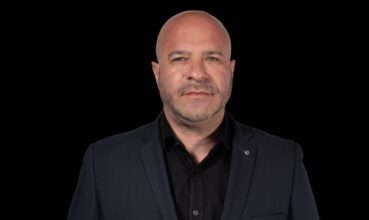
Mike Miller, Executive Vice President of Real Estate and Community Development at Red Oak Development Group, brings a unique perspective to this strategy. With degrees in both architecture and urban planning from the University of Virginia, followed by a master’s in land and real estate development from Texas A&M, Miller’s career has been shaped by a vision that extends beyond traditional subdivision models.
“I grew up seeing the bigger picture through working at an architecture firm,” Miller explains. “I saw the individual on the other end of the table telling me their vision for what I was to design. That vision was the developer providing the vision, and I was putting the deal in AutoCAD. I quickly realized I needed to go back to school and become a real estate developer.”
A Consumer-Centric Development Philosophy
Red Oak’s approach centers on what Miller describes as “complete communities” that challenge conventional master-planning wisdom. Rather than relegating commercial elements to the periphery, the company integrates mixed-use components as core amenities for residents.
“We don’t just consider the residential and put the commercial on the outer edge of the plan and color a box red, and sell it to a third party developer,” Miller notes. “We truly vision out the community as a whole. We bring our commercial into the community as part of an amenity for our residents.”
This philosophy extends to understanding buyer demographics that many developers overlook. Miller points to a critical market insight: “Eighty percent of the home buyer pool out there is actually not your traditional nuclear family.” This recognition drives Red Oak’s diverse product offerings, designed to appeal to a wide variety of buyers, from single mothers to young professionals and baby boomers seeking low-maintenance lifestyles.
The company’s flagship development, Moxie in Lockhart, exemplifies this integrated approach. The community plans include restaurant and retail spaces, medical facilities, live-work units for entrepreneurs, and co-working spaces—all designed to be walkable from residential areas.
Strategic Market Positioning
Red Oak’s aggressive development stance comes at a time when many competitors are retreating. The company currently has over 6,000 lots in various stages of entitlement across the Austin area, with a particular focus on Caldwell County markets like Lockhart.
“We own the most lots in Caldwell County in the Austin area,” Miller states. “Caldwell County is expected to double by 2040, and Lockhart is the county seat. We feel very bullish on Caldwell County. There’s a lot of demand down there, but not a lot of product on the ground.”
This timing strategy reflects Miller’s long-term market view. With lot development requiring 12 to 18 months, the company is positioning for what industry experts predict will be improved market conditions by 2027. “Unless you plan during times of murkiness and get things going, you’re going to miss the next boom,” Miller explains.
The approach appears to be resonating with builders. Despite current market challenges, Red Oak reports success in selling development positions, with several builder meetings scheduled for mid-September to market Phase Two of the Moxie development.
Innovative Product Mix and Market Response
Red Oak’s product strategy addresses multiple market segments often ignored by traditional developers. Live-work units represent what Miller calls “a whole asset class that is yet to be uncovered.” These three-story units allow homeowners to purchase with traditional mortgage financing while operating businesses on the ground floor.
“If I were a local entrepreneur down in Lockhart, it would be gold to have that many customers right outside my space,” Miller observes. “And then I’ve just got to walk downstairs to get to work that day.”
The company also emphasizes third-place retail concepts: coffee shops, cafes, and co-working spaces that serve the growing work-from-home population. “Work from home, as much as a lot of big companies hate it, it’s here to stay,” Miller notes. “Those third places become important for people who don’t have the community connections at the office.”
Measuring Success Differently
Red Oak’s approach extends to how it evaluates project success. While traditional developers focus on metrics like price per front foot or absorption rates, the company emphasizes what Miller calls “human metrics.”
“We want to measure things like happiness indices and life per square foot, and how many parks or community get-togethers our community curates,” Miller explains. “We know these will drive the profit bottom line, but if we concentrate on the human metrics, then we feel like the profitability metrics will follow.”
Regulatory Strategy and Community Partnership
The company’s development process includes what Miller describes as a “Charette process” an intensive design sessions that begin with city stakeholder meetings. This approach has proven effective in smaller markets.
“On day one of that Charette process, we actually meet with the cities. We tour their downtowns with the city manager and mayor and councilmen. We understand the needs and desires they want for their community, and we do our best to incorporate those into our design process,” Miller explains.
This collaborative approach has yielded positive results. Miller recounts feedback from Seguin officials: “They said, ‘We’ve never had a developer come to us and ask us our thoughts and then incorporate our thoughts.’ They were amazed by the process.”
Market Challenges and Opportunities
Despite the company’s optimistic outlook, Miller acknowledges current market realities. Land acquisition costs remain elevated, though he notes some softness and increased seller willingness to consider structured financing. Water availability continues to be a significant constraint in the Austin market, sometimes complicating development timelines.
Looking ahead, Miller identifies regulatory risks, particularly around minimum lot size requirements that could impact the diverse housing types Red Oak champions. “We’ve got to break the mold of these 40-, 50-, 60-foot front-loaded lots where every house has a four-bedroom unit. It’s just not what today’s buyers want,” he argues.
The company’s focus on housing diversity also addresses affordability concerns. “If we can combat that attainability with cottage-type product, or townhouses, or alley products, it opens up the buyer pool because it’s a little less square footage, maybe a smaller yard,” Miller notes. “There’s a lot of studies out there saying that home buyers will sacrifice a smaller lot or smaller home in order to be able to purchase the American Dream.”
Looking Forward
As Red Oak prepares to bring thousands of lots to market over the next 18 months, Miller remains confident in the company’s differentiated approach. The strategy of building complete communities with diverse housing options and integrated amenities represents a bet that Austin-area buyers are ready for alternatives to traditional suburban development patterns.
“We need to start designing homes for a changing world,” Miller concludes. “Our residential strategy incorporates an array of housing types to meet those needs and today’s prismatic household compositions and not just adding them for variety, but adding them so it makes a more inclusive community for everyone.”
With Caldwell County’s projected population doubling and continued demand for alternatives to urban living, Red Oak’s vision of complete communities may well represent the future of master-planned development in one of America’s fastest-growing metropolitan areas.
Similar Articles
Explore similar articles from Our Team of Experts.