
You’ve finally found the Manhattan apartment that checks all your boxes. The price fits your budget, the location is ideal, and you’re ready to make an offer. Yet, the deal unrav...

American Homes Are Getting Smaller — and Buyers Are Fine with That

Written by:
Date:
17 Mar 2026
Share via Facebook

Share via Linkedin

Share via X

Copy to clipboard

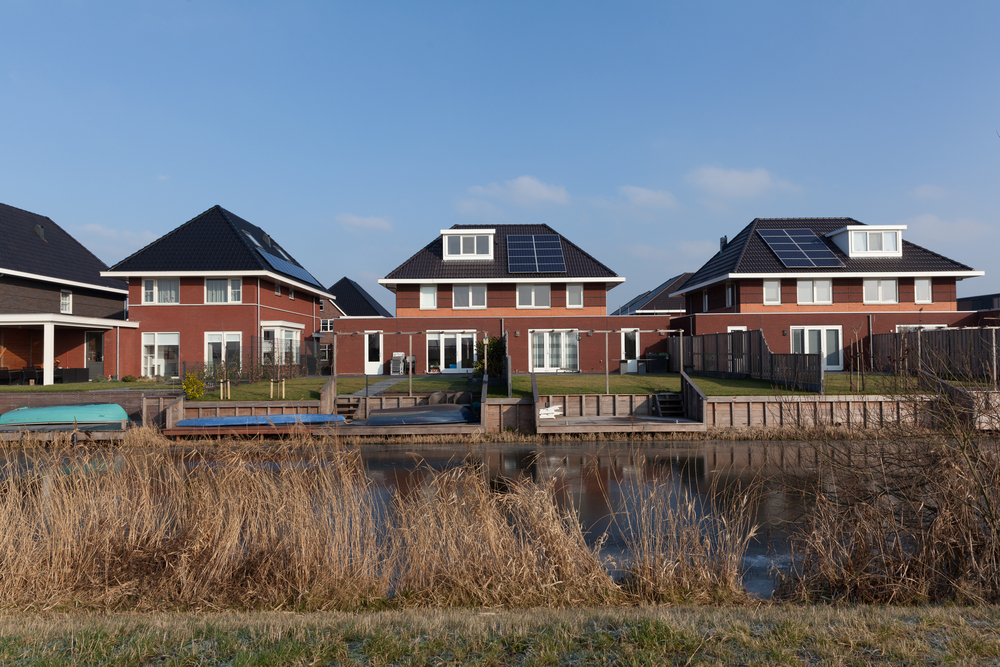
Five years ago, a new suburban home often stretched 3,500 square feet. Today, the same builder might offer you 2,800 — and argue it’s the better deal. The difference isn’t just size. It’s insulation, windows, air sealing, and long-term costs that most buyers never thought to ask about.
“The easiest way to pay for performance is to design your house to be a bit smaller,” says Cary DeCamp, managing director at Kala Performance Homes in Kansas City. After a career in technology, DeCamp co-founded a construction company focused on “high-performance building.” He’s now seeing a clear shift: buyers are willing to give up square footage in exchange for quality, durability, and lower long-term costs.
Bigger Isn’t Always Better
For years, American buyers prioritized space — bigger kitchens, extra bedrooms, and bonus spaces were seen as smart investments. But rising construction costs have left builders with few options to keep prices in check. With material and labor expenses up sharply, most have already reduced quality to the minimum allowed by code. That leaves size as the only major variable left to adjust.
“They’ve gone about as cheap as they can get,” DeCamp says. “Now there’s starting to be a downward trend in how big houses are.”
This trend is visible in new projects. Families who once planned a 3,200-square-foot home are now opting for 2,400 square feet and using the savings to improve insulation, windows, and air sealing. The result is a house that costs less to heat and cool, lasts longer, and offers greater everyday comfort — even if it means one fewer bedroom.
What Buyers Want
Kala Performance Homes works on projects ranging from affordable housing to custom homes above $2 million. Across that spectrum, DeCamp sees buyers’ priorities changing. Younger clients, in particular, are less interested in oversized homes with little-used rooms.
Instead, they’re focused on durability and long-term costs. Buyers now ask whether windows will need replacement in a decade, how much maintenance the home will require, and how it will perform during extreme weather. “People don’t want to buy a new house and have to spend $10,000 in a decade replacing windows because of wood rot,” DeCamp explains.
A decade ago, most buyers were concerned with finishes and sheer mass. Today, many want to know how thick the walls are, how much air leaks through the building envelope, and whether the house will remain solid after 30 years. This marks a clear departure from previous trends focused on cosmetic appeal.
Less Can Be More
Choosing a smaller, better-built home doesn’t have to mean giving up comfort. In fact, a well-insulated 2,200-square-foot house with triple-pane windows and airtight construction will often feel more comfortable and perform better than a 3,000-square-foot home built to minimum code standards.
Kala Performance Homes builds to near-Passive House standards — an approach borrowed from a rigorous European energy efficiency framework that goes well beyond what most local building codes require. While typical code calls for minimum insulation grades and standard windows, Passive House principles require thicker insulation, triple-pane windows, and airtight construction.
This raises upfront costs, but that’s where building smaller comes in. A buyer who trims 400 square feet from their plan can redirect that savings toward better materials and systems, ending up with a home that costs less to heat, cool, and maintain over time.
Taking Advantage of This Trend
If you’re planning to build a custom home or buy new construction, these changes present real opportunities:
- Don’t assume new means high-quality. “People assume if they buy a new house, they’re buying a high-quality house,” DeCamp says. Most new homes meet only the minimum building codes, which cover safety but not comfort, efficiency, or longevity.
- Ask about performance, not just square footage. Find out how the home is insulated, how airtight it is, and what energy costs to expect. Most builders won’t highlight these details unless you ask directly.
- Consider reducing the size and increasing the quality. Cutting 400 square feet from your plan could free up $40,000 to $60,000 for better windows, thicker walls, or a more efficient HVAC system.
- Choose builders who focus on durability. If a builder’s sales pitch is all about finishes and cosmetic upgrades, keep looking—the structure and systems of the house matter far more in the long run.
A New Definition of Value
The era of “bigger is better” is fading. Buyers are discovering that a well-built 2,400-square-foot home is a better investment than a cheaply built 3,200-square-foot house — and costs less to own over time. As DeCamp notes, “People are more open to a better building, as opposed to just buying size.”
As buyers become more educated about building performance and long-term expenses, that demand will likely continue to grow. For anyone entering the market, prioritizing quality over size is often the smarter financial move.
About the Expert: Cary DeCamp is the Managing Director of Kala Performance Homes in Kansas City. DeCamp focuses on high-performance residential construction, Passive House building, and affordable housing development.
This article is intended for informational purposes only and does not constitute legal, financial, or investment advice. The views and opinions expressed herein reflect those of the individuals quoted and do not represent an endorsement of any company, product, or service mentioned. Readers should conduct their own due diligence and consult qualified professionals before making any investment decisions.
Similar Articles
Explore similar articles from Our Team of Experts.