

In today’s luxury coastal markets, the usual reasons for failed real estate deals — financing issues, inspection surprises, or low appraisals — have largely faded into the background. ...

Automation Meets Its Limits: The Case for Human Skill in Building Operations

Written by:
Date:
03 Oct 2025
Share via Facebook

Share via Linkedin

Share via X

Copy to clipboard

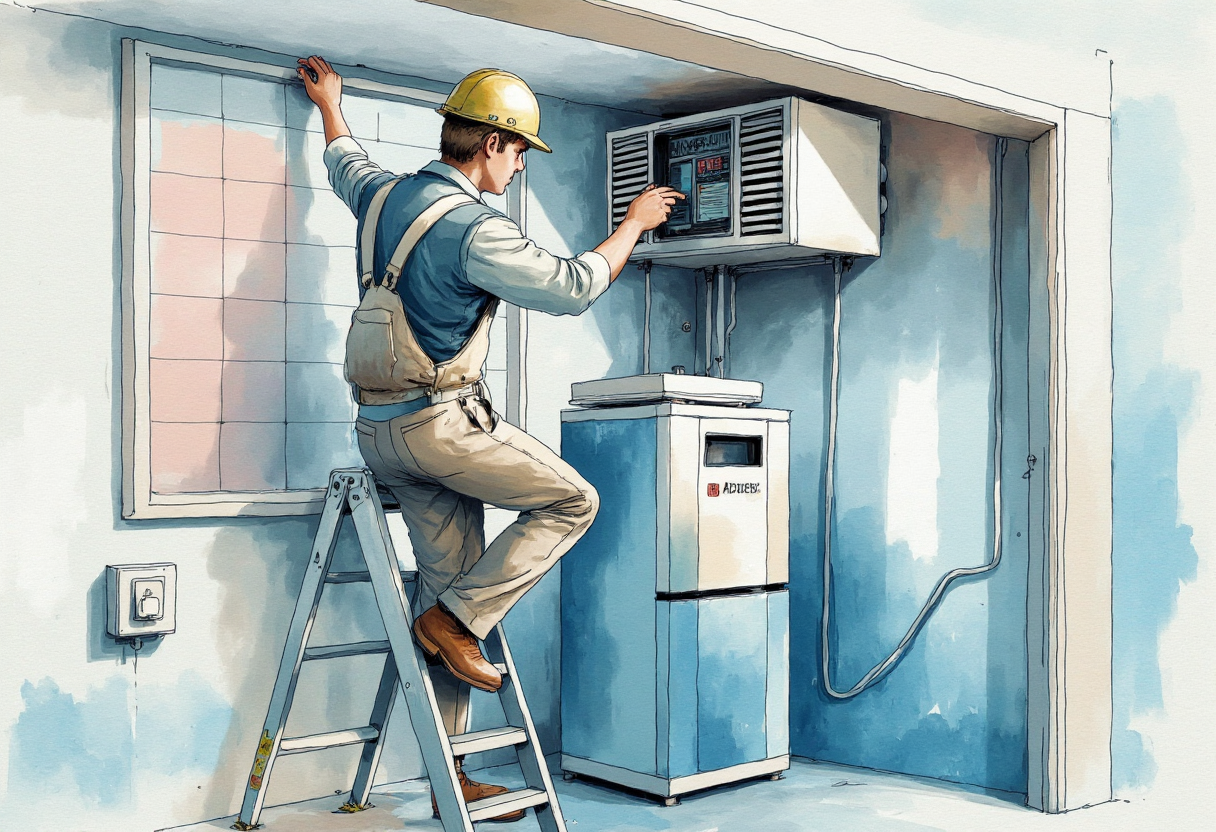
Facility management veteran argues that fears of AI displacing skilled trades are misplaced, pointing to critical hands-on work that technology cannot replicate.
David Trask, Host of Facility Voices and industry expert with over 13 years of experience, has a clear message about artificial intelligence in building maintenance: AI may be advancing rapidly, but it cannot climb a ladder or detect a rattling machine with experienced ears.
The Human Element in Modern Buildings
“AI is not going to replace an air filter on a roof. AI is not going to change a belt in a unit that just broke,” Trask says, addressing widespread concerns about automation displacing workers. While he acknowledges AI’s role in predictive maintenance and system monitoring, Trask argues the technology remains fundamentally limited when it comes to physical maintenance and repairs.
According to Trask, the real crisis isn’t AI replacing workers – it’s finding enough skilled professionals to maintain increasingly complex building systems. “We’re losing generational knowledge of buildings. And the challenge we’re also seeing in the industry is that there aren’t enough people coming in to backfill those positions that are leaving,” he explains.
Breaking Down the Skills Gap
The shortage stems partly from longstanding misconceptions about trades careers, Trask argues. “The stigma for years has been that blue collar jobs, skilled trades jobs are a job, not a career. That’s wrong,” he says. This attitude has steered many young people away from what can be lucrative and stable professions.
Trask points out that modern building systems require sophisticated technical knowledge alongside traditional hands-on skills. From advanced HVAC systems to smart building controls, today’s maintenance professionals need to understand both mechanical systems and their digital interfaces.
The Path Forward: Human-AI Collaboration
Rather than replacement, Trask envisions AI augmenting human capabilities in building maintenance. He says AI and sensor systems can provide early warnings about potential issues, but human expertise remains essential for diagnosis and repair.
“AI may tell you and provide some predictive things that something’s not running efficiently,” Trask explains, “but somebody still has to go fix a thing.”
Industry Response and Solutions
Leading organizations are already adapting to this reality by developing internal training programs. “I just interviewed three of them this week on the podcast. Top of mind for all three of them were, we’re building an internal apprentice program,” Trask shares. These initiatives often combine traditional apprenticeships with modern technical training.
Some companies are partnering with trade schools and offering certification programs, creating clear career advancement paths for maintenance professionals. This approach helps attract new talent while ensuring knowledge transfer from experienced staff.
Looking ahead, Trask believes successful facility management will depend on effectively combining human expertise with technological tools. While AI and automation will continue to advance, the fundamental need for skilled human professionals in building maintenance appears unlikely to diminish.
Similar Articles
Explore similar articles from Our Team of Experts.