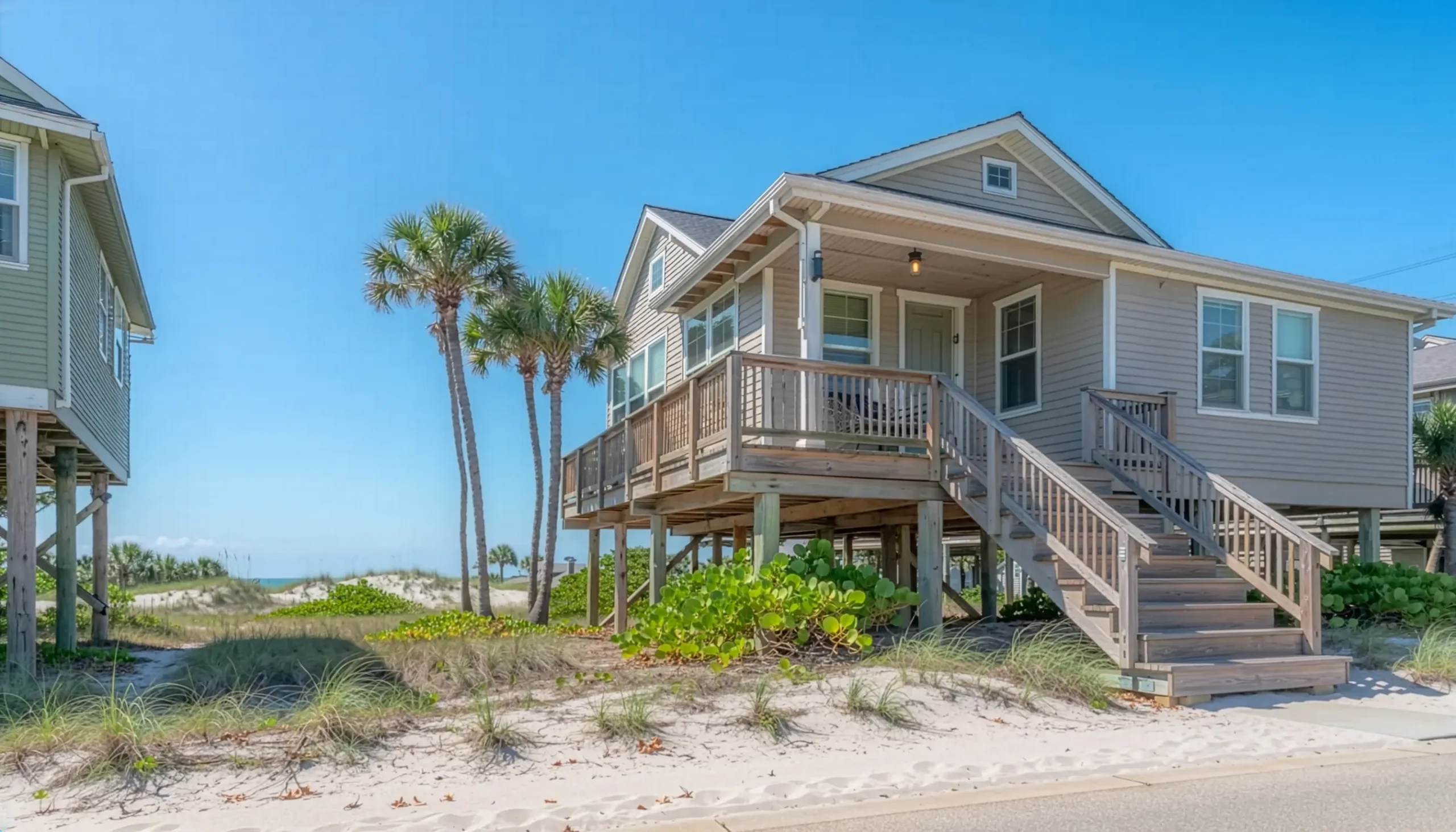
Most Florida markets that lose 25 to 30 percent of their home values are in decline. On a ferry-access barrier island off the coast of Englewood in Charlotte County, the drop is producing something different: a functioning market reorganizing around a lower price band, with rebuilt housing stock and buyers who are willing to pay less but are still showing up.
The island – roughly 1,100 properties spread across Don Pedro Island, Knight Island, and the north-end Palm Island Resort – has absorbed three hurricanes in the last four years, according to Robin Madden, who has owned Islander Properties in Placida, Florida for nearly 20 years. The most destructive was a nine-hour, 180-mile-per-hour storm that pushed eight feet of water up the front doors of beachfront offices. The damage is largely repaired. The market emerging on the other side looks meaningfully different from the one that existed before.
The island sold $55 million in 2021 across 115 transactions. This year, total island sales stand at $21 million across just 35 transactions. Madden has handled $12 million of that volume. “The values will come back,” she says, “but at the moment, the confidence level is not where it will be.”
Activity Has Shifted to a Lower Price Band
The most active segment of the market has moved downward. Properties in the $500,000 to $700,000 range are selling, while the $1.5 to $1.8 million listings that characterized the pre-hurricane market are sitting longer. Madden’s own closings this year have ranged from that lower band up to a $4 million sale, but volume is concentrated at the bottom.
The buyer profile has not changed as much as the price range. Most purchasers are second-home buyers from the Midwest or the Tampa area who use the island seasonally. The island does not attract institutional capital or high-rise development. There are individual homes, vacation rentals, and some duplexes – nothing resembling a metro skyline.
That distinction matters for understanding who invests here. “An investor to me is somebody who’s buying a second or third home,” Madden says. “This is where they come certain times of the year.” The island’s remoteness – ferry access only, no malls, no urban nightlife – filters for buyers seeking a specific kind of environment. Madden describes it as a place people either love or leave. Those who come are looking for calm and distance from daily stress, not the amenities of Sarasota or Naples.
Storm Damage Created an Unintentional Renovation Cycle
One of the less obvious effects of three hurricanes is that much of the island’s housing stock has been substantially rebuilt. The first storm destroyed interiors. The subsequent water storms – Helene and Milton – forced replacement of mechanical systems underneath elevated structures: air conditioning units, electrical hookups, and related infrastructure.
The result is that older homes now carry significantly updated interiors and systems. “People are, in essence, while they might be buying a house that was built in 1989, they’re getting pretty much a brand new place,” Madden says. That renovation cycle is helping move inventory even as overall values remain depressed. For buyers, the combination of lower prices and rebuilt interiors creates a purchasing opportunity that did not exist before the storms.
Insurance Is Manageable With Local Knowledge of Elevation
Florida coastal insurance has been a headline concern statewide, but Madden’s experience on the island suggests the picture is more nuanced than the broad narrative implies. The island’s properties are elevated on stilts – Madden’s own home sits 13 feet above base flood elevation – and the island falls outside the V zone that has driven the steepest premium increases elsewhere. Madden notes that the island’s base flood elevation is actually higher than parts of mainland Englewood.
One buyer recently received an outsized flood insurance quote, but Madden attributes that to using a non-local insurer unfamiliar with the island’s specifics. “We use local insurance companies – people that know the island, people that know the area,” she says. “I believe the flood insurance has been reasonable.” The takeaway for buyers considering barrier island property is that insurer selection and knowledge of local elevation data can produce significantly different premium outcomes on the same structure.
Seasonality Has Returned
Before the hurricanes, the island had effectively lost its off-season. Post-COVID demand kept activity steady year-round. That pattern broke with the storms and has not fully reassembled. The snowbird season from January through April was strong this year, and summer brought Florida-based visitors back. But the traditional September-to-Thanksgiving lull has returned for both rentals and sales.
Madden sees this as a return to the island’s historical rhythm rather than a new problem. Inventory reflects the shift: she started the year with 30 listings and now has 10, with overall island inventory sitting at roughly 6 percent of total properties.
Recovery Is Underway but Not Complete
Madden expects the market to return to 2022 sales levels by year’s end and projects further improvement next year, though she estimates full recovery to pre-hurricane confidence is roughly two years away. “I think next year we’re going to be good,” she says. “Values will start creeping back up again.”
The market taking shape on this barrier island is not the one that existed before 2021. The price band driving activity is lower, the housing stock is newer than its construction dates suggest, and the buyer pool remains limited to those drawn to an island reachable only by ferry. For second-home buyers willing to accept that remoteness, the current window offers rebuilt properties at values 25 to 30 percent below pre-hurricane levels – a combination that will narrow as confidence returns and seasonal patterns stabilize.
About the Expert: Robin Madden is owner of Islander Properties in Placida, Florida, serving the barrier islands off Englewood in Charlotte County, including Don Pedro Island, Knight Island, and Palm Island Resort. She has owned the firm for nearly 20 years.
This article is based on information provided by the expert source cited above. It is intended for general informational purposes only and does not constitute legal, financial, or real estate advice. Readers should conduct their own research and consult qualified professionals before making any real estate or financial decisions.