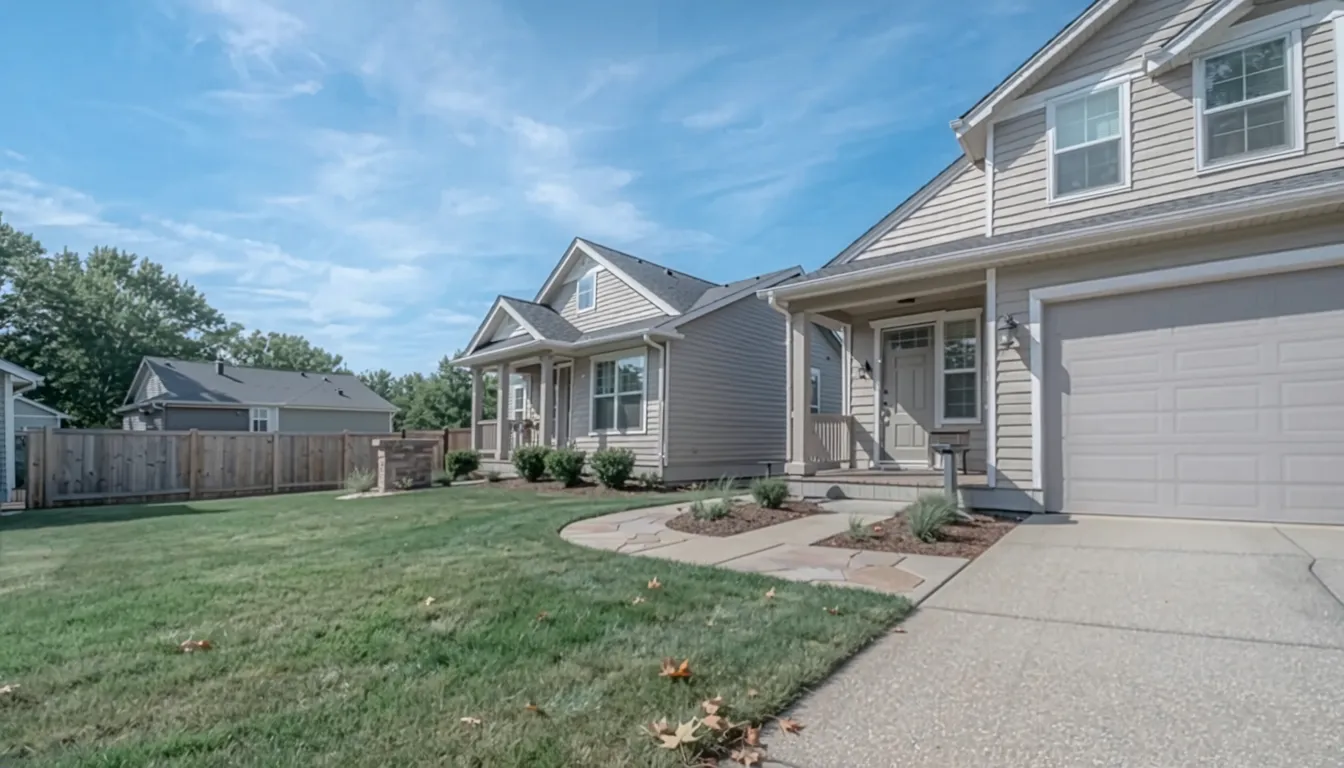
For years, cost segregation was a strategy reserved for owners of large commercial properties, the kind worth a million dollars or more. The economics simply didn’t work at smaller scales. Engineering firms charged $5,000 to $8,000 per study, required in-person site visits, and took weeks to deliver results. For someone who owned a duplex or a single Airbnb, the math rarely justified the expense.
That has changed substantially. A combination of virtual inspection technology and reinstated federal tax provisions has opened up cost segregation to a segment of the market that was previously priced out: owners of one to ten rental units, including first-time investors still learning the basics of real estate tax strategy.
Max Segal, managing partner at SMF Cost Segregation Advisors, says his firm’s inbound inquiry volume is up roughly 100% year over year – a figure he notes tracks closely with Google search trends for cost segregation since the legislation passed. “The biggest thing we hear from clients is, ‘I just wish I heard about this sooner,'” he says.
What Actually Changed in the Tax Code
The current wave of interest traces back to the passage of what Segal calls Trump’s “big monumental bill,” the One Big Beautiful Bill, passed in mid-2025 with provisions retroactive to January 2025. That legislation reinstated 100% bonus depreciation for qualifying property components, reversing a scheduled phase-down that had already reduced the rate to 80% in 2023 and 60% in 2024. Without intervention, the rate would have dropped to 40% in 2025, 20% in 2026, and zero in 2027.
The original 100% bonus depreciation took effect under Trump’s first bill, the Tax Cuts and Jobs Act, on September 27, 2017. It ran at full strength through the end of 2022 before the phase-down began.
Cost segregation works by reclassifying portions of a property’s depreciable basis into shorter-lived categories. Residential rentals normally depreciate over 27.5 years; short-term rentals over 39. A cost segregation study identifies components that qualify as either five-year property – interior items like appliances, cabinetry, light fixtures, and carpeting – or 15-year property, which covers land improvements such as paving, landscaping, fencing, and patios. With 100% bonus depreciation, those reclassified components can be written off entirely in year one rather than spread across decades.
The resulting paper loss can offset taxable income, though eligibility depends on the owner’s tax situation. Short-term rental owners need to meet a material participation requirement. Long-term rental owners face a higher bar: both real estate professional status and material participation. “That’s the most important piece that we always talk through with investors – can you actually use the losses,” Segal says.
How Virtual Visits Opened the Market
The cost barrier that kept small investors out of cost segregation began falling during the pandemic, when virtual site visits became widely accepted. Before 2020, studies required an inspector on-site, which made national coverage expensive for providers and prohibitive for owners of modest properties.
Virtual delivery cut turnaround times from roughly a month to about a week and brought prices down significantly. SMF charges $1,750 for a single-unit study – a figure the firm publishes on its website, which Segal notes is uncommon in the industry. At that price, a study can be economical on properties with as little as $100,000 in depreciable basis, compared to the old million-dollar threshold.
Segal frames this as an industry-wide development, not a proprietary advantage. “It’s not just us – there’s plenty of other very high-quality virtual providers. It was more of an industry compression,” he says. The underlying analysis doesn’t change with the delivery method. “At the end of the day, the owner still has three chandeliers,” Segal says – whether an inspector photographs them in person or catalogs them over a video call, the same components get classified.
The Exit Side Most Owners Overlook
Depreciation recapture – the tax consequence triggered when an owner sells a property – gets far less attention than the year-one deduction. Segal says that gap in understanding is something his firm addresses in every initial consultation.
The basic principle: accelerated depreciation reduces the property’s tax basis. When the owner sells, the difference between the sale price and that reduced basis becomes taxable. A portion of the recaptured amount may be treated as ordinary income rather than capital gains, creating what Segal describes as “friction costs” that are not favorable to the seller. His rule of thumb is that owners should plan to hold at least three years before selling to justify the study. Buyers who intend to flip quickly are poor candidates – Segal says his firm has very few flipper clients because they don’t hold long enough to benefit.
Most of his clients enter the process planning either to hold indefinitely, using a buy-borrow-die strategy where the property passes to heirs with a stepped-up basis, or to sell through a 1031 exchange, which defers the taxable event entirely. “With a 1031, you’re effectively exchanging one property into another,” Segal says. Because no taxable event is triggered, the owner never pays back the depreciation taken up front.
For owners weighing a cost segregation study, the exit plan matters as much as the year-one write-off. An owner who sells outright after two years may find the recapture erases much of the initial tax benefit. An owner who holds for a decade or exchanges into another property keeps the advantage intact.
Looking Ahead
While a growing share of rental transactions now include a cost segregation study, Segal is candid that the broader transaction environment remains difficult. “The debt markets drive the ability to get deals done,” he says. “If you’re an all-cash buyer, maybe you don’t care, but that’s not the majority of the small rental market.”
His view on what would unlock more activity is straightforward: lower interest rates. “I think the industry just needs that to cooperate,” Segal says. Until then, cost segregation is functioning as one of the few tools available to small rental investors trying to make current deal economics work – not by changing purchase prices or financing terms, but by reducing the after-tax cost of ownership in year one.
About the Expert: Max Segal is managing partner at SMF Cost Segregation Advisors, a firm that provides cost segregation studies for owners of rental properties.
This article is based on information provided by the expert source cited above. It is intended for general informational purposes only and does not constitute legal, financial, or real estate advice. Readers should conduct their own research and consult qualified professionals before making any real estate or financial decisions.