
The real estate industry is witnessing a fundamental shift in how teams collaborate and share information, according to Trisha Roy of Open Spaces International Inc., who points to new commun...

Real Estate Faces Risk as 15% of U.S. Wastewater Plants Hit or Exceed Capacity

Written by:
Date:
17 Sep 2025
Share via Facebook

Share via Linkedin

Share via X

Copy to clipboard

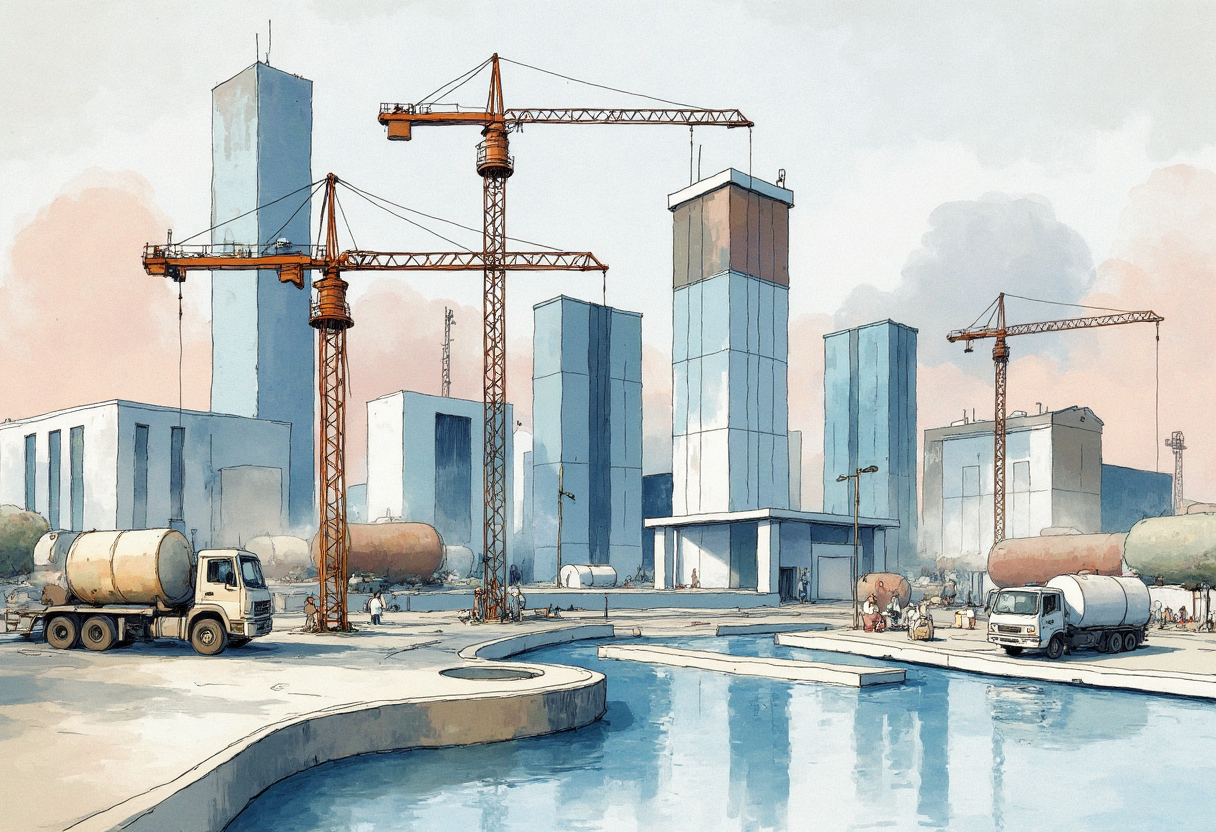
Infrastructure expert says developers’ “pipe in, pipe out” mentality threatens new construction viability
The American real estate industry faces a looming crisis that few developers are discussing, according to Kimmerly Nace, CEO of Brightwater Tools. A staggering 15% of U.S. wastewater treatment plants have reached or exceeded their capacity, threatening future development and existing properties.
The Hidden Infrastructure Crisis
“Our system is really not in good shape. It’s really in very bad shape,” Nace warns, pointing to widespread infrastructure failures that most developers overlook in planning. “When you get a rain event of an inch, you’ve got sewage all over the place.”
According to Nace, the traditional developer mindset of “pipe it in, pipe it out” ignores a deteriorating reality that could halt projects and impact property values. “There’s a real gap in the timing of when people think about building and construction, and when they need to be talking about water,” she explains. “It should be right up front.”
Development Restrictions Spreading
The infrastructure limitations are already restricting growth in some markets. “In Southern Phoenix, if you go south, you can’t get a building permit, there’s no water there,” Nace notes. Similar restrictions could spread as more treatment facilities hit capacity limits.
This crisis particularly threatens multi-family and commercial developments that require significant water infrastructure. Nace argues that developers need to completely rethink their approach to water management during initial project planning, not as an afterthought.
Emerging Solutions
Nace’s company, Brightwater Tools, is developing technologies that could help address these challenges through on-site water treatment and recycling systems. Their solutions are particularly suited for properties with “stacked bathrooms” like dormitories, apartments and office towers.
“For a 100-person unit, our specific technology would take up about two parking spaces,” Nace says, describing compact systems that can be installed in utility floors or basements. While widespread adoption remains limited, she believes such solutions will become standard. “Twenty years from now, this will be very much part of what people are considering, like solar panels or HVAC systems.”
Similar Articles
Explore similar articles from Our Team of Experts.


Real Estate Investment, Industry News, Commercial Real Estate, Market Analysis & Policy, Perspectives
The idea that regional banks have pulled back entirely from commercial real estate lending oversimplifies the reality, according to Stephen Haase, Director of Capital Markets at Greysteel. W...