

The South Florida real estate market is undergoing a notable transition as the intensity of the pandemic-era boom fades and more balanced conditions emerge. After years marked by rapid price...

The High Cost of Originating a Mortgage Is Locking Small-Dollar Borrowers Out of the Market

Written by:
Date:
26 Aug 2026
Share via Facebook

Share via Linkedin

Share via X

Copy to clipboard

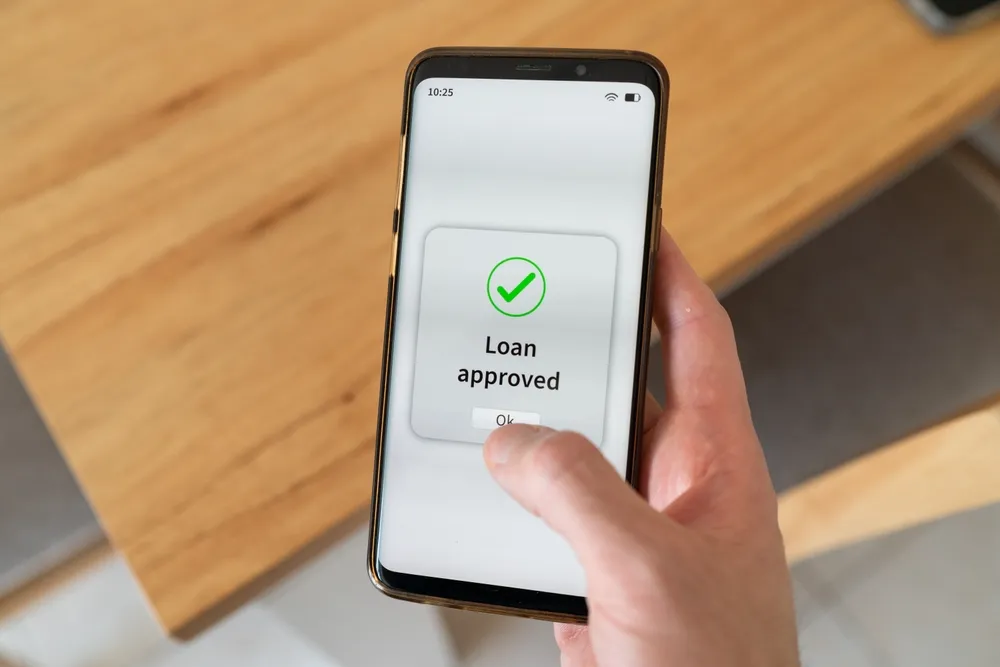
The mortgage industry’s cost structure has a built-in exclusion mechanism. The Mortgage Bankers Association estimated the average cost to originate a mortgage loan in 2024 at approximately $9,000 per loan once labor, technology, compliance, and overhead are counted, and other industry benchmarking puts the figure even higher, with credit unions reporting a per-loan average closer to $11,800. On a $500,000 loan, that cost is manageable. On a $100,000 loan, the kind that serves lower-income buyers, it can represent well over five points of the loan amount, making the transaction unprofitable for most lenders before it’s even underwritten.
The consequence isn’t hypothetical. Applicants for smaller loans don’t have meaningfully different credit profiles than applicants for larger ones, yet smaller loans get denied at higher rates, a gap independent researchers attribute not to risk but to economics. Lenders generally lose money originating small-balance mortgages because fixed origination costs outweigh the revenue a small loan generates, and industry trade groups have pushed regulators to consider direct payments to lenders as one of the only levers likely to meaningfully change that math. Small-dollar FHA lending has been declining even as it’s specifically designed to serve first-time buyers, minority borrowers facing historical discrimination, and low- and moderate-income households.
That fixed-cost floor is also why small-dollar lending is increasingly where the mortgage industry’s push toward AI-driven underwriting is concentrated, the segment of the market where shaving origination costs stops being a margin play and starts being the difference between a loan existing at all.
Why Traditional Underwriting Breaks Down
The origination-cost problem is compounding as borrower profiles grow more complex. Underwriting guidelines were largely written in an era when steady employment at a single employer was the norm. Today’s borrowers frequently combine side businesses, gig work, and multiple income streams, a mix that demands more documentation review and more labor hours per file than the traditional model was built to handle.
For small-dollar lending specifically, the math is unforgiving in a different way: human underwriting labor has a floor cost that doesn’t scale down with loan size. A lender can’t spend thousands of dollars in underwriting labor on a loan that small and expect to make money on it. The borrowers who need the least capital are, structurally, the ones the system is least equipped to serve profitably.
This is the gap a wave of mortgage-technology platforms has formed around over the past several years. One AI-driven digital lending platform creates underwriter-ready loan files in under 10 minutes and is now used by 10 of the top 40 U.S. mortgage originators, collectively representing roughly $200 billion in annual loan volume. Freddie Mac’s own machine-learning tools, released in 2025, can save originators up to $1,500 per loan through automated verification of income, assets, and employment, with leading lenders now auto-clearing 70–75% of underwriting conditions without any human review. Industry-wide, AI adoption in mortgage origination is associated with operational expense reductions in the 30–50% range across vendors and deployments, a wide band, but one that puts a company like Sun West Mortgage, whose Angel AI platform Pavan Agarwal, the company’s President & CEO, says has cut per-transaction origination costs below $125, within the range other platforms in the category are reporting rather than in a category of one.
Pavan Agarwal, President & CEO of Sun West Mortgage Company, frames the underlying dynamic bluntly: “I don’t believe it’s because Americans are purposely trying to discriminate against a certain class of people, but it’s just because it’s too expensive,” he says. “It’s economics.” According to Agarwal, Angel AI has processed over 200,000 transactions and $40 billion in funding since its full deployment in 2018, figures that, like the cost-reduction claim, come from the company rather than an independent audit.
The Trust Gap Between Borrowers and Lenders
Beyond the cost math, mortgage AI platforms are also trying to solve a psychological barrier that keeps some potential borrowers from engaging with traditional banking at all. Agarwal points to a dynamic he’s observed directly: borrowers who feel confident walking into a bank get treated differently than those who don’t. “If you’re established and wealthy, you walk into a bank with confidence, and you tell a banker what to do,” he says. “But if you’re struggling and you’re starting up, the banker tells you what to do.”
Sun West’s approach to that gap is what Agarwal calls “warranted intelligence”: when the platform provides guidance during the mortgage process, the company commits to funding the loan if the borrower follows it. It’s one version of a broader industry push to reduce the number of moments where a borrower’s application can be second-guessed or reopened after the fact; other mortgage-tech platforms have approached the same trust problem through faster conditional approvals and more transparent, real-time condition tracking rather than a funding commitment specifically. The private, low-pressure interface of a phone-based application, versus an in-person meeting with a loan officer, is a design choice several platforms in this category have converged on for similar reasons.
Where the Access Gap Is Global
The underserved-borrower problem isn’t confined to the U.S. In many emerging markets, formal credit participation lags far behind smartphone penetration, a gap that leaves people with the device but not the institutional connection needed to borrow against it. Distance from bank branches combines with unfamiliarity or discomfort with formal institutions, and people outside the banking system often end up borrowing from unregulated lenders instead, at rates far worse than a regulated institution would charge.
Mortgage- and lending-technology platforms designed to run on low-cost devices are one way this gap is starting to close: a borrower can provide documentation—photos of inventory, receipts, income records—and receive an underwriting decision without traveling to a city or a bank branch. Sun West is one platform pursuing deployment in rural markets on this model; it isn’t the only one, and the broader shift toward mobile-first, document-light underwriting is playing out across multiple lenders and geographies as smartphone-based verification technology matures.
Cost Reduction as Market Expansion
The practical implication of cutting origination costs, whether to $125 as Agarwal describes for Sun West, or the 30–50% reductions reported more broadly across AI-driven mortgage platforms, is that loan sizes previously too small to justify start to pencil out. That doesn’t just widen access for individual borrowers; it reopens lending categories that fixed labor costs have made dormant, both in domestic small-dollar mortgage markets and in emerging markets where loans need to work at very small dollar amounts.
Whatever the exact figures at any single platform, the direction is consistent across the sector: the fixed labor-cost floor that has excluded the bottom of the mortgage market is the target multiple technology approaches are now converging on, from Freddie Mac’s own automation tools to fintech underwriting platforms to direct-to-borrower AI products. For a market where small-dollar borrowers perform about as well as borrowers with larger loans despite facing higher denial rates, closing the cost gap, rather than any single company’s version of doing so, is what determines whether that segment of the market gets served at all.
About the Expert: Pavan Agarwal is President and CEO of Sun West Mortgage Company, whose Angel AI platform is used for automated mortgage underwriting.
This article is based on information provided by the expert source cited above. It is intended for general informational purposes only and does not constitute legal, financial, or real estate advice. Readers should conduct their own research and consult qualified professionals before making any real estate or financial decisions.
Similar Articles
Explore similar articles from Our Team of Experts.