

For most homeowners, selling a property is the largest financial transaction of their lives, yet the process has remained largely unchanged for decades, including the fees. That’s begi...

Raw Land Is Getting More Expensive to Source. That's Reshaping the Seller-Finance Model.

Written by:
Date:
07 Sep 2026
Share via Facebook

Share via Linkedin

Share via X

Copy to clipboard

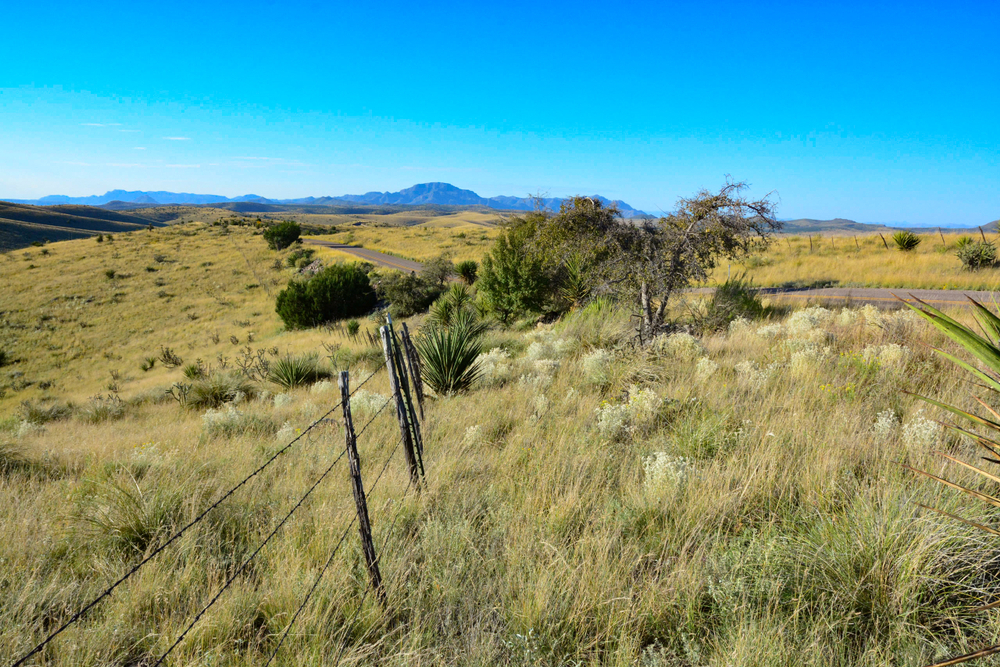
Raw land has spent most of the last few years as a quiet inflation hedge, a finite, tangible asset that investors treat as reliable protection against inflation because the cost of land tends to rise alongside the cost of everything else. Rural land prices in particular held firm through 2025 and into 2026, with no major correction expected, supported by continued interest from remote-work buyers, off-grid seekers, and recreational users.
That stability on the demand side is colliding with a less-discussed shift on the acquisition side: for operators who buy distressed or underpriced land and resell it to retail buyers on seller-financed terms, the cost of sourcing that land has been climbing. Because the model depends on keeping monthly payments low enough for a retail buyer to qualify without a mortgage, a higher acquisition cost doesn’t just compress margins; it forces a restructuring of the note itself, typically toward longer terms.
Mark Podolsky, Founder of Frontier Equity Properties, is one operator who has watched this play out directly. He buys distressed and tax-delinquent parcels and resells them to end buyers on seller-financed terms, and he’s been doing it long enough, across thousands of transactions, to have a clear read on how the math has changed.
Acquisition Costs Are Rising Fast
According to Podolsky, parcels that cost around $2,500 to acquire in certain counties a few years ago now run closer to $10,000, a fourfold increase that, if representative, would outpace most published land-market benchmarks. Broader data suggests a more moderate picture: U.S. cropland values rose about 2.2% on an inflation-adjusted basis between 2024 and 2025, and industry outlooks describe 2026 as a stabilized market rather than one seeing sharp broad-based increases. The gap likely reflects the niche Podolsky operates in, distressed, off-market, and tax-delinquent parcels in specific counties, rather than land pricing generally, but it points to a real dynamic: sourcing costs in this corner of the market have moved up meaningfully even where headline land indices haven’t.
“Because there’s a fixed supply of land, just like gold and silver, these prices have gone up with inflation,” Podolsky says. “Land is a traditional inflation hedge, and we are benefiting from that.”
Higher acquisition costs mean more capital tied up per deal, which tends to favor operators with access to pooled investor capital over individuals testing the model with limited budgets. Podolsky’s own operation, for instance, now works exclusively with accredited investors, pooling capital across a partner structure rather than funding deals individually.
Buyer Behavior Is Stable
Despite rising input costs, buyer demand in this segment hasn’t softened, at least by Podolsky’s account; down payments and monthly payment rates have stayed roughly consistent with a year ago. What has shifted is term length.
“The only difference is we might have to have a longer term out so that we can get in that car payment area,” Podolsky says. “So we just restructure it.”
The “car payment area” is the pricing sweet spot, a monthly payment around $399 at 9% interest, that keeps land accessible to buyers who might otherwise be priced out of a lump-sum purchase. Extending a note from, say, 36 to 60 months preserves that monthly figure while accommodating a higher purchase price. The trade-off is a longer duration of risk for whoever holds the note, though Podolsky says default behavior on his own notes hasn’t changed. Owner-financed land is generally considered well-suited to this kind of adjustment: low carrying costs make it easier to extend hold periods without the deal losing money, unlike financed models with higher fixed costs.
Where the Cycle Sits Right Now
Operators in this space commonly frame the market through a buy/sell cycle: depressed markets make buying easy and selling hard, equilibrium makes both easy, and heated markets invert the pattern. Podolsky places the current market slightly toward the “buying easier than selling” end.
“Right now in this market it is easier to buy and a little bit more difficult to sell because asset prices have gone up,” he says.
That reading is consistent with the acquisition-cost story: sellers who’ve held land through a period of rising valuations are more willing to part with it at a discount, while retail buyers face higher sticker prices that can slow absorption on the resale side.
Why Competition in This Niche Stays Thin
One structural feature of the raw-land space is that it draws little institutional attention and limited retail investor interest compared to residential flipping or landlording. Podolsky attributes this partly to the asset’s lack of visual appeal: “If there’s 100 people in a real estate investment association meeting, 99 of them are going to be landlords, wholesalers and flippers,” he says, and partly to pricing difficulty. Comparable sales data for raw land is sparse and inconsistent at the county level, which keeps algorithmic buyers and large platforms largely out of the space.
“You can’t go on Zillow and take out the price of raw land,” Podolsky says. “There might be a few comps. You need to figure it out.” Land-market data providers describe the same limitation: broad averages from national aggregators often lag real market conditions by 12 to 24 months, and the most reliable pricing comes from actual comparable sales in a specific target county.
Where Buyer Demand Concentrates
Geographically, demand in this niche tends to concentrate in states where land is cheap enough to sell on terms, and buyer pools are deep; commonly cited examples include Arizona, Nevada, New Mexico, Colorado, Texas, affordable parts of California and Florida, and Midwest states like Missouri, Tennessee, and Oklahoma. Demand from military buyers, recreational users, and people seeking off-grid or rural property continues to support the market, echoing broader 2026 land-market reporting that recreational buyers are increasingly drawn to hunting, mountain, and timber properties for lifestyle and long-term enjoyment rather than short-term appreciation.
A Common First-Year Mistake
For new entrants to seller-financed land investing, one behavioral pattern shows up repeatedly: stopping deal flow after the first acquisition. Investors mail offers, wait six to eight weeks for responses, close one deal, then pause their marketing, cutting off the pipeline that sustains the business.
A second common mistake is entering without adequate market research, skipping the work of understanding comparable sales, county-level pricing dynamics, and buyer demographics before committing capital.
What’s Likely to Persist
Land-market outlooks for 2026 generally describe a stabilized, disciplined market rather than one poised for sharp moves in either direction; explosive growth is considered unlikely, but land is expected to remain one of the more resilient asset classes. Within the seller-financed niche specifically, the more durable dynamic may be the one Podolsky describes: as acquisition costs rise, term length, not price resistance, is likely to be the main lever operators adjust to keep deals affordable for buyers.
Podolsky expects AI and related tools to reduce friction in sourcing, due diligence, and sales industry-wide over time, describing it as likely to make the existing model “easier, cheaper, and faster” rather than replacing it.
About the Expert: Mark Podolsky is Founder of Frontier Equity Properties, a firm that acquires distressed and tax-delinquent land parcels and resells them to end buyers on seller-financed terms.
This article is based on information provided by the expert source cited above. It is intended for general informational purposes only and does not constitute legal, financial, or real estate advice. Readers should conduct their own research and consult qualified professionals before making any real estate or financial decisions.
Similar Articles
Explore similar articles from Our Team of Experts.