
For many years, Salisbury and much of the Concord area were known primarily for established neighborhoods, relative affordability, and convenient access to employment centers throughout the ...

Quebec's Rental Market Correction Is Punishing Sameness. Unique Units Still Move.

Written by:
Date:
18 Aug 2026
Share via Facebook

Share via Linkedin

Share via X

Copy to clipboard

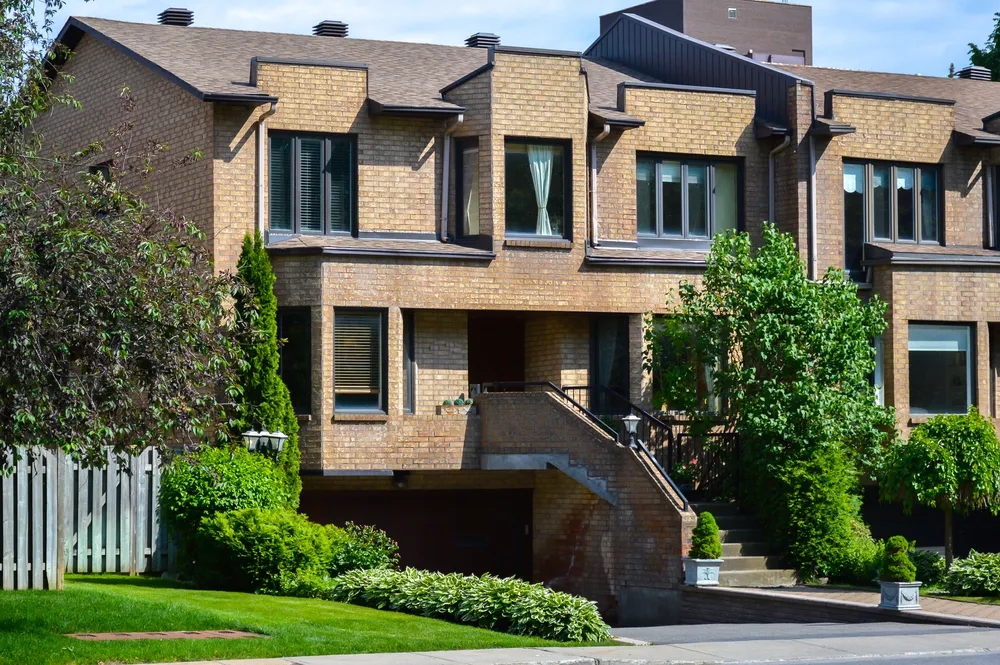
Montreal’s rental market spent the post-COVID years absorbing a wave of investment capital. Smaller developers and larger companies alike bought properties, renovated them, and listed them in a market where vacancy was low and demand was relentless. That era is over. Vacancy has climbed, prices are falling, and landlords across the province are competing through promotions they never imagined needing. But the correction is not hitting all units equally, and the line between what fills and what sits is not as simple as price or quality tier.
The Sameness Problem
When capital flooded into Montreal’s rental market after COVID, much of it produced the same thing: white-and-black modern renovations in low-rise buildings. Each unit looked good on its own. Collectively, they created a glut of interchangeable apartments that tenants can now comparison-shop at their leisure.
According to Zach Hofland, Co-Founder of Rentack, a Montreal-based listing and marketing platform, landlords were creating quality units but growing fast because the market made it easy. The result is a market where even high-end apartments struggle if they do not stand apart. “Even high-quality products across Montreal and Quebec are still not hitting that uniqueness-to-price ratio, and as a result they struggle a bit more,” Hofland says.
What does move? Large-scale developments with distinctive amenities, and older buildings that kept their original character rather than converting to the standard modern template. Quebec is a province of old cities, and Hofland says tenants are gravitating toward architectural distinction, buildings with original craftsmanship and design details that newer renovations cannot replicate. “A lot of people tend to look for that old-school look with quality, and those ones still do great,” he says.
The units caught in the middle, renovated to a generic modern standard but lacking either the scale of a large development or the character of an older building, are the ones sitting longest.
Immigration, Students, and the July 1st Fade
Two structural shifts are compounding the vacancy problem. Federal immigration policy changes have reduced the flow of international students, a population that historically absorbed furnished studios in downtown cores. And the cultural institution of July 1st as Montreal’s universal moving day has weakened.
“We’ve seen that veer off a lot. It’s not what it was a few years back,” Hofland says. With more inventory available and prices declining, tenants feel less urgency. They wait through the summer, shop into the winter, and hold out for better deals. The seasonal compression that once gave landlords predictable leasing windows has flattened into a longer, less concentrated cycle.
The dynamic is self-reinforcing. As tenants take more time, vacancies extend, landlords feel pressure, and promotions proliferate, which teaches the next cohort of tenants that waiting pays off. Hofland describes a domino effect: more landlords get stressed, drop prices, and offer promotions, which draws out tenant decision-making further.
The Experience Gap Among Landlords
For landlords who entered the market during the boom, the current environment presents an unfamiliar problem. Many built portfolios during a period of minimal vacancy and have never needed to adjust pricing or offer concessions.
Hofland describes two failure modes among less experienced operators. Some panic and cut prices too aggressively. Others refuse to adjust at all, assuming the vacancy is temporary because it has never happened to them before. “They won’t alter prices. So with the lack of experience, you can go too far to one end or sit on it longer thinking that it will rent, when in reality it’s not a time issue, it’s a product issue,” he says.
The core mistake in both cases is the same: treating vacancy as a timing problem rather than a pricing-to-product alignment problem. A unit that is not filling is not waiting for the right tenant to arrive; it is mispriced relative to what it offers, especially when comparable inventory is abundant, and tenants have options.
Condos Converting to Rentals
One trend adding supply pressure: condo developments originally planned for sale are converting to rental projects. Hofland says this is happening across Canada and is visible in Quebec as well. With fewer buyers able or willing to purchase, developers are pivoting mid-construction, adding rental inventory to a market that already has rising vacancy.
The federal and provincial governments are actively encouraging this shift, Hofland notes, recognizing that affordability pressures are keeping more people in the rental market longer. For landlords already competing for tenants, the practical effect is more supply entering a market still in the middle of a correction, intensifying the pressure to differentiate or adjust pricing.
What National Data Misses
Anyone underwriting a Quebec rental property from national-level data would likely miss the granularity of what is actually happening. Performance varies sharply from city to city; one market can be slow while another moves quickly, and within cities, it varies by unit type in ways that do not map onto conventional categories.
“It’s not as black and white as high-end luxury products rent well, low ones don’t, or cheap apartments rent well, and expensive ones don’t,” Hofland says. “It really depends on the type of product, the uniqueness of it, the location.”
He characterizes the current period as correctional. “I think it will continue to get a bit worse before it gets better. But I don’t think we are going to have another dramatic negative change anytime soon,” he says. The implication for investors evaluating Quebec rental properties: conventional quality tiers and price brackets are unreliable predictors of occupancy right now. What matters is whether a unit offers something its immediate competitors do not, whether through character, amenities, location, or pricing that reflects the current reality rather than the market of two years ago.
About the Expert: Zach Hofland is a Co-Founder of Rentack, a Montreal-based rental listing and marketing platform.
This article is based on information provided by the expert source cited above. It is intended for general informational purposes only and does not constitute legal, financial, or real estate advice. Readers should conduct their own research and consult qualified professionals before making any real estate or financial decisions.
Similar Articles
Explore similar articles from Our Team of Experts.