

The narrative surrounding Florida’s real estate market has been dominated by dramatic headlines and conflicting reports, but the reality on the ground tells a more nuanced story. In So...

Institutional Capital Is Rotating Out of Office and Into Alternatives

Written by:
Date:
30 Jul 2026
Share via Facebook

Share via Linkedin

Share via X

Copy to clipboard

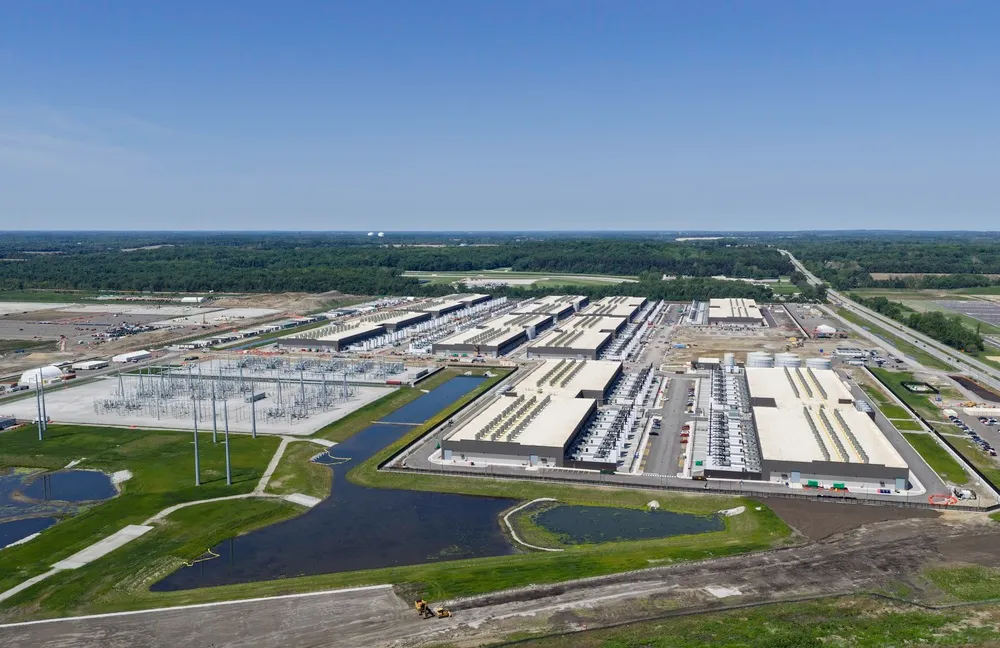
For years, institutional real estate portfolios looked roughly the same: heavy allocations to office, industrial, and apartments, with modest exposure to everything else. That composition is now shifting in ways that reflect structural changes in how people live and work and a broader reassessment of what “real estate” means as an asset class. Capital is moving toward data centers, senior housing, necessity retail, and other categories that institutional investors historically left to the public REIT market.
Will McIntosh, Founder & CEO of ArcBridge Research Group, a third-party institutional commercial real estate consulting firm launched as a joint venture with Institutional Real Estate Inc., works directly with pension funds, endowments, sovereign wealth funds, and high-net-worth investors navigating these shifts. His read on the current environment is shaped by more than 30 years inside institutional real estate, including 14 years at USAA Real Estate (now known as Phineas Capital).
A Market Still Uncertain
The past few years have been defined by what McIntosh calls a “transition.” Low transaction volumes made it difficult to establish reliable valuations, which made investors more conservative. Some moved to the sidelines entirely; others reallocated capital away from real estate into other asset classes.
“Many of the investors have gone to the sidelines, and they’ve said, we’re going to wait and see. We need more clarity. We need more visibility into the market,” McIntosh says.
That posture is beginning to soften. Transactions have picked up, lenders are lending, albeit at higher rates and lower loan-to-value ratios, and the overall mood among allocators is improving. But the recovery in confidence is tentative. The 10-year Treasury, which is the benchmark rate institutional real estate prices are off of, was hovering around 4.65% as of the interview date. McIntosh expects it to stay around four and a half through this year and next.
The risk is that it moves higher. Because Treasuries trade at auction and the federal government must sell large volumes to fund its debt, rates could rise if demand weakens. “If it takes off and goes higher, it’s going to cause required rates of return to go up, which means values are going to decline even more,” McIntosh says.
Inflation compounds the concern. While it came down from its peak, it remains above the Federal Reserve’s 2% target. McIntosh says the Fed is unlikely to cut rates this year, and if inflation accelerates further, driven in part by Middle East instability, the Fed may raise them.
Where Capital Flows
The most significant reallocation is toward what the industry calls alternatives or non-traditional real estate. Data centers top the list, with capital requirements that can reach $800 million to $1 billion per facility, a scale that suits sovereign wealth funds and large pension plans. McIntosh notes that community pushback around noise, power consumption, and water usage is real but unlikely to diminish long-term demand driven by AI, cloud computing, and e-commerce.
Beyond data centers, institutional investors are deploying into senior housing, student housing, medical office, manufactured housing, and self-storage. These are categories the publicly traded REIT market has invested in for decades, but private institutional capital largely avoided. According to McIntosh, roughly 50% of publicly traded REITs have been investing in alternatives for a long time. Private institutional investors are now following their lead.
“Only recently has the private institutional market said, hey, maybe we need to be investing in that space too,” McIntosh says.
Senior housing stands out as a near-term opportunity. McIntosh attributes its momentum to the baby boomer generation aging into facilities at scale, creating demand that did not exist at this volume five years ago.
Retail’s Return
Office properties have seen value declines of 30 to 40 percent in many cases, particularly for Class B and C buildings that lost tenants to work-from-home and never recovered them. Class A properties in strong locations are leasing well; McIntosh cites One Vanderbilt in New York as an example of a trophy asset with tenants lined up, but older, functionally obsolete stock faces demolition or conversion.
The valuation picture remains unclear. Many of these distressed buildings have not traded, leaving appraisers without comparable sales to establish current worth. For investors holding older office assets, McIntosh says the uncertainty around what their properties are actually worth persists.
Meanwhile, retail is attracting fresh interest after years of avoidance. The anticipated wave of mall closures has largely played out among weaker properties in marginal locations, and new construction has been minimal. What remains is performing. McIntosh estimates there are roughly 1,200 to 1,300 shopping malls in the US, and while many predicted half would disappear within five to ten years, the closures have been concentrated in marginal trade areas.
“The only thing wrong with retail is that it’s not oversupplied; it’s under-demolished,” McIntosh says. Necessity retail anchored by grocery stores and services that cannot be replicated online: haircuts, nail salons, medical visits, continues to perform, and capital is being reallocated from office into these categories.
Two Structural Themes
McIntosh frames the current opportunity around two broad areas: the intersection of real estate and technology, and housing.
The technology thesis encompasses data centers and industrial warehouse space. E-commerce continues to drive demand for logistics facilities, and nearshoring – companies bringing manufacturing back to the US from Asia – adds further pressure on industrial supply. McIntosh acknowledges the sector was overbuilt for a period but says that excess is being absorbed.
Housing remains structurally undersupplied. Sunbelt cities overbuilt apartments in recent years, McIntosh describes driving around Austin and seeing new complexes everywhere, resulting in declining rent growth and widespread concessions. But because single-family housing is priced beyond what many households can afford, apartment demand persists. As new supply slows, the overbuilding is being absorbed. West Coast markets are already picking back up.
A Long-Term View
McIntosh’s longer-term outlook remains positive, contingent on resolving near-term pressures around inflation and geopolitical instability. He points to continued population growth – assuming immigration policy supports it – and what he sees as the US’s relative safety and return profile compared to other markets.
“The US is still the best place in the world to invest,” he says. “The returns here tend to be more attractive than in other parts, and we’re safer.”
For institutional allocators still on the sidelines, the calculus is straightforward: the market is clearing, transactions are resuming, and the sectors absorbing capital today: data centers, senior housing, necessity retail, industrial, reflect demand patterns that predate the current cycle and will outlast it. The short-term question is whether inflation and Treasury rates cooperate enough to let that reallocation proceed at pace.
About the Expert: Will McIntosh is Founder and CEO of ArcBridge Research Group, a third-party institutional commercial real estate consulting firm launched as a joint venture with Institutional Real Estate Inc. His background includes more than 30 years in institutional real estate, including 14 years at USAA Real Estate (now known as Phineas Capital).
This article is based on information provided by the expert source cited above. It is intended for general informational purposes only and does not constitute legal, financial, or real estate advice. Readers should conduct their own research and consult qualified professionals before making any real estate or financial decisions.
Similar Articles
Explore similar articles from Our Team of Experts.