

In real estate, where market reports often serve as sales tools, Jonathan Miller stands out as a rare neutral voice. As President and CEO of Miller Samuel Inc., the New York-based appraisal ...

Construction Sites Are Spending on Safety Before Accidents Happen. That's New.

Written by:
Date:
28 Jul 2026
Share via Facebook

Share via Linkedin

Share via X

Copy to clipboard

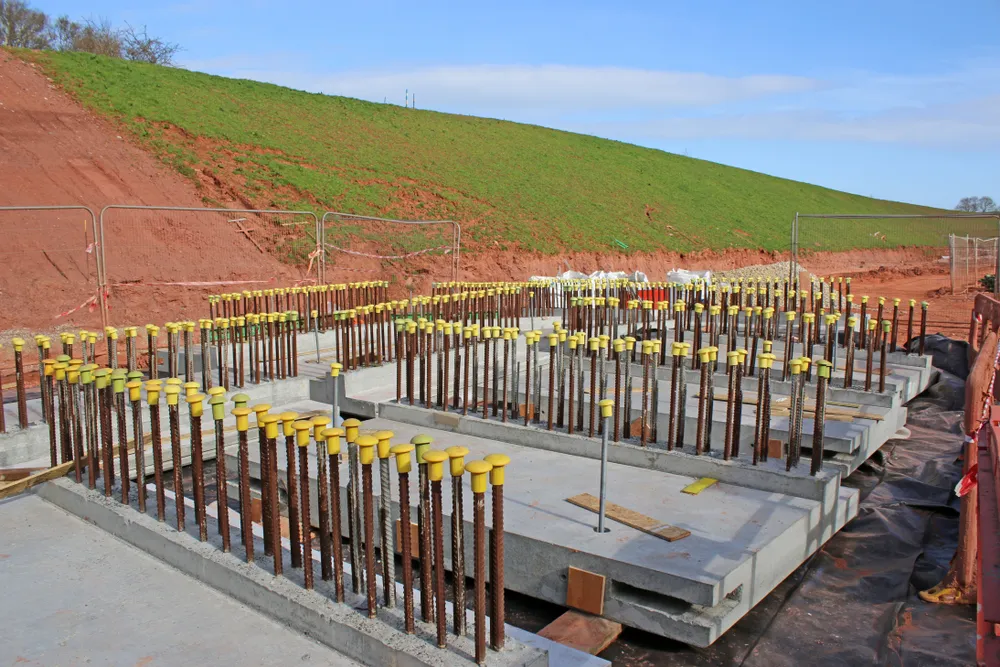
The construction industry has long treated small-scale site hazards – low steel pickets, exposed rebar ends, temporary fencing stakes – as problems you deal with after someone gets hurt. That pattern is reversing. Across residential and civil construction, safety spending is moving from reactive to preventative, with contractors budgeting for protective equipment before incidents force their hand.
Anthony Burr, a working concreter and co-founder of Safety Pickets, has watched the shift play out around one specific hazard: the sharp, exposed tops of steel pickets used to form concrete slabs, mark boundaries, and fence off development land.
The industry standard has long been a plastic cap pressed onto the exposed end, but the caps break, blow off, or degrade in UV and rain, leaving exposed steel below the line of sight. Citing the lack of a reliable, standardized solution, Burr and his co-founders developed an alternative made from a high-strength alloy designed to stay fixed to the top of the picket rather than being pressed on loosely. The material choice also sidesteps the plastic waste generated by caps that need regular replacement.
“A lot of the time they’re quite low to the ground; they’re out of the line of sight. So people forget,” Burr says. The result is both a trip hazard and an impalement hazard; workers who stumble over low pickets can fall directly onto exposed steel.
The consequences of overlooking small, low-visibility hazards can be severe. Industry incident records include cases of workers falling onto unprotected steel bars and rebar left exposed on site, a category of accident that safety advocates have pushed to address through better site protocols and protective equipment, rather than after-the-fact response.
From Reactive to Preventative
The shift is one Burr hears about from customers across sectors, not just around pickets specifically. Two to four years ago, he says, safety gear for small hazards was often an afterthought; something went wrong, and then contractors reacted. Now, more are looking for solutions before problems occur.
“It’s turned to quite a preventative industry where people are looking for solutions to prevent these problems,” Burr says.
The Australian housing boom may have contributed to earlier complacency. During peak building activity, Burr says, basic compliance sometimes slipped, with workers skipping proper footwear or high-visibility clothing. As activity normalized, enforcement tightened. Digital check-in systems now require workers to log onto sites through apps, narrowing the room for skipping safety protocols. “You can’t get away with these little things as much anymore,” he says.
Where Low-Visibility Hazards Show Up
Hazards like exposed picket tops turn up across a wider range of settings than residential job sites alone: civil infrastructure projects, agricultural fencing, and public land managed by government parks departments all involve the same basic problem, sharp, low, easily overlooked site elements that sit outside a worker’s or visitor’s normal line of sight. On agricultural land, an exposed post presents a hazard to animals as well as people. On idle development sites fenced off for months at a time, weather exposure alone can leave protective measures degraded long before construction even begins.
Generational Resistance
Adoption of preventative measures hasn’t been uniform. Burr describes a clear generational divide among contractors. Older operators who have worked the same way for decades tend to push back on spending for something they’ve never needed before. “They slowly come around, and they buy a little bit, and then they get used to them,” he says.
Younger contractors, more exposed to injury stories circulating online and to compliance culture generally, tend to adopt preventative measures faster. “The new style of contractors that are aware of these injuries and have had these things happen, they’re a lot more adaptive, and they’re happy to spend the money,” Burr says.
For site managers, the calculus driving this shift is straightforward: preventative spending on durable, low-maintenance protective measures increasingly looks cheaper than the cycle of repeat purchases, compliance gaps, and liability exposure that reactive spending leaves behind.
About the Expert: Anthony Burr is a working concreter and co-founder of Safety Pickets, an Australian construction safety company focused on protective equipment for low-visibility site hazards including exposed steel pickets and rebar ends.
This article is based on information provided by the expert source cited above. It is intended for general informational purposes only and does not constitute legal, financial, or real estate advice. Readers should conduct their own research and consult qualified professionals before making any real estate or financial decisions.
Similar Articles
Explore similar articles from Our Team of Experts.