
The North Dallas corridor spent the past year shifting from what agents describe as an even playing field to a clear buyer’s market, with inventory at levels not seen in over 15 years ...

Multifamily Prices Are Down 25 Percent. Why Most Investors Aren't Buying.

Written by:
Date:
24 Jul 2026
Share via Facebook

Share via Linkedin

Share via X

Copy to clipboard

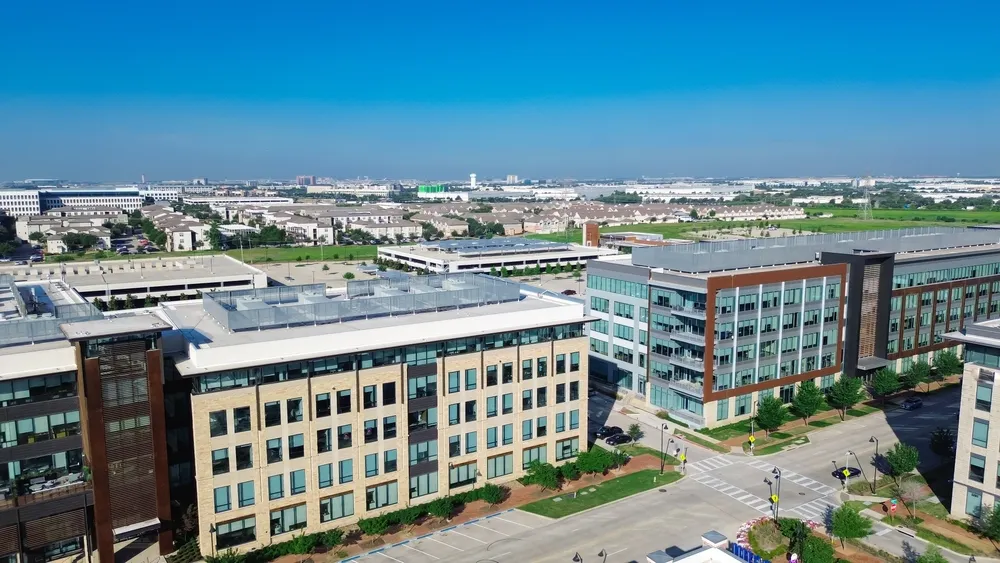
Multifamily real estate has experienced a correction that, by most historical standards, should be attracting capital. Prices are down 20 to 25 percent from their peaks, according to Neal Bawa, CEO and Founder of Grocapitus Investments. Rents, while flat, haven’t fallen. Yet investor appetite remains subdued, a pattern that says more about behavioral cycles than market fundamentals.
Bawa manages a portfolio backed by roughly 1,300 accredited investors and more than $350 million in deployed equity across multifamily acquisitions and build-to-rent projects. His read on the current market is blunt: the opportunity is real, but almost nobody wants to act on it.
“Everybody wanted to invest in 2021, 2022, because they had made a huge amount of money,” Bawa says. “But then those properties didn’t do well because they were reliant on low interest rates and the interest rates went up. So investors are very skittish.”
The result is a market with depressed valuations but almost no transaction volume. Sellers won’t list at discounted prices, and buyers who could benefit from the discount are sitting on the sidelines.
The Metric Most Single-Family Investors Miss
Beyond the pricing environment, Bawa argues that a fundamental analytical gap persists among single-family rental investors: they ignore incoming supply.
The rental market, he explains, operates as a pyramid: single-family homes at the top, then Class A multifamily (new construction), Class B (built within the last 30 years), and Class C (older or poorly located) at the base. A single-family rental investor competes most directly with the tier immediately below: Class A multifamily.
“I always ask single-family investors, what’s the supply situation? And I always get a blank stare,” he says. “There are many places in the U.S. where population growth is increasing, and rent growth is negative. Why? Supply.”
The mechanism is straightforward: 100 percent of incoming multifamily supply enters the rental market, whereas most new single-family construction is owner-occupied. When a metro absorbs a wave of new apartments, rents flatten or decline regardless of job growth, income growth, or population trends. Bawa points to Austin and Phoenix as current examples: markets with strong long-term fundamentals that are nonetheless experiencing negative rent growth because of oversupply delivered over the past two years. He expects rents in both metros could remain negative through 2026 and into 2027.
“There are no great markets in America,” he says. “There are markets that are in phases.”
For investors buying single-family rentals in these metros, the implication is direct: even if the property appreciates over time, monthly cash flow may remain negative for a year or more as surrounding multifamily supply suppresses what they can charge in rent.
A Floating-Rate Thesis
For investors willing to act during the current window, the Grocapitus approach centers on floating-rate debt – a contrarian position given the rate environment. The logic rests on Bawa’s view that AI-driven job displacement will eventually push unemployment higher, reduce consumer demand, and pull inflation down, creating conditions for lower rates over time.
“AI is going to reduce job usage. As unemployment goes up, that reduces inflation because demand is down,” he says. “So I think the long-term path of interest rates is lower.”
He acknowledges a short-term complication: the ongoing conflict with Iran has pushed oil prices higher, creating inflationary pressure that may keep rates elevated longer than he anticipated 12 months ago. When oil rises, Bawa notes, plastics, fertilizer, and petroleum-derived products follow – broadening the inflationary effect beyond energy alone.
“I thought, okay, it’s a three-month war, it’s over now. We basically restarted the war,” Bawa says. “So I’m really worried about the long-term impact that this war could have on both the world economy slowing down and on inflation.”
Following Non-Real-Estate Trends
Rather than screening purely on demographic or economic metrics, the firm tracks external industry shifts that create localized demand. Bawa offers Idaho Falls, Idaho, as an illustration. The city of roughly 150,000 people is home to Idaho National Labs, where nuclear reactors are certified. As tech companies – responding to backlash over data center electricity and water consumption – pivot toward generating their own nuclear power, the certification pipeline running through Idaho Falls is growing.
“Whether the Navy is building a ship with a nuclear power plant or Google is buying a small modular reactor, a huge percentage of that work is going to be done in Idaho National Labs,” Bawa says. He sees this as a 10-year growth driver for the local economy, given that no new nuclear reactor projects have been started in the last few years and the development cycle for each is measured in years.
The investment thesis requires connecting several steps that are individually visible but rarely linked: AI driving data center expansion, data centers consuming unsustainable amounts of electricity and water, tech companies responding by purchasing nuclear capacity, and certification work concentrating in one small city. Bawa says this kind of multi-step research is what separates supply-aware investors from those relying solely on population and job growth figures.
Scaling Operations Through AI Employees
On the operational side, Grocapitus currently runs 32 AI-based “cloud virtual employees” handling underwriting, rent comps, acquisitions research, asset management, and accounting tasks. Each costs roughly $250 per year. Bawa’s goal is to have over 5,000 processes run by AI and reviewed by humans by the end of 2026.
“There’s going to be a lot of companies that are expanding, but their expansion is all AI employees,” he says.
The firm currently has $300 to $400 million in properties in lease-up and a similar amount in stabilized assets being optimized. Bawa attributes the ability to manage this scale partly to the AI operational model, which allows a small team to handle underwriting, asset management, and research across multiple markets simultaneously. Each employee costs $250 per year rather than a salary, which means the firm can add capacity without proportional payroll growth.
For multifamily investors evaluating sponsors, the operational question is becoming harder to ignore: firms that can underwrite faster, monitor assets in real time, and research markets at lower cost may identify opportunities – and problems – before competitors relying on traditional staffing models.
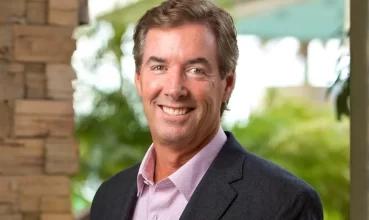
About the Expert: Neal Bawa is CEO and Founder of Grocapitus Investments, a multifamily real estate investment firm focused on acquisitions and build-to-rent projects across U.S. markets.
This article is based on information provided by the expert source cited above. It is intended for general informational purposes only and does not constitute legal, financial, or real estate advice. Readers should conduct their own research and consult qualified professionals before making any real estate or financial decisions.
Similar Articles
Explore similar articles from Our Team of Experts.