Here’s something that surprises almost everyone who hears it: in Pittsburgh right now, the buyers moving fastest and with the most confidence are shopping at the top of the market. Mea...

Your Rooftop Might Be Worth More Than You Think – If You Own the Airspace

Written by:
Date:
27 Jul 2026
Share via Facebook

Share via Linkedin

Share via X

Copy to clipboard

Most property owners think of their buildings in terms of square footage on the ground. The walls, the floors, the parking lot – that is the asset. But aviation infrastructure advisors working with developers across the Middle East and the United States are making a different case: the sky above a property is a separate layer of real estate, and ignoring it means leaving a revenue stream untouched.
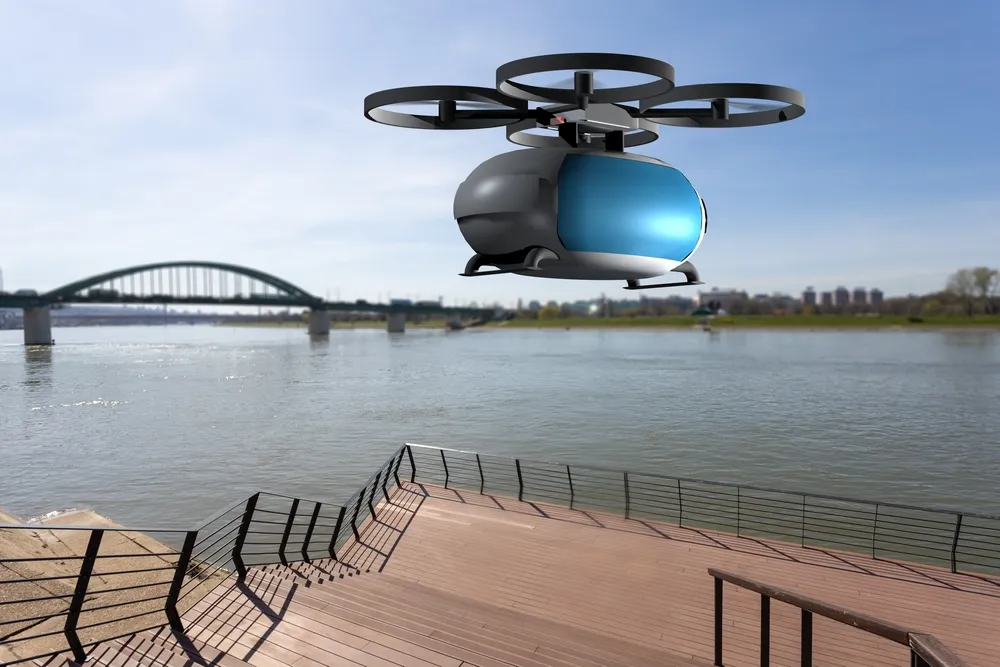
The argument is straightforward. Electric vertical-takeoff aircraft, sometimes called air taxis, need places to land. Those places are vertiports, and they sit on rooftops, parking structures, and open parcels that already exist in cities. The developers who move first to secure airspace access above their properties stand to capture lease income and valuation premiums that latecomers cannot replicate, because airspace corridors are limited and regulated.
Rasha Alshami, Founder & CEO of LYNEports, an aviation infrastructure advisory and technology company, works with established real estate developers and family offices evaluating whether their sites can host these landing facilities. “Airspace is also real estate that you need to understand how you can capture,” Alshami says.
From Dubai to Chicago
That framing – airspace as a capturable asset – separates this from a futuristic talking point. Certified vertiports are already being announced. A recent collaboration between Skyports, the Roads and Transport Authority in Dubai, and aircraft manufacturer Joby produced one of the first certified vertiport agreements. The infrastructure is moving from concept to physical construction in specific cities right now.
For property owners and small investors, the practical question is what this means for existing buildings. Alshami describes a pattern she sees repeatedly: developers come to her firm before acquiring a site, asking whether the airspace above a parcel is usable. Others come after they have already built, wanting to know if their existing rooftop can be retrofitted.
The distinction matters. A developer who plans for airspace access from the start can orient the building, manage obstacle heights, and design approach paths that make operations feasible. A developer who tries to add it later faces constraints that may make the project unworkable, or far more expensive.
Alshami says real estate developers are beginning to evaluate airspace alongside ground-level considerations when selecting sites. She compares the shift to how data centers entered the real estate conversation. When data centers first emerged, no one knew where to place them within cities. Today, family offices and institutional investors own them as routine assets. Vertiports may follow that trajectory, unfamiliar now, normalized within a decade.
The Cell Tower Comparison
The revenue model does not require operating the landing pad yourself. A property owner can lease the rooftop infrastructure to a third-party operator, generating income without managing flights. Alshami notes that some developers may never intend to operate the vertical landing themselves. They treat it the way a landlord treats a cell tower lease, passive income from an asset that was previously generating nothing.
Not every rooftop qualifies. Military operations nearby can effectively kill a site’s chances. Proximity to a busy airport corridor – Alshami cites Heathrow as an example – can reduce flight frequency to the point where operations are not commercially viable. Weather conditions, fire safety on high-rise rooftops, and obstacle clearance all factor into feasibility assessments.
What Kills a Rooftop’s Chances
The regulatory landscape is still forming. Europe is progressing through collaborative planning frameworks, but approvals remain jurisdiction-by-jurisdiction. A property that works in Dubai may face entirely different constraints in New York or Chicago. The absence of uniform zoning codes for vertiports means developers are navigating uncertainty, not a clear permitting path.
No Uniform Rulebook
Zoning also determines what type of aviation use fits a given location. According to Alshami, a residential zone might support small drone deliveries rather than passenger aircraft, while a commercial district near transit hubs could handle higher-capacity operations. The functionality of the landing infrastructure must match the surrounding land use.
For property owners and small investors, the immediate takeaway is not to rush into rooftop modifications. It is to recognize that airspace access is becoming a factor in site selection and long-term valuation, and to ask whether any property under evaluation has that potential or is permanently blocked by surrounding obstacles, military zones, or congested flight corridors.
Alshami describes rooftops covered in mechanical equipment as “dead space that you have not utilized, that is dead square meters.” Whether that dead space becomes a revenue-generating asset depends on factors most buyers never think to check: what is happening in the sky above the building, not just on the ground beneath it.
About the Expert: Rasha Alshami is Founder and CEO of LYNEports, an aviation infrastructure advisory and technology company focused on vertiport development and airspace feasibility for real estate developers and institutional landowners.
This article is intended for informational purposes only and does not constitute legal, financial, or investment advice. The views and opinions expressed herein reflect those of the individuals quoted and do not represent an endorsement of any company, product, or service mentioned. Readers should conduct their own due diligence and consult qualified professionals before making any investment decisions.
Similar Articles
Explore similar articles from Our Team of Experts.