
The Houston suburbs have earned a reputation as one of the more stable residential markets in the country, insulated by a diverse employment base in energy, healthcare, and engineering. But ...

Real Estate Returns Used to Come From Rates. Now They Come From Running the Building.

Written by:
Date:
14 Jul 2026
Share via Facebook

Share via Linkedin

Share via X

Copy to clipboard


For years, institutional real estate investors rode returns driven largely by capital markets activity. When interest rates were near zero, generating gains was relatively straightforward. That era is over, and the shift is changing how pension funds, endowments, and foundations choose who manages their money.
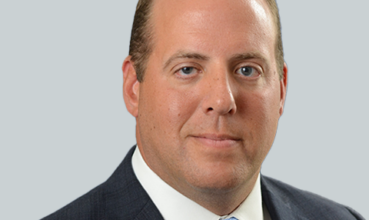
The change is visible in how investors now evaluate managers, according to John Baczewski, President & Founder of Real Estate Fiduciary Services and 2026 global chair of The Counselors of Real Estate. After 21 years advising institutional investors on portfolio matters, he sees a market where operational competence – actually running buildings well – has moved to the top of the priority list.
“When money’s free, which it was a number of years ago, it’s pretty easy to go out and make money in real estate,” Baczewski said. “And now it’s all about operations.”
Each piece of real estate is different because of its leases, its location, and its physical condition. But during the low-rate era, Baczewski says, assets were treated as essentially interchangeable because returns were so driven by capital market movements rather than how well a building was managed. That period rewarded capital deployment speed over management skill. The current environment rewards the opposite.
Mature Portfolios
Many pension funds spent 25 or 30 years building their real estate allocations from below target up to target. Today, Baczewski says, many are within a couple hundred basis points of their allocation goals. That changes the nature of new investment decisions.
Rather than filling out a portfolio from scratch, investors are now looking to plug specific gaps, seeking managers with narrower, more specialized capabilities rather than broad generalist platforms. “There’s a lot more portfolio management going on from the investor side than maybe you had when they were in that big ramp-up stage,” Baczewski said.
For investors selecting managers today, the practical consequence is that generalist firms face a harder pitch. Investors already near their allocation targets need a manager who can deliver something specific, expertise in a particular asset type, geography, or operational challenge, rather than broad market exposure.
One visible result: increased demand for vertically integrated providers, firms that acquire, operate, and eventually sell assets all under one roof. Baczewski says capital allocations have tilted toward these programs because investors want assurance that the same organization controlling their capital also knows how to manage the physical asset day to day.
Cautious Optimism, Asset by Asset
The general mood among institutional investors, as Baczewski characterizes it, is “cautious optimism with different levels of caution.” He pushes back against the tendency to discuss commercial real estate as one monolithic portfolio.
“The decision-making is happening on the ground, and it’s asset by asset,” he said. Hold-sell decisions come down to whether a specific asset in a specific market can still deliver what the portfolio needs. When it can’t, it gets sold to someone with different objectives, and that, Baczewski noted, is what markets are made of.
Transaction activity has picked up somewhat after a period when buyers and sellers couldn’t find common ground. “It’s not quite up to the levels it was years ago, but it’s steady,” Baczewski said. For investors waiting on liquidity, that steadier pace means exits are possible again, though not at the speed or pricing of peak years.
Office Skepticism, Retail’s Rebalancing
Among asset classes generating disagreement, office remains the most doubted, a familiar position by now. Baczewski says the more notable development is in retail. After years of minimal new construction, the sector appears to have reached what he calls “at least a temporary balance between what happens online and what happens in person.”
Retail centers have made accommodations to fit the current consumer landscape, and the lack of new supply has worked in existing assets’ favor. Investors looking for capital appreciation still face difficulty finding it, Baczewski says, while those willing to actively improve assets – making them more appealing to tenants and giving tenants a reason to pay higher rents – are finding more opportunity in sectors like retail where the supply picture has tightened.
Capital Competing on a Broader Field
Capital flows into real estate are down modestly, and Baczewski frames this within a longer competitive dynamic. For over 30 years, real estate has competed with private equity, infrastructure, and fixed income for investor dollars. During the low-rate era, all three of private equity, infrastructure, and real estate gained allocation share relative to fixed income. Some of that ground is being returned now.
“Capital flows to where the risk-adjusted returns are perceived to be the highest,” Baczewski said. “And that’s not always real estate.”
The search within real estate has narrowed toward assets offering durable cash flow. Investors aren’t chasing appreciation; they want net operating income they can count on. For property owners and operators, this means the assets most likely to attract institutional capital are those demonstrating stable, well-managed income streams, not those positioned primarily for a future sale at a higher valuation.
Insurance Costs and Climate Preparedness
One area Baczewski flagged as underreported: a potential softening in commercial real estate insurance markets. Premiums had been rising sharply due to climate-related losses – wildfires, hurricanes, floods – but based on conversations with colleagues, he’s hearing that the rate of increase is slowing. In some cases, larger portfolios have received modest pricing reductions.
Baczewski says premiums are certainly not increasing at the same rate they were before. For institutional owners, even a slowing rate of increase changes operating budgets and net income projections in a market where cash flow stability is the primary metric investors care about.
Climate resilience remains a source of diverse opinion within the institutional community. Some investors are taking significant preparedness action; others less so. “As the climate change progresses, we’ll figure out who’s right,” Baczewski said – a candid acknowledgment that the industry hasn’t converged on a standard approach to climate risk, and that the adequacy of current strategies won’t be clear until events test them.
The investors who prove correct on climate preparedness will likely be those whose buildings remain insurable at reasonable costs while competitors face either premium spikes or coverage gaps. In a market defined by operational returns, insurance is no longer a back-office line item but a performance variable.
About the Expert: John Baczewski is President and Founder of Real Estate Fiduciary Services and 2026 global chair of The Counselors of Real Estate, with 21 years of experience advising institutional investors on real estate portfolio matters.
This article is based on information provided by the expert source cited above. It is intended for general informational purposes only and does not constitute legal, financial, or real estate advice. Readers should conduct their own research and consult qualified professionals before making any real estate or financial decisions.
Similar Articles
Explore similar articles from Our Team of Experts.